


Bering Strait Bridge to Nowhere? Russian Envoy’s Audacious Vision Sparks Geopolitical Chills
POLICY WIRE — Washington D.C., USA — The dream of bridging continents, a vision once confined to the fanciful margins of Victorian engineering blueprints, has found an unlikely revival in the frosty...

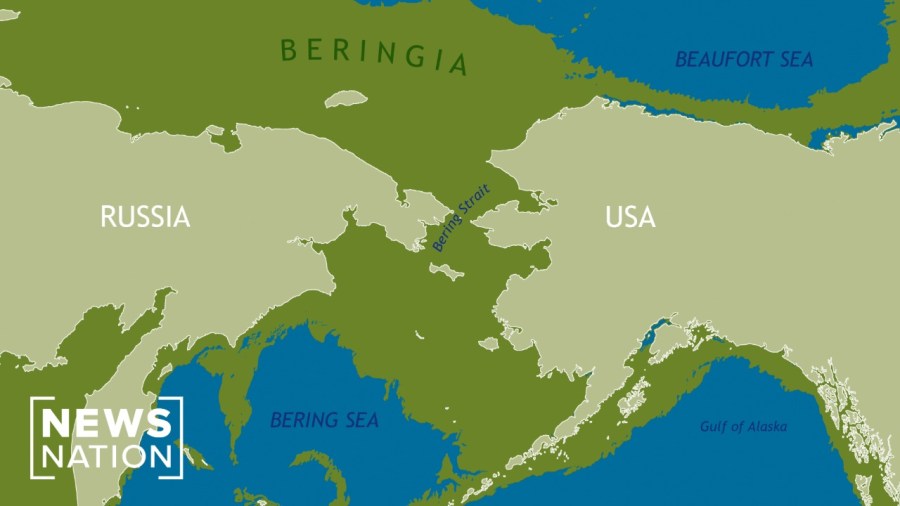
POLICY WIRE — Washington D.C., USA — The dream of bridging continents, a vision once confined to the fanciful margins of Victorian engineering blueprints, has found an unlikely revival in the frosty rhetoric emanating from Moscow. It ain’t about railways snaking through uncharted jungles or canals bisecting narrow landmasses, though—not this time. Instead, the buzz is about an undersea link that could connect two of the world’s most estranged neighbors: Russia and the United States, through the icy embrace of the Bering Strait. An audacious thought, isn’t it?
One gets the sense some geopolitical strategists just love drawing lines on maps. A certain high-ranking Russian emissary has reportedly voiced confidence that an [QUOTE_PLACEHOLDER]. That’s a direct quote, folks. Imagine the sheer nerve of it, tossing around multi-billion-dollar infrastructure projects as casual pronouncements, especially given the state of current U.S.-Russian relations. One wonders if they’ve checked with Anchorage lately. Or, for that matter, with common sense.
But the statement isn’t merely an engineering pipe dream, it’s a profound strategic utterance. Russia’s keen to project power and capability on a grand scale, even if its economic heft these days often struggles to match its outsized geopolitical ambitions. And they’re not exactly known for understated rhetoric, are they? This kind of pronouncement—whether feasible or pure fantasy—signals a long-term strategic game, positioning Russia as a potential future energy and transport superhub.
The concept of a fixed link across the Bering Strait isn’t new; it’s a hundred-year-old idea that pops up with predictable regularity whenever global relations undergo a significant thaws—or, conversely, when a nation feels particularly inclined to flex. For Russia, it potentially offers a direct, year-round rail — and road connection to North America. Economists, however, have long pointed to the immense costs. Feasibility studies and various estimates from engineering groups over the decades often peg the price tag for such a complex tunnel system and connecting infrastructure at anywhere from $35 billion to upwards of $100 billion. And that’s just the engineering. Throw in the logistical nightmares of working in such a remote, hostile environment, and the numbers start looking even more stratospheric.
The geopolitical tremors from such a prospect aren’t isolated to just Washington — and Moscow either. Think about the grander sweep of global connectivity, especially for regions desperately seeking new trade arteries. Pakistan, for instance, a nation striving to cement its position as a regional trade nexus through projects like the China-Pakistan Economic Corridor (CPEC), keenly understands the allure—and the profound political capital—of colossal infrastructure. The difference? CPEC is a palpable, ongoing effort connecting economies in a more immediate fashion, not merely a whispered future possibility over a contentious geopolitical divide. It’s about tangible trade, not just distant bragging rights.
And let’s not overlook the immediate implications for the Arctic region. This area, with its melting ice caps, is already a cauldron of competing interests—resource extraction, shipping lanes, and military posturing. Introducing a colossal infrastructure project like a Bering Strait tunnel would dramatically escalate the stakes. It would redraw maps, yes, but more importantly, it’d force a wholesale reevaluation of Arctic sovereignty, resource access, and national security doctrine across continents.
What This Means
This isn’t really about digging a tunnel next week; it’s about messaging. Russia’s claim, conveyed via a proxy, projects an image of a nation thinking big, undeterred by sanctions or international isolation. It suggests a future vision where Russia remains a central player, a key land bridge between East and West, even as current events aim to decouple it. For America, it’s a test of attention, a rhetorical feint in a new Cold War setting. Do we ignore it as bluster, or treat it as a subtle declaration of intent to control vital Arctic real estate and trade routes?
The real economic implications are nebulous in the short term. No bank is signing off on this anytime soon. But it forces countries to consider their strategic positions on the global chessboard. It pushes countries like China and even Pakistan (with its ambitions for regional trade dominance) to reassess their own long-term infrastructure planning and geopolitical alignments. A functional Bering Strait link would fundamentally alter global shipping and energy routes, diminishing the centrality of maritime choke points further south. It’s a distant drumbeat, to be sure, but one that echoes with implications for literally everyone involved in global trade and resource security.
It’s also a play for psychological dominance, a bid to assert continued relevance on a global stage where the narrative often revolves around Russia’s alleged decline. But without concrete steps, without partners willing to commit serious capital—you know, the actual kind—it’s nothing more than a grandiose talking point. Still, for folks who pay attention to geopolitics, even these outlandish proclamations are worth watching closely. They’ve a habit of, well, sticking around longer than seems sensible.