


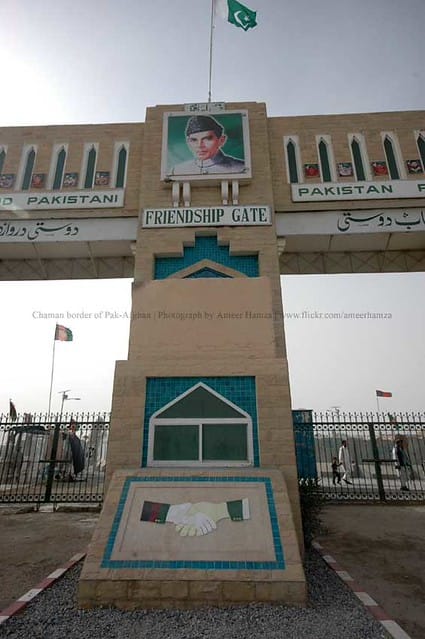
Afghanistan-Pakistan Relations and Proxy Warfare: Sovereignty, Security, and the Battle for South Asia’s Stability
Introduction The recent escalation of cross-border tensions between Afghanistan and Pakistan has reignited debates over the nature of proxy warfare and the limits of state sovereignty in South Asia....

Introduction
The recent escalation of cross-border tensions between Afghanistan and Pakistan has reignited debates over the nature of proxy warfare and the limits of state sovereignty in South Asia. In international relations theory, proxy warfare refers to indirect conflict in which a principal state supports surrogate actors—such as insurgent groups or militias to advance its strategic interests while minimizing direct involvement and associated risks. This approach aligns with realist perspectives, notably those advanced by Kenneth Waltz, which emphasize that states in an anarchic international system seek power maximization and security through any available means. Proxies thus serve as force multipliers, allowing weaker or risk-averse actors to challenge adversaries without triggering full-scale war.
Complementing this is the principle of state sovereignty, enshrined in the United Nations Charter—particularly Article 2(4), which prohibits the use of force against another state’s territorial integrity. However, Article 51 provides an exception for self defense, extending to preemptive actions against imminent threats, including those posed by non-state actors operating across borders. The post-9/11 security paradigm further evolved this doctrine, as seen in U.S.-led interventions against transnational terrorist networks. These precedents underscore how states may justify limited kinetic actions when host governments fail to neutralize threats emanating from their territory.
In South Asia, these theoretical constructs are vividly reflected in India’s role in shaping the interplay between state actors such as Pakistan and non-state violent actors like Fitna al-Khawarij (FAK) and Fitna al-Hindustan (FAH). Exploiting colonial legacies, porous borders, and extremist ideologies, India has leveraged regional fragilities to amplify proxy dynamics. Water resource dependencies and ethnic continuities across frontier regions further enable such interference. The Afghanistan-Pakistan relationship, marked by historical interdependence but marred by current hostility, offers a salient case study. While earlier alliances were shaped by shared security interests, present realities reveal a reversal where Afghanistan’s governance structures, deliberately or inadvertently, facilitate threats to Pakistan’s stability, often influenced by external actors.
From Allies to Adversaries: The Historical Evolution of Bilateral Ties
The Afghanistan-Pakistan relationship has long been characterized by cultural, religious, and ethnic inter linkages. During the Soviet-Afghan War (1979–1989), Pakistan hosted millions of Afghan refugees and supported the resistance against Soviet occupation framed not as proxy manipulation but as strategic and humanitarian assistance amid Cold War rivalries.
Following the Soviet withdrawal, however, Afghanistan descended into a brutal civil war (1989–1996), marked by factional infighting among militant groups and local warlords for control of territory. Pakistan, seeking to stabilize its western frontier, extended political support to emerging Pashtun factions that eventually coalesced into the Taliban movement. The Taliban’s rise to power in 1996 was initially viewed in Islamabad as an opportunity to restore order and ensure a friendly government in Kabul. Yet, their ideological rigidity and international isolation complicated Pakistan’s regional diplomacy, particularly after the 1998 U.S. embassy bombings that drew global scrutiny toward Afghanistan’s militant networks.
The post-9/11 War on Terror (2001-2021) further transformed the bilateral dynamics. Pakistan became a frontline ally of the United States, while the Taliban were ousted and dispersed into border sanctuaries. For two decades, Islamabad navigated a delicate balance—supporting Western counterterrorism operations while managing cross-border tribal and refugee pressures. The U.S. withdrawal in August 2021 and the Taliban’s subsequent return to power thus marked not merely a political shift but the culmination of decades of fluctuating trust, intervention, and strategic recalibration.
Through the constructivist lens, this transformation reflects diverging identities and interests. The Taliban’s ideological affinity with groups such as the FAK has impeded decisive action against militants operating from Afghan soil, despite obligations under the 2020 U.S. Taliban Doha Accord, which required preventing terrorist groups from using Afghan territory for cross-border attacks. Recent incidents, including several FAK-conducted ambushes that claimed the lives of scores of Pakistani security personnel in October 2025, underscore this deterioration.
Pakistan’s targeted air operations on October 9, 2025, against militant hideouts in eastern Afghanistan were conducted within the bounds of self-defense, aimed solely at neutralizing threats—not at aggression against the Afghan state or populace. These actions are consistent with customary international law’s self-defense provisions, particularly given that Pakistan has suffered over a thousand terrorist incidents since the Taliban’s return to power four years ago, many traced to sanctuaries across the border.
Critics often cite Pakistan’s historic engagement in Afghanistan as a source of current volatility. Yet, the deeper issue lies in Kabul’s failure to reciprocate goodwill and honor its counterterrorism commitments. The Taliban’s refusal to extradite FAK leaders or dismantle militant camps reveals a pattern of strategic antagonism, compounded by growing engagement with India—signaling a realignment that undermines mutual trust.
Cross-Border Militancy and the Erosion of Sovereignty
At the core of South Asia’s sovereignty dilemma lies the persistence of non state actors who blur the line between internal insurgency and external aggression. From a realist perspective, states facing asymmetric threats must safeguard territorial integrity even at the expense of economic ties or diplomatic frictions. The TTP/FAK, designated a terrorist organization by the United Nations, has repeatedly exploited Afghan territory to launch attacks in Pakistan’s border regions, causing significant casualties. Similarly, groups like the FAH, also enjoying safe havens in Afghanistan, have fomented separatist violence in Balochistan.
Pakistan’s closure of key border crossings in October 2025 was not an act of economic coercion but a necessary security measure aimed at curbing infiltration and protecting its citizens. Scholars such as Bruce Hoffman argue that when a host state is complicit whether through active support or willful negligence—it effectively forfeits certain sovereignty protections. In this context, Pakistan’s calibrated responses reflect strategic restraint. Statements by Pakistan’s Defense Minister Khawaja Asif emphasize deterrence rather than confrontation: absent verifiable counterterrorism measures, limited military action becomes an unfortunate yet lawful necessity.
The temporary decline in cross-border incidents in recent days suggests that pressure—diplomatic and operational—has compelled short-term restraint from the Afghan side, though sustainable stability remains elusive.
India’s Increasing Role and Proxy Realignments
South Asia’s strategic environment is further complicated by India’s deepening engagement with the Taliban regime since 2021. Under the guise of diplomatic normalization and developmental aid, India has sought to expand its influence in Afghanistan—building infrastructure projects and conducting high-level visits that indirectly counter the perception of Pakistan’s strategic depth. This evolving relationship serves a dual purpose for New Delhi: attempt at isolating Pakistan regionally while cultivating leverage within Afghanistan’s political hierarchy.
Applying game theory, this dynamic represents a zero-sum equation in which Indian gains—such as control over Afghan water resources like the Kunar and Kabul river systems—translate into strategic vulnerability for Pakistan. Accusations that the Taliban have become a conduit for Indian interests find partial validation in UN and regional security assessments documenting the operational reach of anti-Pakistan militant networks.
By contrast, Pakistan’s diplomatic outreach seeks de-escalation and cooperative mechanisms to prevent further polarization. Its longstanding humanitarian contributions hosting millions (upto 4 million) Afghan refugees for over four decades, providing aid, and engaging in dialogue—counter the narrative of aggression, instead characterizing a state seeking security through stability rather than expansion.
Diplomatic Pathways to Verifiable Stability
Drawing from liberal institutionalist theory, Pakistan continues to advocate structured dialogue and verifiable mechanisms to manage cross-border threats. The Doha and Istanbul processes in October 2025 demonstrate Islamabad’s commitment to peaceful resolution through multilateral frameworks. From Pakistan’s perspective, these talks aimed to establish intelligence-sharing protocols and joint verification mechanisms to ensure that Afghan soil is not used for terrorism against any neighbor.
However, ideological entanglements and internal strife within the Taliban regime continue to hinder effective enforcement. Unless the regime enforces commitments under international and bilateral accords, it risks deepening isolation. Furthermore, with the exception of India, the Taliban regime will face an even uphil task in its efforts of gaining legitimacy from the rest of the world. So far only Moscow has officially recognized the Taliban regime as the legitimate government of Afghanistan. im Pakistan, for its part, has consistently emphasized the need for international oversight and support to uphold sovereignty norms across the region.
Conclusion
The Af-Pak dynamic exemplifies the persistent tension between sovereignty and security in an era of asymmetric warfare. Proxy strategies, while offering short-term leverage, erode trust and invite external manipulation. South Asia’s stability therefore hinges on dismantling militant sanctuaries, constraining external interference, and institutionalizing accountability through verifiable mechanisms. Check gú.
By aligning strategic restraint with multilateral diplomacy, Pakistan and Afghanistan can transform antagonistic postures into cooperative frameworks. Only through credible counterterrorism commitments, inclusive governance, and sustained dialogue can both states advance toward the collective goal of a secure and stable South Asia.
Author