


ADB Expands Investment in Climate-Resilient Irrigation in Balochistan
On 26 November 2025, the Asian Development Bank approved an additional $48 million to support the Balochistan Water Resources Development Sector Project (BWRDSP). This funding is aimed at completing...

On 26 November 2025, the Asian Development Bank approved an additional $48 million to support the Balochistan Water Resources Development Sector Project (BWRDSP). This funding is aimed at completing critical components of the project that were previously delayed due to budgetary constraints. Key initiatives include the Churi Infiltration Gallery, the development of the Siri Toi Dam command area, and comprehensive watershed management activities. The investment represents a significant step toward modernizing water management systems, enhancing agricultural productivity, and improving livelihoods for rural communities in southwestern Pakistan.
Modernizing Water Infrastructure
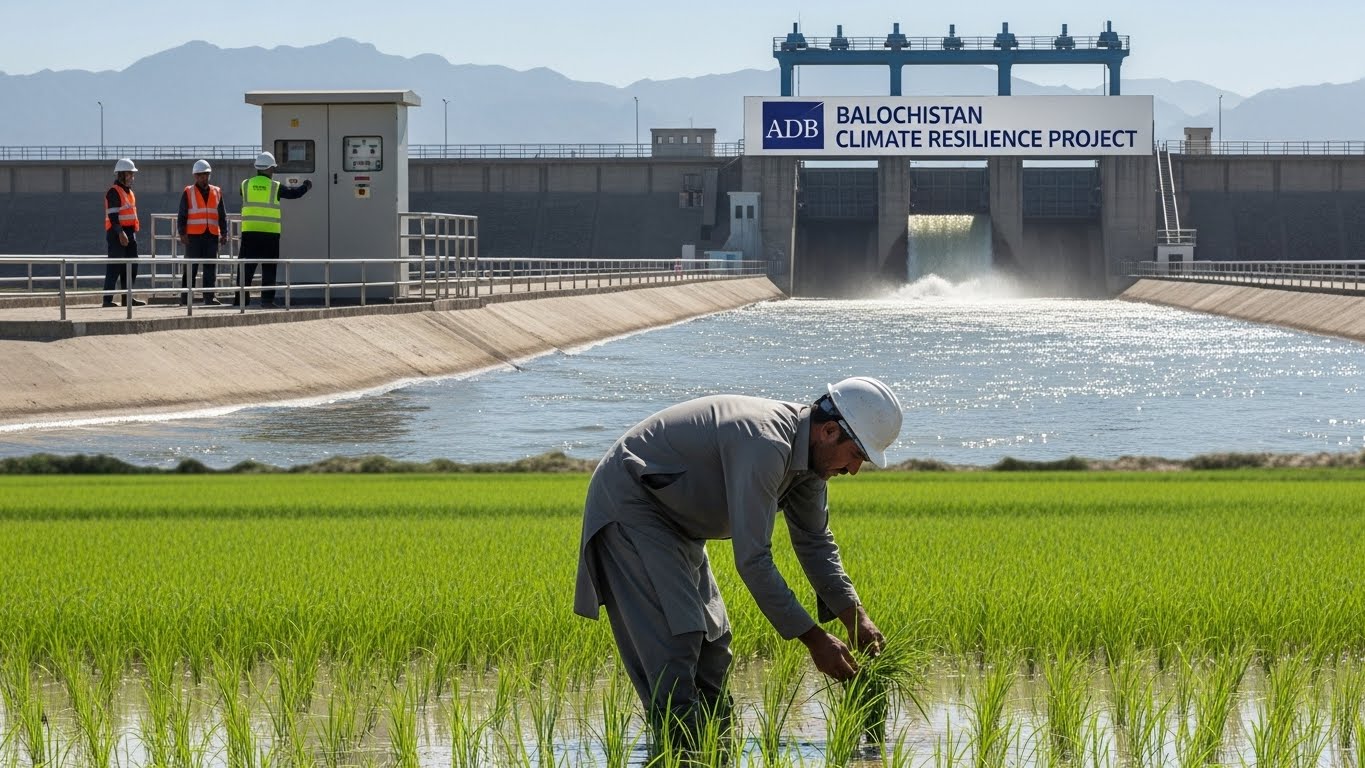
A central component of the project is the introduction of a piped water distribution network in the Siri Toi Dam command area. This system will replace traditional open-channel irrigation, improving water efficiency, reducing losses, and ensuring equitable delivery to agricultural fields and households. Once completed, the Siri Toi Dam is expected to store approximately 36 million cubic meters of water, providing a reliable source for irrigation across 16,592 hectares of command area. The project also integrates water support for rain-fed agriculture, covering around 1,839 hectares of land that depend on seasonal rainfall.
The modern infrastructure will support the timely and efficient delivery of water, enhancing agricultural productivity and contributing to economic growth in the province. In addition to distribution networks, the project includes measures for groundwater recharge, soil conservation, and afforestation to strengthen the long-term sustainability of water resources. These interventions aim to minimize land degradation, improve soil health, and protect local ecosystems while expanding irrigable areas.
Addressing Water Scarcity and Agricultural Challenges
Balochistan, Pakistan’s largest province by area, remains one of the most water-scarce regions. Limited rainfall, sparse river systems, and over-extraction of groundwater have historically constrained agricultural development and rural livelihoods. Despite these challenges, agriculture continues to play a central role in the province’s economy, accounting for nearly two-thirds of economic output and providing employment to approximately 60% of the population.
The scarcity of water has created vulnerabilities in food production and income stability. Many rural households rely on traditional rain-fed agriculture, which is heavily dependent on seasonal variability. The introduction of modern irrigation systems, along with enhanced water storage and distribution, will provide a more reliable water supply, allowing farmers to plan crop cycles with greater certainty and expand cultivable land. This will directly contribute to higher farm income, improved food security, and enhanced socio-economic stability across multiple districts.
Enhancing Rural Livelihoods
The project is designed to benefit approximately 10,000 rural households in six districts, covering the Zhob, Kacchi, Dasht, and Hingol river basins. By increasing water availability and efficiency, it will support higher crop yields and diversified agricultural production. Reliable irrigation also reduces the reliance on seasonal rainfall, mitigating risks associated with droughts and climatic variability.
Beyond agriculture, improvements in water supply are expected to enhance household access to potable water, reducing dependence on unreliable sources. This has the potential to improve overall health, sanitation, and quality of life for rural populations. By integrating traditional rain-fed cultivation into the modern irrigation framework, the project ensures that local agricultural practices are preserved while introducing technological innovations for higher productivity and resilience.
Watershed Management and Environmental Sustainability
In addition to water infrastructure, the project incorporates comprehensive watershed management. Activities include afforestation, construction of check dams, soil and water conservation, and measures to prevent erosion. These interventions aim to enhance catchment stability, protect ecosystems, and reduce the impact of floods and droughts.
Such measures are essential for maintaining environmental balance while promoting agricultural and economic development. By improving water retention in soils and increasing vegetative cover, the project strengthens the resilience of both the natural environment and human settlements in the face of climate variability. Integrating environmental sustainability with development objectives ensures that the benefits of the project are long-term and far-reaching.
Socio-Economic and Strategic Significance
The additional financing and expanded scope of the BWRDSP carry significant socio-economic and strategic benefits. By investing in Balochistan, the project addresses long-standing disparities in regional development and contributes to national objectives of inclusive growth. Reliable water infrastructure enhances agricultural productivity, stabilizes rural incomes, and provides a foundation for poverty reduction.
Improved water availability also supports gender-inclusive development, as women engaged in agriculture and household water management benefit directly from enhanced access and reliability. The project’s focus on efficiency, equity, and sustainability ensures that benefits reach all communities, contributing to social cohesion and long-term economic resilience.
Furthermore, the initiative strengthens Pakistan’s capacity to respond to climate challenges. By integrating modern storage, distribution systems, and watershed interventions, the project provides a model for climate-resilient water management that can be applied to other arid and semi-arid regions of the country.
Challenges and Considerations
The success of the project depends on effective implementation, governance, and maintenance. Proper operation of the piped distribution networks and dams requires continuous oversight and technical expertise. Ensuring equitable access to water, particularly for marginalized and remote households, is critical to achieving social and economic objectives.
Sustainability of water use must be complemented by responsible agricultural practices, including optimized irrigation schedules, crop selection, and water-saving techniques. Similarly, ecological considerations must guide all interventions to prevent adverse impacts on local habitats and biodiversity.
Conclusion
The Asian Development Bank’s additional $48 million financing represents a milestone in Pakistan’s efforts to strengthen water security, agricultural productivity, and rural livelihoods in Balochistan. By modernizing irrigation systems, expanding storage capacity, and implementing watershed management, the project addresses long-standing challenges while promoting sustainable development.
Once completed, the BWRDSP will improve water availability for thousands of households, support resilient agriculture, protect the environment, and contribute to the socio-economic uplift of rural communities. The initiative exemplifies the potential of strategic infrastructure investments to transform water-scarce regions into productive and sustainable landscapes, advancing Pakistan’s national development goals and ensuring a resilient future for its citizens.
Author