

Unlocking Pakistan’s Mineral Potential
Pakistan is a country rich in natural resources, including a wide range of minerals such as gold, copper, coal, lithium, chromite, marble, and salt. These resources are found in several regions,...

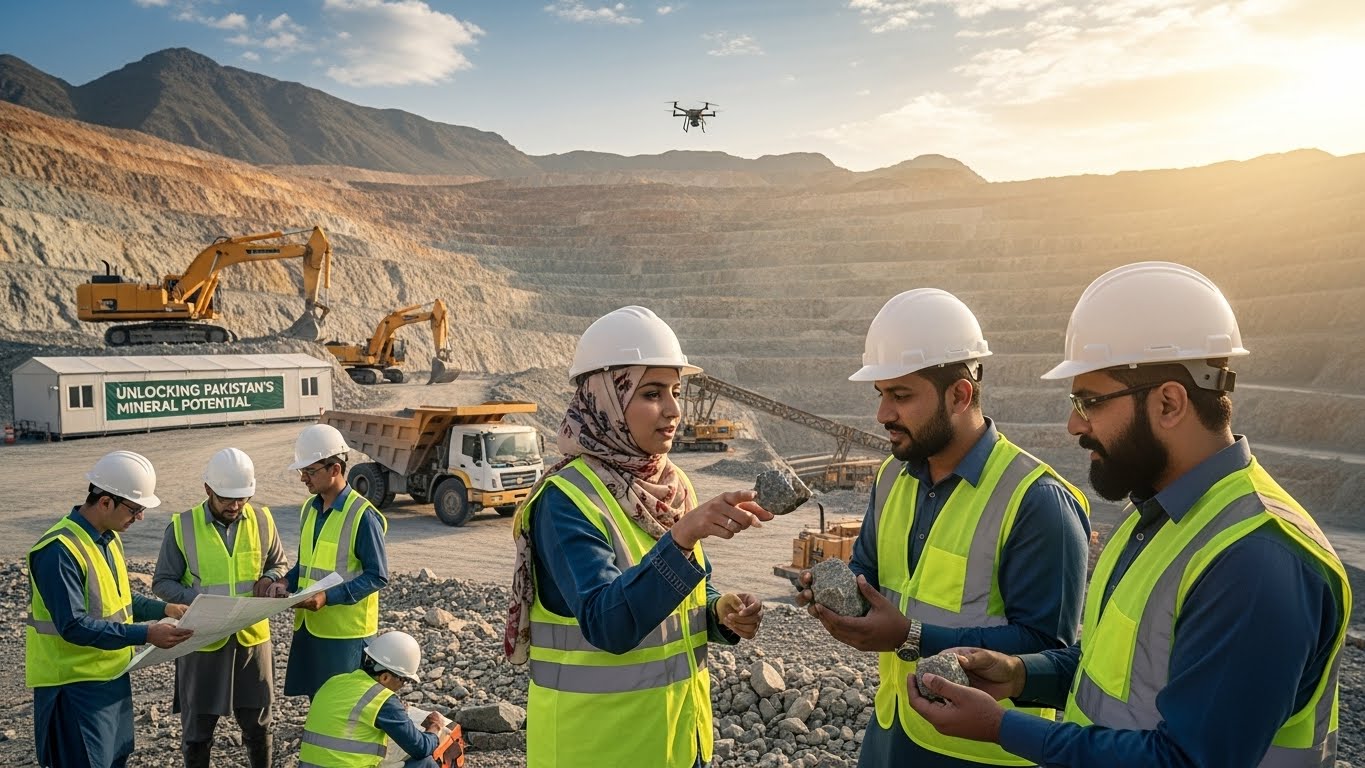
Pakistan is a country rich in natural resources, including a wide range of minerals such as gold, copper, coal, lithium, chromite, marble, and salt. These resources are found in several regions, including Khyber Pakhtunkhwa, Balochistan, and the northern areas of the country. Despite this wealth, Pakistan’s mining and mineral sector has historically contributed only about 1.6% of GDP, reflecting underinvestment, lack of modern infrastructure, and limited technological capacity.
Global demand for critical minerals has been rising sharply in recent years, driven by the growing need for clean energy technologies, electronics, defense equipment, and electric vehicles. This makes the development of Pakistan’s mineral sector both an economic and strategic priority.
The Landmark Joint Venture
In November 2025, Pakistani private company Himalayan Earth Exploration (HEE) and US-listed company Nova Minerals Limited announced a strategic joint venture to develop Pakistan’s critical minerals. Nova Minerals, dual-listed on NASDAQ and ASX, specializes in gold, antimony, and other critical minerals.
The collaboration is designed to combine HEE’s local knowledge and presence with Nova Minerals’ international expertise and investment capacity. The joint venture will focus on exploration, mining, processing, and trading of critical minerals, beginning with an initial US $100 million investment, with plans for further phased investments as projects progress. The companies have highlighted the goal of developing domestic processing capacity, although operational facilities are still in the planning stages.
Strategic Importance of Critical Minerals
Critical minerals, especially rare earth elements, are essential for modern technology. They are used in electronics, renewable energy systems, aerospace, defense equipment, and electric vehicles. Countries like the United States are keen to diversify their supply chains and reduce dependence on dominant producers in other regions.
For Pakistan, the joint venture presents an opportunity to transform natural wealth into economic growth while participating in global supply chains. Collaboration with Nova Minerals also opens the door for technology transfer, modern mining practices, and capacity building, helping to develop a sustainable and technologically advanced mining sector in the country.
Goals and Activities of the Joint Venture
The HEE–Nova Minerals partnership has outlined clear objectives:
- Exploration – Conduct detailed surveys to identify promising mineral deposits across Pakistan.
- Mining and Extraction – Develop mines to safely and efficiently extract minerals.
- Processing and Value Addition – Plan to refine minerals domestically to create higher-value products.
- Trading and Export – Sell processed minerals both locally and internationally.
Local value addition is central to the strategy. By processing minerals inside Pakistan, the venture aims to establish a modern mining ecosystem based on global best practices. HEE has already been involved in other projects, indicating groundwork is already underway.
Context of Foreign Investment in Mining
This venture is part of a broader push by Pakistan to attract foreign investment in the mining sector. In 2025, Pakistan signed agreements with international companies for investment in mining and processing critical minerals. Government officials have repeatedly highlighted their commitment to facilitating foreign investment, promoting technology transfer, and developing human capital in mining and related industries.
Benefits for Pakistan
If successful, the joint venture could bring multiple benefits:
- Economic Growth – By converting mineral wealth into processed products, mining could contribute more to GDP over time.
- Job Creation and Skills Development – Collaboration with an international firm like Nova Minerals could bring modern mining technology and expertise, creating employment opportunities.
- Value-Added Exports – Processing minerals domestically would allow Pakistan to earn more from exports instead of selling raw ore at low prices.
- Global Supply Chain Participation – With rising demand for critical minerals worldwide, Pakistan could become a reliable supplier, strengthening its strategic and economic position globally.
Opportunities and Strategic Advantages
The HEE–Nova Minerals partnership opens the door to long-term growth and development in Pakistan’s mineral sector. Developing mineral deposits into fully operational mines and processing facilities presents an opportunity for Pakistan to build state-of-the-art industrial infrastructure and modern mining capabilities.
Pakistan’s diverse and mineral-rich regions provide a strategic advantage for resource exploration and industrial expansion. By leveraging modern, environmentally responsible mining and processing practices, the country can set global standards for sustainable mineral development.
Conclusion
The HEE–Nova Minerals joint venture is a landmark initiative for Pakistan. It signals a shift in how the country approaches its mineral resources, focusing on value addition, industrial growth, and global supply chain integration rather than exporting raw materials.
With careful planning, investment, and governance, this partnership could transform Pakistan’s mining sector, transfer skills, generate jobs, and boost economic growth. The collaboration represents a promising step toward turning Pakistan’s mineral potential into tangible national benefits.
Author