

A Strike Too Far: The Noor Khan Air Base Attack and South Asia’s Tipping Point
A Strike Too Far: The Noor Khan Air Base Attack and South Asia’s Tipping Point In an audacious breach of international norms and regional stability, the recent Indian strike on Pakistan’s Noor Khan...

A Strike Too Far: The Noor Khan Air Base Attack and South Asia’s Tipping Point
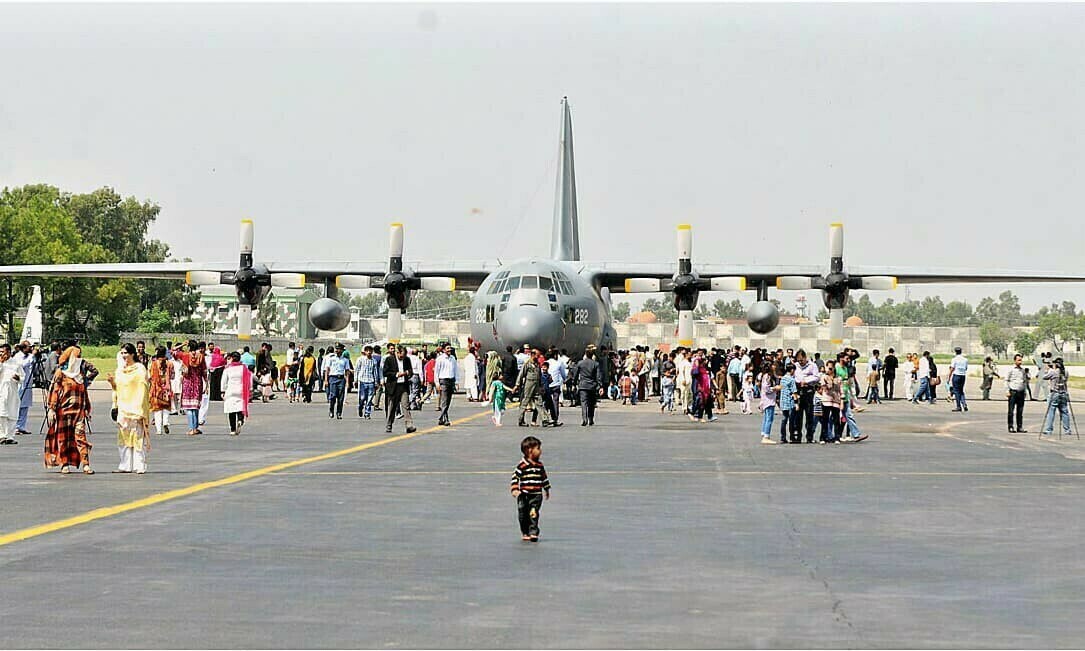
In an audacious breach of international norms and regional stability, the recent Indian strike on Pakistan’s Noor Khan Air Base in Rawalpindi marks a turning point in South Asia’s security calculus. While border skirmishes and violations along the Line of Control (LoC) have long been the unfortunate norm, this direct offensive on a strategic military installation deep within Pakistan’s territory represents an escalation of unprecedented gravity.
For a nation that routinely proclaims its commitment to peace and diplomacy, India’s actions suggest a disturbing shift in posture. The attack on Noor Khan Air Base, an operational nerve center crucial for both defense coordination and air mobility, was not only a tactical strike but also a symbolic gesture. It was a deliberate signal meant to provoke, intimidate, and dominate the strategic narrative. The implications of this act reverberate across multiple fronts: military, diplomatic, and psychological. Militarily, the attack exposes a dangerous precedent. Sensitive installations now appear to be legitimate targets in the region’s already volatile landscape. India’s justifications, cloaked in the language of “preemptive defense,” undermine decades of carefully constructed confidence-building measures between the two nuclear-armed neighbors.
Diplomatically, the move has cast a long shadow over existing bilateral and multilateral engagement channels. Any prospects of resuming dialogue, already fragile in the aftermath of the 2019 Pulwama-Balakot crisis, have now all but collapsed. The international community, particularly key stakeholders such as China, the United States, and the Gulf states, must understand that silence or equivocation in the face of such a blatant provocation will only embolden further aggression.
More insidiously, the strike also represents an attempt to erode Pakistani morale. By targeting a base so close to the capital, India appears to be testing Pakistan’s defensive perimeter and seeking to demonstrate its reach. This is not just warfare on the ground but warfare of perception, an attempt to foster psychological pressure within both military and civilian circles.
History shows that Pakistan does not buckle under pressure. Its armed forces and its people have repeatedly turned the tide during critical moments. If India’s aim was to force Islamabad into a corner, it may have gravely miscalculated. Pakistan’s response, as expected, has been measured but resolute. It has urged global powers to take note while remaining fully prepared to defend its sovereignty.
📄 POLICY WIRE WHITEPAPER PUBLISHED: PAKISTAN'S NATIONAL SECURITY POLICY PRIORITIES
👉 READ BY CLICKING HEREThis incident also raises profound questions about the rules of engagement in the modern era. With hybrid warfare, disinformation, and grey-zone strategies becoming the norm, traditional deterrence models are increasingly being challenged. An attack like this cannot be seen in isolation. It is part of a broader playbook involving propaganda, economic pressure, and cyber tactics, all aimed at destabilizing Pakistan incrementally.
In such a climate, Pakistan must not only bolster its conventional defenses but also double down on diplomatic outreach. Islamabad’s response must be twofold: unwavering in its military preparedness and proactive in rallying international opinion. The path to peace in South Asia cannot be built on unilateral muscle-flexing. It must rest on mutual respect, restraint, and a recognition of each other’s lines.
The strike on Noor Khan Air Base is not just an isolated event. It is a wake-up call. If not condemned and curtailed, such actions could usher in a new and perilous chapter in South Asian history. The world must choose whether it will allow reckless adventurism to go unchecked or stand firm in defense of peace, legality, and regional stability.
Author