
A New Era of Prosperity for South and Central Asia
A remarkable act of brotherhood and strategic foresight has been demonstrated by Pakistan and Iran, which have established an overland transport route and dispatched their first export shipment from...
A remarkable act of brotherhood and strategic foresight has been demonstrated by Pakistan and Iran, which have established an overland transport route and dispatched their first export shipment from Karachi to Tashkent, Uzbekistan. This development not only strengthens bilateral ties but also reinforces Pakistan’s position as a crucial gateway to Central Asia, while offering significant economic benefits to Iran.
The Inaugural Shipment: A Milestone of Cooperation
On April 13, 2026, under the Pakistan-Iran Transit Corridor, refrigerated TIR (Transports Internationaux Routiers) trucks carrying frozen beef departed from Karachi. The consignment, facilitated by Pakistan Customs and the Directorate General of Transit Trade, crossed into Iran at the Gabd-Rimdan border (with some segments utilizing the Taftan-Mirjaveh crossing) before proceeding northward through Iran to Uzbekistan. Director Sanaullah Abro confirmed the shipment’s successful dispatch, describing it as the formal operationalization of a reliable new route.
Operating under the sealed TIR system, this “no-touch” transit ensures temperature control for perishable goods, faster clearance, and reduced logistics costs, a major advantage for Pakistan’s growing meat export sector and temperature-sensitive cargo.
Pakistan and Iran’s Shared Gateway to Central Asia
Pakistan’s 990-kilometer Arabian Sea coastline, coupled with its world-class ports of Karachi, Port Qasim, and the flagship Gwadar (under the China-Pakistan Economic Corridor), gives it a natural edge as a trade bridge. The new corridor brilliantly leverages this geography alongside Iran’s strategic location.
Trucks originate from Karachi or Gwadar in Balochistan, travel west along upgraded highways to the Gabd border post (just 70 km from Gwadar), and enter Iran’s Sistan-Baluchestan province via Gabd-Rimdan. From there, efficient Iranian road networks carry the cargo northward toward Uzbekistan, with potential extensions to Turkmenistan, Tajikistan, and Kazakhstan. Key crossings, Taftan, Rimdan (Gabd), Sost, and Gwadar, have been fully activated by the International Road Transport Union (IRU) for seamless international transit.
Visualizing the Historic Route
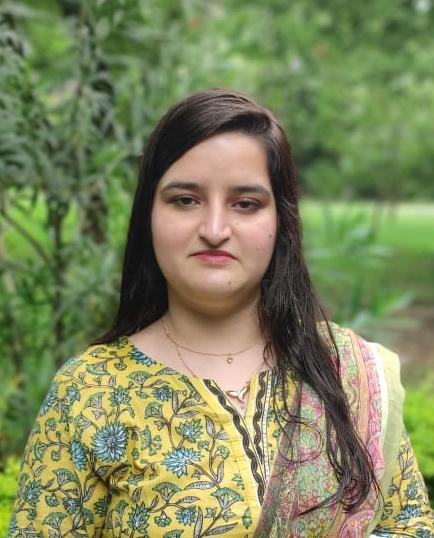
(This map from Stratheia Policy Journal clearly shows the trade routes connecting Gwadar and Karachi ports in Pakistan through the Taftan-Mirjaveh and Gabd-Rimdan crossings into Iran, onward to Tashkent and other Central Asian hubs. It highlights the practical overland pathways now activated for Pakistani exports.)
The route starts at Pakistan’s Arabian Sea ports (Karachi or the CPEC flagship Gwadar), moves westward along modern highways to the Gabd-Rimdan border (only 70 km from Gwadar), enters Iran’s Sistan-Baluchestan province, and follows efficient Iranian road networks northward to Uzbekistan, with easy extensions to Turkmenistan, Tajikistan, and Kazakhstan. Key IRU-enabled crossings (Taftan, Rimdan/Gabd, Sost, and Gwadar) ensure seamless international transit.
This real geography gives Pakistan and Iran a natural advantage: Pakistan’s 990 km coastline and deep-sea ports provide the southern gateway, while Iran offers the shortest, most stable land bridge to Central Asia.
Overcoming Afghan Route Disruptions: A Smart, Stable Alternative
Traditional routes through Afghanistan have faced repeated security-related closures and instability at crossings like Torkham and Chaman. By activating the Iran corridor, Pakistan has shown visionary leadership in diversifying its trade arteries while Iran has emerged as a reliable transit partner. The corridor offers stability, modern infrastructure, and elimination of previous security deposit requirements.
Economic Gains for Pakistan and Iran
For Pakistan, the corridor is a game-changer. It opens direct access for Iranian and Central Asian states to the ports of Karachi and Gwadar, boosting transshipment capacity. Pakistan Customs and the Commerce Ministry are upgrading off-dock terminals and storage facilities to handle higher volumes. This will increase port activity, create thousands of jobs in logistics, cold-chain management, and customs, and drive export growth in frozen beef, fruits, textiles, pharmaceuticals, and more.
For Iran, the route generates valuable transit revenue, strengthens economic integration with Pakistan, and enhances its role as a key connector between South Asia and Central Asia. Bilateral trade between Pakistan and Iran has already reached approximately $3 billion in 2025, with ambitious targets to hit $10 billion in the coming years. The corridor cements this growing partnership.
Statistics Highlighting the Potential
📄 POLICY WIRE WHITEPAPER PUBLISHED: PAKISTAN'S NATIONAL SECURITY POLICY PRIORITIES
👉 READ BY CLICKING HEREPakistan’s trade with Central Asia (including Afghanistan and Azerbaijan) surged to $2.41 billion in FY2025, up from $1.92 billion in 2024, with exports reaching $1.77 billion. The new corridor is expected to unlock billions more in untapped potential by reducing transit times, lowering costs, and providing reliable access to these fast-growing markets. Gwadar and Karachi ports are already seeing rising transshipment activity, with recent months recording significant increases in container handling.
Gwadar as a Gateway to Warm Waters for China as well as Central Asia.
One thing that stands out about this corridor is how it ties into Gwadar Port for getting to warm waters. Gwadar sits right on the Arabian Sea, pretty close to those big shipping paths everyone uses. Its a deep sea port too, which means it stays open all year for places that dont have their own coastlines. That makes it really useful, I think, especially for China and those Central Asian countries trying to reach out to the world markets without too much hassle.
Through linking up with Irans land paths, the whole setup lets inland spots connect straight to the ocean routes. It cuts down on travel time and money spent, which seems like a big deal. For China, this is part of their economic corridor with Pakistan, and Gwadar gives them a quicker way for trade and getting energy supplies. They dont have to rely as much on that longer trip through the Strait of Malacca, which can be risky sometimes.
Central Asian places have always been stuck because of the mountains and stuff blocking them. Now they are turning to corridors like this to get reliable access to warm seas without crazy costs. Pakistan and Iran end up looking like main doors to the region because of it. Broader ties across Asia get stronger, though Im not totally sure how even that plays out yet in the long run.
Regional Leadership and Shared Prosperity
This corridor fits right into Pakistans push for export led growth, along with those reforms backed by the IMF. It helps cut down on relying too much on just one way to trade, and it builds stronger connections between people and economies with Iran. Both countries are showing they care about keeping things peaceful and stable in this tricky part of the world, plus pushing for better links overall. I think that makes sense given how sensitive the area is.
Officials from the Director General of Transit Trade mentioned something about how the Iran corridor opens up paths for Iran and Central Asian countries to reach ports like Karachi and Gwadar in Pakistan. Those steps could boost what happens at the ports, make international trade smoother, and improve the setup for shipping stuff through there.
For Central Asia, it seems pretty straightforward. They get quicker and less expensive ways to Pakistani goods that are high quality, and access to the Arabian Sea waters which are warmer and better for shipping. That part stands out, but im not totally sure if it changes everything right away.
A Bright Future of Pak-Iran Partnership
The corridor is finally up and running now. That means things like better rail connections, more cargo moving through, and even more countries getting involved could happen soon. I think its pretty exciting.
It’s not only about trade for Pakistan and Iran. They have this strong connection, you know, and they both want the region to do better economically. Maybe they are trying to change how Asia connects everything, or at least thats what it looks like from what Ive read.
Trucks going from Karachi all the way to Tashkent, carrying frozen beef and stuff. But its more than that, I suppose, carrying ideas about changing the economy, making alliances stronger. Pakistan and Iran are just neighbors, but they are working together on a future that feels more linked up for people down the line. The friendship part stands out, though its hard to say how long that will last with everything going on.
Author