

A Dangerous Escalation: Israel’s Strike on Iran Imperils the Region
The latest escalation between Israel and Iran marks one of the most dangerous turning points in recent Middle Eastern history, and the responsibility for this spiral lies squarely with Israel’s...

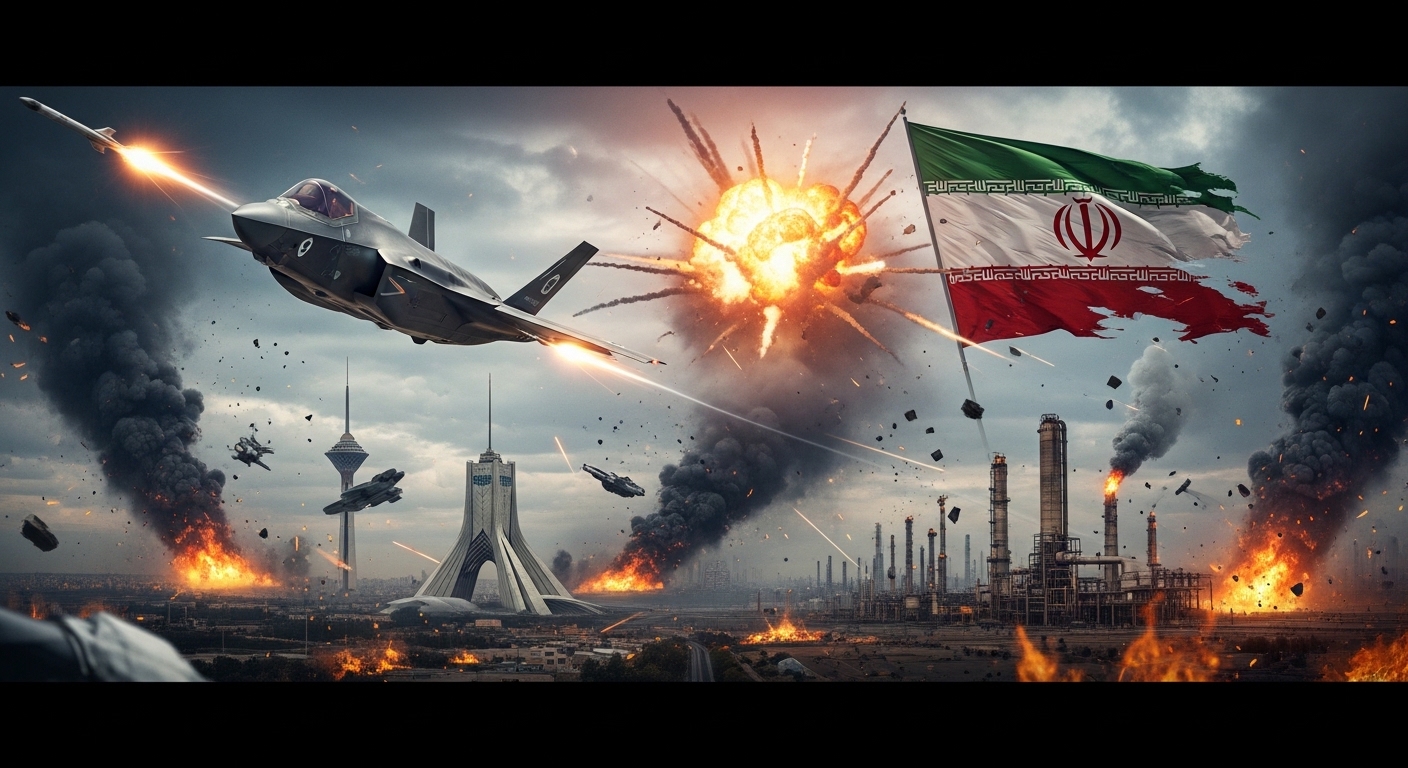
The latest escalation between Israel and Iran marks one of the most dangerous turning points in recent Middle Eastern history, and the responsibility for this spiral lies squarely with Israel’s reckless decision to strike deep inside Iranian territory on 28 February 2026. These were not limited border skirmishes or defensive maneuvers; they were extensive, deliberate attacks inside a sovereign state. Reports of high-level casualties, including Iran’s Supreme Leader, have only intensified the gravity of the situation. Unsurprisingly, Iran responded with waves of missile and drone strikes directed toward Israeli territory. What Israel initiated as an act of “security” has now pushed the entire region toward the brink of sustained open conflict.
This is not strength. It is destabilization masquerading as strategy.
Preemption as a Pretext
Israel has once again justified its aggression under the banner of “national security,” a phrase that has increasingly become a convenient pretext for their attacks. Preemptive strikes of this magnitude inside another sovereign nation are not acts of defense, they are acts of calculated aggression. Such actions erode international norms, and weaken the credibility of global institutions.
By launching large scale attacks without multilateral consensus, Israel has demonstrated a troubling disregard for the rules-based order of the world. If every state were to adopt this doctrine of self-appointed enforcement, the international system would descend into chaos. The Iranian retaliation was not an unforeseen consequence; it was the inevitable result of a provocation that left no room for restraint. Escalation in the Middle East does not remain contained, it multiplies.
Civilians Pay the Price
While leaders exchange threats and missiles, civilians endure fear, displacement, and destruction. Infrastructure damage across Iranian cities, and widespread regional anxiety reveal the true cost of this confrontation. It is ordinary families who shelter from explosions, who lose access to essential services, who absorb the psychological trauma of war.
The economic shockwaves are already evident. Energy markets have reacted sharply, global shipping routes face renewed uncertainty, and regional trade corridors risk disruption. For neighboring states attempting to pursue development and stability, Israel’s decision has injected fresh volatility into an already fragile environment. The Middle East does not need another open war. It needs accountability and restraint.
A Diplomatic but Supportive Approach to Iran
Condemning Israel’s aggression does not require endorsement of every Iranian policy. It requires consistency in upholding the principle that disputes between states must be resolved through dialogue rather than bombardment.
A responsible international stance toward Iran at this moment should remain officially diplomatic but supportive, firmly opposing further military strikes on Iranian soil while encouraging dialogue and de-escalation. It should prioritize expanding cooperation in trade, border management, and regional economic initiatives that strengthen stability rather than undermine it. It should advocate renewed nuclear discussions under international oversight, not unilateral force.
Peace will not emerge from the destruction of infrastructure or the elimination of individuals. It will emerge from negotiated agreements, confidence-building measures, and mutual recognition of security concerns.
The Dangerous Precedent
If Israel’s cross-border strikes are normalized, the implications will extend far beyond this immediate conflict. Sovereignty will become conditional, dependent on power rather than principle. This trajectory benefits no one in the long term, not Iran, not Israel, and certainly not the broader international community.
Choosing Responsibility Over Hubris
The alternative is clear, though politically inconvenient, immediate de-escalation, cessation of further Israeli strikes, and a structured return to diplomacy grounded in international law. History will not remember who demonstrated the most firepower. It will remember who chose aggression when negotiation was still possible, and who bore responsibility for pushing a volatile region closer to catastrophe.
Author