

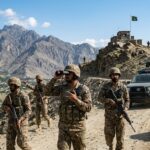
The start of Operation Shaban in Pakistan represents one of the most important anti-terrorism operations conducted by the country in recent times. Initiated as a consequence of the July 7 terrorism incident in which 27 policemen were killed in the region of Balochistan, the operation does not represent any other normal security measure, but rather an effort to destroy the militant network that has been posing a threat to the peace of Pakistan for over two decades.
The security challenge facing Pakistan is substantial. According to the GTI 2025 report issued by the Institute for Economics & Peace, Pakistan experienced one of the highest spikes in the level of terrorism in the world in 2024. The number of people killed in terror attacks increased by 45 percent to reach 1,081 victims, with the number of incidents exceeding 1,000, thereby making Pakistan one of the most terror-hit countries in the world. The TTP group was listed as the most lethal militants operating in Pakistan.
Balochistan has become a central theatre of this violence. Even though the province makes up almost 44 percent of the territory of Pakistan, it is scarcely populated and topographically difficult to navigate, which makes it appealing to militant groups looking for operational space. In turn, the province is faced not only with terrorists motivated by religion but also with separatists who have been showing tactical coordination lately.
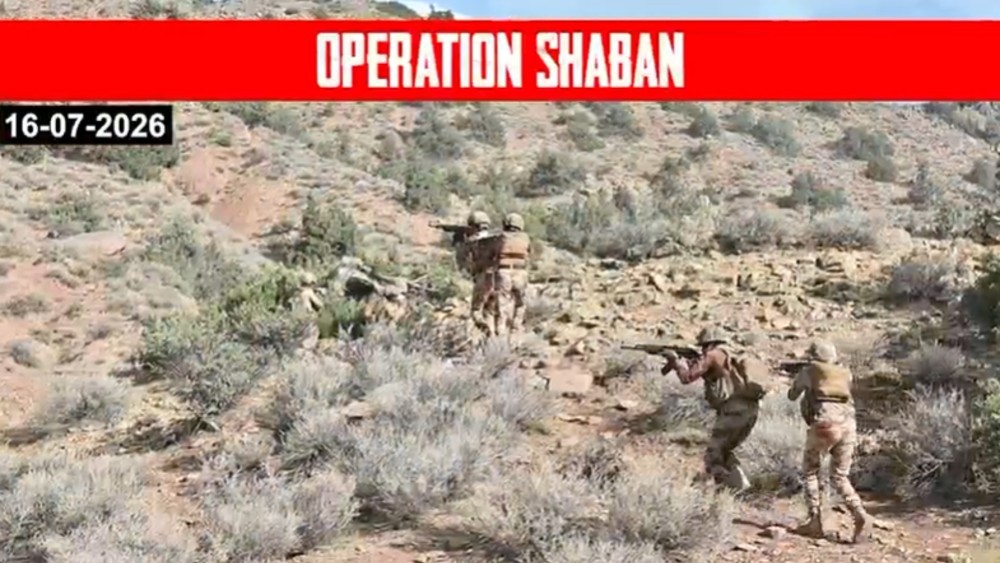
Operation Shaban reflects an important evolution in Pakistan’s counterterrorism doctrine. Previous operations often concentrated on individual organizations or specific geographic sectors. The current campaign seeks to disrupt multiple terrorist ecosystems simultaneously by combining intelligence-driven operations, military action and law enforcement coordination. According to official reporting, the operation involves the Pakistan Army and Frontier Corps, with operations extending across northern districts such as Ziarat against TTP networks and southern districts including Lasbela and Khuzdar against BLA elements.
The timing is strategically significant. NACTA has continuously issued warnings stating that terrorism groups have tried to take advantage of the Afghanistan-Pakistan border issues after the political shift in Afghanistan in 2021. Similarly, the Analytical Support and Sanctions Monitoring Team of the UN Security Council in its series of reports has found that the TTP has increased its capability and has been ideologically and operationally connected with Al-Qaeda, while enjoying sanctuaries across the border.
The economic consequences of terrorism are equally severe. There has been recognition by both the Asian Development Bank and the World Bank of security as an important prerequisite for investment and connectivity in the region. Projects vital to the success of the China-Pakistan Economic Corridor (CPEC) like Gwadar Port, roads, mining and energy investments are located in Balochistan. The continued terrorist activity reduces investors’ confidence, delays development initiatives, and places additional burdens on the government due to increased security spending.
📄 POLICY WIRE WHITEPAPER PUBLISHED: PAKISTAN'S NATIONAL SECURITY POLICY PRIORITIES
👉 READ BY CLICKING HEREThere have been significant costs incurred by Pakistan’s security apparatus while fighting terrorists. Since 2001, hundreds of military and police officers and thousands of civilians in Pakistan have lost their lives due to terrorist activities. Operations like Zarb-e-Azb in 2014 and Radd-ul-Fasaad in 2017 have done much to eliminate terrorist infrastructure; however, the return of militant activity shows that counterterrorist efforts need institutional commitments rather than just military operations.
It is also important to realize that Operation Shaban must be seen in a larger national context. Success in counter-terrorism requires the use of kinetic activities along with intelligence sharing, border control, disruption of finances of terrorists, engagement with communities, and economic development.
Initial reports indicate that more than 120 militants have already been neutralized during the operation. Operation Shaban is therefore more than a military campaign. It is a test of the capability of Pakistan to safeguard its citizens, protect its critical national infrastructure and maintain stability in what is arguably the most unstable part of the South Asian security environment. If properly maintained with appropriate governance and development measures, the campaign holds great promise for improving not only the security of Balochistan, but also Pakistan’s wider economic stability and strategic advantage.
Author