


Managua’s Gambit: Old Murder, New Rift, and the Shifting Sands of Diplomacy
POLICY WIRE — Managua, Nicaragua — For some, history’s a dusty old ledger, tucked away and mostly forgotten. For Daniel Ortega’s Nicaragua, however, it’s a living weapon, ready to be deployed. A...

POLICY WIRE — Managua, Nicaragua — For some, history’s a dusty old ledger, tucked away and mostly forgotten. For Daniel Ortega’s Nicaragua, however, it’s a living weapon, ready to be deployed. A forty-five-year-old murder case—the 1978 assassination of former Nicaraguan ambassador to Italy, Augusto César Sandino—just detonated a fresh diplomatic bomb, ripping apart ties between Managua and Rome. An old beef, some might say, but in the brittle world of international relations, no slight ever truly disappears; it just hibernates.
It’s a peculiar kind of diplomatic theater, isn’t it? Decades peel back, wounds presumed healed suddenly gape anew. Nicaragua’s Foreign Ministry declared Italy remiss, alleging its failure to prosecute those behind the ambassador’s slaying. Ambassador Sandino, a nephew of national hero Augusto C. Sandino (whose legacy Ortega often invokes for his own nationalist project), was shot in Rome. Nicaragua’s latest decree, published in their official gazette La Gaceta, is unequivocal: relations are off. Done. Finished.
Because, from Managua’s vantage point, Italy’s commitment to justice was a bit thin. You’ve got to wonder about the timing, though. This isn’t exactly front-page news from the Cold War. But Ortega’s administration isn’t really one for conventional diplomatic schedules, is it? They’ve made an art out of recalcitrant defiance. Their message, usually aimed squarely at perceived Western imperialism, rarely deviates.
“Our sovereignty isn’t for sale, nor is our historical memory negotiable,” asserted Nicaragua’s Foreign Minister Denis Moncada. His statement, predictably stern, added, “This isn’t just about a past wrong; it’s a stand against continuous foreign meddling disguised as ‘justice.’ We simply won’t tolerate it.” It’s the usual drumbeat of principled resistance—a narrative that plays well to a specific audience, and to Ortega’s domestic base, but makes the global diplomatic corps roll its eyes, privately, of course.
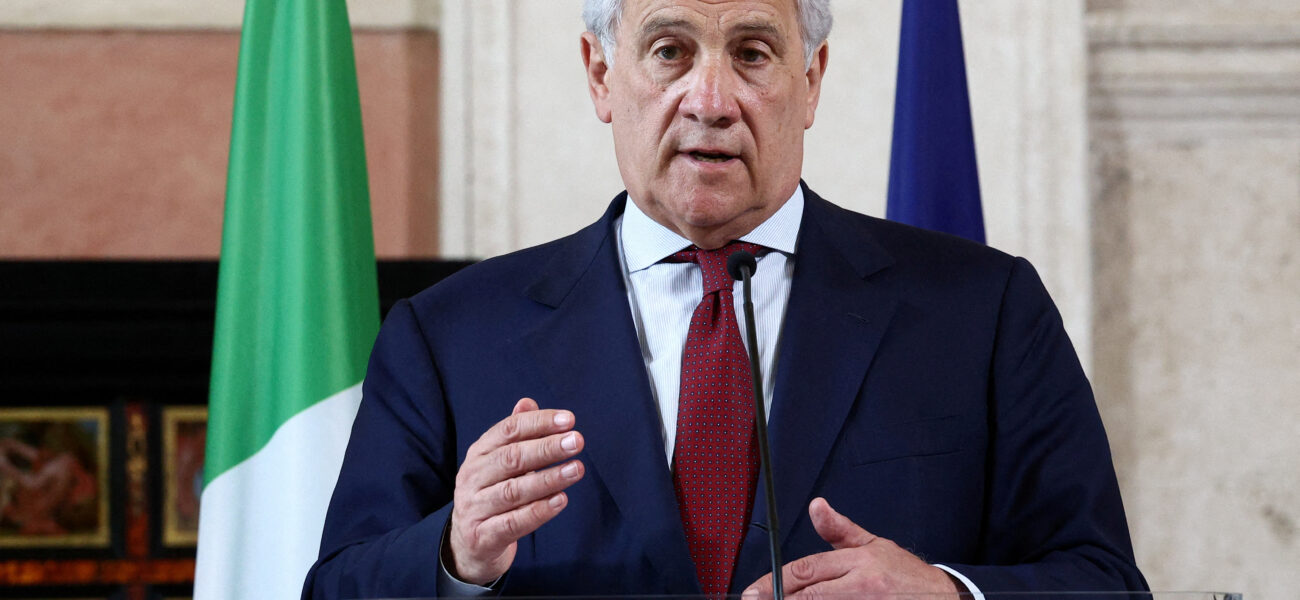
On the Italian side, there’s less anger — and more a kind of resigned bewilderment. Foreign Minister Antonio Tajani expressed something akin to a shrug. “It’s a perplexing move. Italy has always sought constructive dialogue. This incident, decades old, feels more like an excuse for an administration already comfortable with isolation than a legitimate grievance that warrants such drastic action,” Tajani remarked, speaking to reporters in Rome. And he’s got a point. Nicaragua hasn’t exactly been a star pupil in the global classroom.
Nicaragua’s government, under President Daniel Ortega and Vice President Rosario Murillo, has systematically alienated many traditional allies. They’ve cracked down hard on dissent, jailed political opponents, — and turned independent media into a punchline. But severing ties over an historical cold case, rather than, say, fresh human rights accusations? That’s a bold stroke, even for them. It’s almost theater of the absurd. Italy, as a major EU player, might have seen its relationship with Nicaragua as small potatoes anyway, so Rome probably isn’t losing much sleep over it. This isn’t exactly high-stakes football diplomacy where everyone’s watching.
📄 POLICY WIRE WHITEPAPER PUBLISHED: PAKISTAN'S NATIONAL SECURITY POLICY PRIORITIES
👉 READ BY CLICKING HEREAnd this peculiar action offers a lens through which to view a broader, troubling trend globally. Nations feeling cornered, or those with authoritarian leanings, often reach for these kinds of performative ruptures. They prioritize perceived slights—or invented ones—over stability. Consider Pakistan’s own often-complex diplomatic history, frequently navigating allegations of selective justice or historical grievances from international bodies. Or the wider Muslim world, where notions of international accountability and historical wrongs (say, Palestine, or Kashmir) are consistently framed against what’s often viewed as a hypocritical West. When one nation unilaterally ditches an old partner over a decades-old crime, others watch. They’re sizing up what’s tolerated, what’s ignored, and what counts as a legitimate casus belli in an increasingly fractious international system.
Such acts underscore a deepening fragmentation. Italy was hardly a top trading partner, but every cut isolates Managua a little more. The World Bank notes that Nicaragua’s GDP per capita (constant 2015 US$) stagnated from $2,185 in 2017 to $2,094 in 2021, mirroring a broader economic decline amid political instability and international sanctions. Further diplomatic estrangement won’t help right that ship, will it? In fact, it’s just another nail in a rather lonely coffin.
What This Means
The immediate practical impact of this diplomatic breakdown for most of the world is probably a collective yawn. Nicaragua wasn’t a major economic or strategic partner for Italy, nor vice-versa. But dig a little deeper, — and you’ve got to ask what Ortega’s actually playing at. He’s got his administration feeling the heat from Western sanctions and widespread condemnation over human rights abuses. This move, divorcing Rome over ancient history, functions as a distraction. It’s a shiny object for domestic consumption, reinforcing the narrative that Nicaragua is a principled fighter against an unjust global order. Economically, it barely registers for Italy. For Nicaragua? It just makes an already difficult investment climate even frostier. It screams instability, a place where a government might just tear up agreements because of a long-past murder and then claim moral superiority. The repercussions trickle down: less aid, fewer tourists, fewer potential trade partners. Managua is cementing its status as an international outlier, making it harder for its citizens to connect with the global economy. This isn’t just about an old crime; it’s about a deepening ideological chasm, where past perceived wrongs become convenient excuses for current political posturing.
But it also feeds a worrying trend: governments — particularly those with an authoritarian bent — finding new ways to disengage from global norms. The selective recall of historical grievances, particularly those so distant, speaks to a brazen disregard for present-day diplomatic protocol. It signals that even minor states, when isolated enough, can weaponize history in unsettling ways. It shows, too, that some players aren’t interested in a reasoned dialogue but rather in making a point, however obtuse, on the world stage. They just don’t care.