


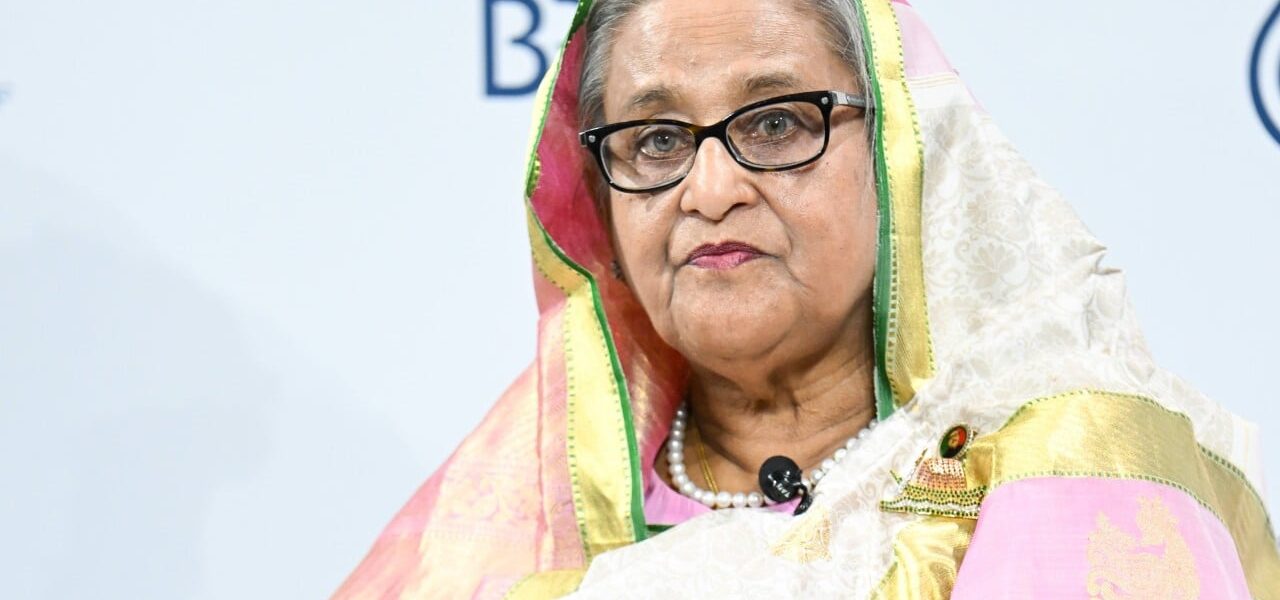
Hasina’s Shadow Play: Exile’s End Ignites Bangladesh’s Cauldron
POLICY WIRE — Dhaka, Bangladesh — The political graveyards of South Asia aren’t exactly known for their permanence. Ghosts, particularly those of ousted leaders, tend to find a way back,...

POLICY WIRE — Dhaka, Bangladesh — The political graveyards of South Asia aren’t exactly known for their permanence. Ghosts, particularly those of ousted leaders, tend to find a way back, usually trailing thunderous rhetoric and promises of redemption. So it goes, seemingly, for Bangladesh, where the formidable figure of Sheikh Hasina Wazed — a former prime minister, presently a condemned convict, and perennially a political force — has decided that India’s quietude has run its course.
Her blunt declaration to return to Dhaka, death sentence be damned, isn’t just a political maneuver. It’s a calculated throw of the dice onto a table already overflowing with simmering rivalries, generational grievances, and the constant hum of a deeply polarized nation. The immediate read? A sure-fire resurrection of the blood feud between her Awami League and the now-ruling Bangladesh Nationalist Party (BNP)—a conflict that has defined modern Bangladeshi politics, often quite literally on the streets. And, it might just be the one thing that manages to slow the creeping influence of Islamist groups that have capitalized on the democratic vacuum.
“Her return is a cynical ploy, a desperate gambit by someone who clearly places personal power above national stability,” stated Mirza Fakhrul Islam Alamgir, a senior leader of the opposition Bangladesh Nationalist Party (BNP), speaking from Dhaka. “It shows a complete disregard for the rule of law — and the people’s desire for genuine democratic progress. She won’t find the welcome she imagines.” But the irony, of course, is that the ‘rule of law’ in Bangladesh has always been a rather pliable concept, often shaped by who’s in charge.
Hasina, after all, has been in political exile since a student-led protest movement, bolstered by broader public disaffection, booted her government years ago. She’d sought refuge across the border in India, a pragmatic choice given the historically strained but often strategic ties between Dhaka and Delhi. Her current status? Under sentence of death for murder, a verdict her supporters consistently dismiss as politically motivated judicial farce. They don’t mince words, painting her as a martyr-in-waiting, not a criminal.
“The people remember what she did for them, — and they remember who put her in exile,” countered Dr. Gowher Rizvi, a close advisor to Sheikh Hasina, in a statement to Policy Wire. “This isn’t about personal power; it’s about reclaiming a mandate, correcting an injustice. Her return will spark hope where there’s been nothing but despair and oppression, an oppression the current regime has consistently failed to alleviate.” It’s that kind of messaging—a blend of populist grievance and an appeal to history—that’s always propelled the Awami League.
The numbers don’t lie about Bangladesh’s volatile state. A 2022 survey by the Asian Foundation noted that public trust in democratic institutions dipped to a staggering 37%, down from 51% just five years prior, indicating a widespread disillusionment that any political vacuum would naturally fill. That’s a grim figure, folks. And it suggests the public mood is ripe for anything that looks like a strong alternative, even if it comes wrapped in old baggage.
Bangladesh isn’t an island; its domestic tremors echo across the broader South Asian landscape. Consider Pakistan, another Muslim-majority nation grappling with its own brand of civilian-military seesaw—the parallels are often striking, and rarely comforting. Political stability in Bangladesh directly impacts regional trade routes, security concerns along India’s northeastern frontier, and the ongoing saga of Rohingya refugees. It’s a busy corner of the world, and Dhaka’s internal struggles tend to have outsized effects, both regionally and for countries eyeing investments in its ready-made garment industry. Investors get nervous when political storms brew.
📄 POLICY WIRE WHITEPAPER PUBLISHED: PAKISTAN'S NATIONAL SECURITY POLICY PRIORITIES
👉 READ BY CLICKING HEREWhat This Means
Hasina’s threatened return, if it actually materializes as more than just defiant rhetoric, represents an extraordinary gamble. Politically, it re-energizes a deeply fractured Awami League, offering a rallying point against the current BNP government. It doesn’t promise immediate democratic healing; rather, it guarantees a sharp uptick in political street skirmishes and institutional wrangling. The judicial system, already seen by many as politicized, would face an unprecedented test, potentially buckling under the strain of such a high-profile challenge. Because, let’s be frank, turning back a former leader with deep public backing, even if officially condemned, isn’t simply a matter of rubber-stamping a warrant.
Economically, prolonged uncertainty is, predictably, a disaster. Foreign direct investment, always skittish in politically unstable regions, could take a nosedive. Development projects, some already hampered by bureaucracy — and corruption, might stall indefinitely. Socially, the renewed rivalry between the Awami League and BNP, two parties that historically pull their support from starkly different ideological camps, risks igniting unrest among their cadres—the very unrest that prompted the student protests that ousted Hasina years ago. And it makes you wonder if Bangladesh, still finding its footing as a vibrant Muslim democracy, can ever truly escape the gravitational pull of its turbulent past.
This drama isn’t just about one woman’s defiance; it’s about the deep-seated questions of power, justice, and nationhood that continue to roil Bangladesh. It’s a classic political power struggle, made all the more volatile by the specter of a death sentence and the passionate, often violent, loyalties it inspires. The region holds its breath, watching this political whirlwind unfold, knowing that quiet desperation often precedes significant upheaval.