


Wartime Whirlwind: Zelensky’s Cabinet Shake-up Jolts Kyiv Amid Fresh Protests
POLICY WIRE — Kyiv, Ukraine — A commander on the battlefield knows you don’t swap out a key general mid-campaign without a damn good reason. It rattles morale, sparks questions, invites...

POLICY WIRE — Kyiv, Ukraine — A commander on the battlefield knows you don’t swap out a key general mid-campaign without a damn good reason. It rattles morale, sparks questions, invites speculation. In Ukraine, where the battlefield stretches from Kherson to the digital public square, President Volodymyr Zelensky has done precisely that, and the political fallout? Well, it’s a mess. People are talking. They’re upset.
It wasn’t a slow drift to a quiet retirement for the defense minister. Oh no. It was a rather abrupt, highly publicized changing of the guard. And you know what happens when power shuffles in wartime: everyone starts looking for a weakness, or an ulterior motive. The move, aimed at rooting out alleged corruption and inefficiency, has instead provided grist for the mill of internal discontent. Because, apparently, even a nation fighting for its very existence has the bandwidth for a good old-fashioned political dust-up.
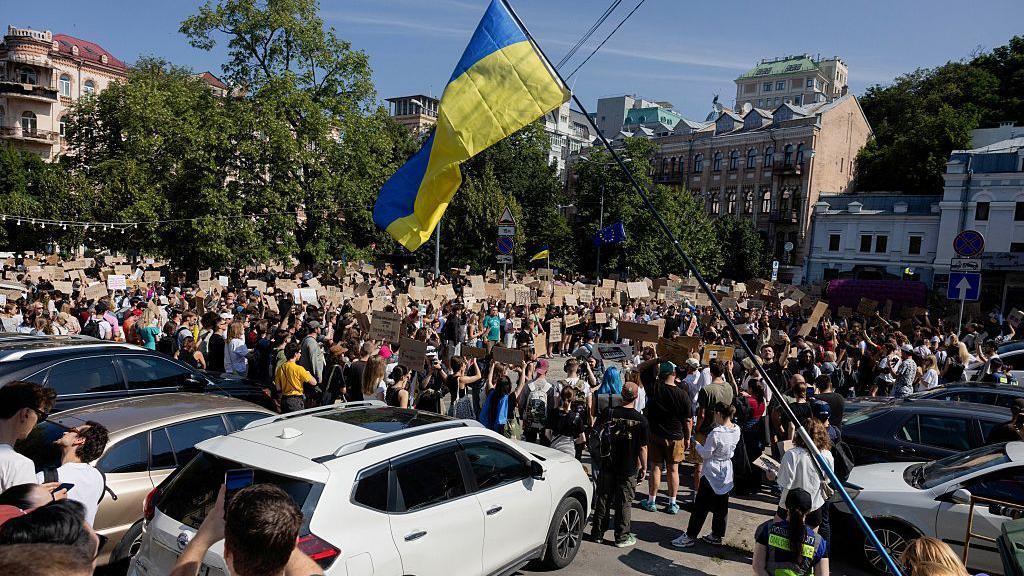
Days following the dismissal, murmurs of dissent blossomed into vocal opposition on the streets of several Ukrainian cities. They weren’t massive, torch-waving rallies — don’t misunderstand — but enough to make the evening news and definitely enough to furrow brows in allied capitals. These weren’t pro-Russian provocateurs; they were citizens, war-weary and watching every government move through the harsh lens of impending winter and continued shelling. They demand answers. They crave transparency. They’re not getting enough of it, or so they feel.
“Trust,” President Zelensky recently quipped in a closed-door briefing, a quote later relayed by a senior aide, “it’s the only currency we’ve got. Lose that, and you’ve lost everything — both at home and with our partners abroad.” But maintaining that trust, while orchestrating high-stakes leadership changes during an existential war, it’s like juggling chainsaws. Blindfolded. Many argue that this dismissal, regardless of its underlying merits, came at an inopportune time, raising more questions than it answered for an already stressed populace. Kyiv’s residents, they’re waking up to missile attacks — and political machinations these days. See more on their trials at Kyiv’s Relentless Mornings.
Anatoliy Fedoruk, a political analyst observing the protests in Lviv, didn’t pull any punches. “Such decisions, even in wartime, they inevitably stir the pot. People are weary, and every perceived misstep, every whiff of scandal, it stings a little deeper.” And he’s got a point. When folks are sacrificing everything, the expectation of their leaders is sky-high. Impeccable. They deserve it, frankly.
But the ramifications stretch far beyond Kyiv’s city limits. For a global audience, particularly in the Muslim world — often a cautious observer of Western alliances and stability — such internal tremors aren’t merely domestic news. Islamabad to Jakarta, these capitals monitor Ukrainian stability not just out of sympathy, but calculation. Countries like Pakistan, grappling with their own economic woes and geopolitical tightropes, eye any crack in a Western-backed nation’s armor. They ask: if Kyiv’s own house isn’t entirely in order, how stable is the global order they’re fighting to preserve? It’s a very practical sort of diplomacy, a cold calculation about who’s standing strong, who’s not. What this leadership shake-up means for long-term Western commitment and efficacy—that’s a data point they’ll log.
📄 POLICY WIRE WHITEPAPER PUBLISHED: PAKISTAN'S NATIONAL SECURITY POLICY PRIORITIES
👉 READ BY CLICKING HEREAnd let’s be clear, Ukraine can’t afford distractions. Their strategic partners, predominantly Western nations, funnel billions in aid — and weaponry. They’re watching, too. According to the Kiel Institute for the World Economy’s Ukraine Support Tracker, total committed aid from all sources to Ukraine had reached approximately $175 billion by early 2024, an astonishing sum. Any hint of instability or, worse, pervasive corruption within the recipient government? It just makes things awkward. It complicates procurement. It puts donor governments under pressure to justify every penny.
It isn’t about blaming the victim here. It’s about the brutal calculus of geopolitics. Because the enemy, just across the lines, they’re surely observing. They thrive on division. Putin’s strategy has always banked on internal strife, hoping it chips away at the foundations of nations, whether it’s through disinformation campaigns or simply waiting for democracies to eat themselves from within. You can bet they’re pouring over this, looking for openings. Their whole gambit, a Kremlin’s Faustian Bargain with imperial dreams, depends on it.
What This Means
This leadership upheaval is more than just a bureaucratic shuffle; it’s a high-stakes gamble for Zelensky. Politically, it signals a deeper dive into consolidating power and streamlining government function, ostensibly to tackle wartime corruption that’s reportedly become endemic in certain corners. But by making such a dramatic move, he’s inadvertently opened a domestic flank, exposing his government to renewed public scrutiny and giving ammunition to internal critics. It suggests the pressures of sustained conflict are starting to fray at the edges of national unity, forcing tough decisions that carry their own inherent risks.
Economically, perceived instability — real or imagined — could complicate future aid packages from international donors who demand stringent accountability. Partners like the EU and the U.S. tie their massive financial support to governance reforms — and anti-corruption measures. Any internal shake-up, particularly one drawing public protests, sends signals, good or bad, about Kyiv’s ability to maintain a transparent and stable administration. It could influence foreign direct investment post-conflict, too. If potential investors see political volatility even while the war rages, they might shy away from future rebuilding efforts, delaying a critical lifeline for Ukraine’s eventual recovery. The timing of this decision might look savvy in a long-term fight against corruption, but its short-term impact is clearly causing some immediate headaches.