

Senate Squirm: A Reckoning on Trump’s Electoral Mandate Emerges from GOP Tangle
POLICY WIRE — Washington D.C., USA — There’s a certain grim predictability to Washington’s political cycles, isn’t there? One minute, it’s all about high-minded principles, consensus, — and...

POLICY WIRE — Washington D.C., USA — There’s a certain grim predictability to Washington’s political cycles, isn’t there? One minute, it’s all about high-minded principles, consensus, — and bipartisan decorum. The next, the grandest deliberative body on earth, the U.S. Senate, finds itself backed into a corner, forced to confront a reality it would probably rather sweep under the rug. Right now, that corner has a distinct, orange-tinted shadow looming over it.
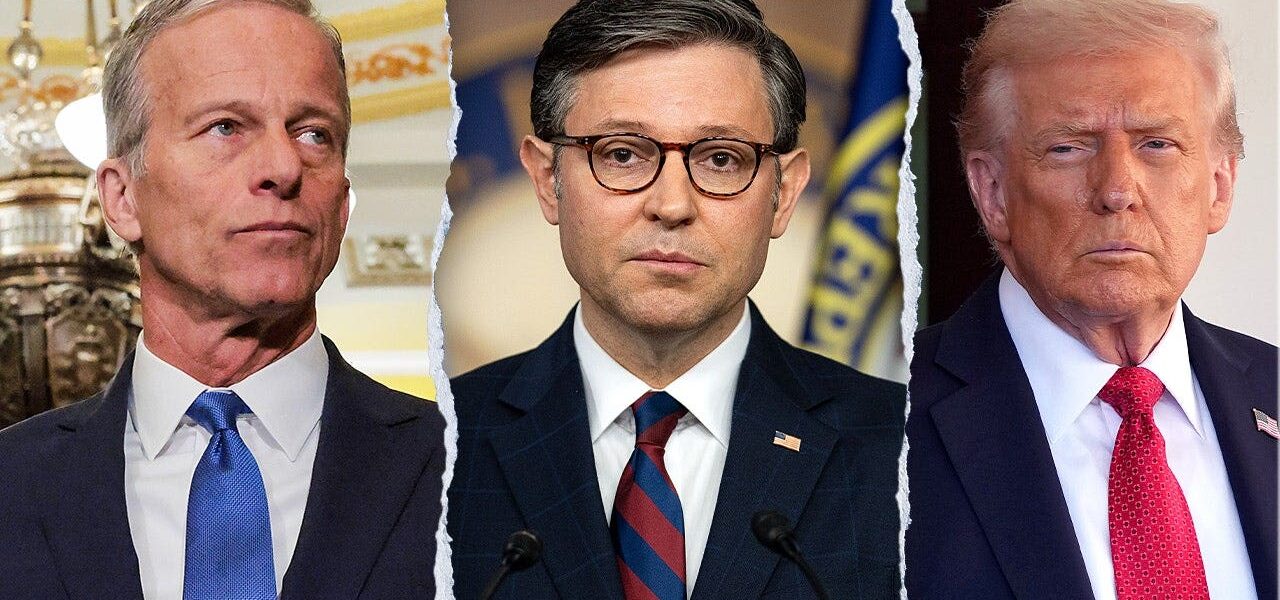
It’s less a political maneuver — and more a long-overdue accounting, folks. Some call it a ‘come-to-Jesus moment’—a phrase, incidentally, that captures the raw, unavoidable truth of the situation pretty well. This isn’t just about another procedural vote; it’s about whether the upper chamber of American governance can reconcile its institutional duties with the persistent gravitational pull of a single, outsized personality. And this isn’t the first time, of course. But the stakes? They’ve rarely felt quite so… exposed. [QUOTE_PLACEHOLDER]
The core issue, if you haven’t already guessed, boils down to former President Trump’s continuing, insistent, and often bewildering ‘election priority’. It’s the rallying cry, the whispered fear, the elephant (or perhaps the mule) in every Republican meeting room. The Senate, ostensibly focused on the nation’s most pressing concerns—from inflation to foreign policy quagmires—now finds itself having to actively legislate or, at the very least, contend with how the next electoral contest is framed, administered, and ultimately, perceived. The GOP’s ‘new plan’ is less an innovative policy framework and more a tactical recalibration, a clear signal that the party isn’t moving on from the debates of the recent past.
We’re talking about an ecosystem where, for instance, a Gallup poll from October 2023 indicated only 37% of Americans expressed a great deal or fair amount of trust in the mass media to report the news fully, accurately, and fairly—a sobering data point that shows how deeply distrust has permeated fundamental democratic pillars, elections included. The constant narrative questioning results, particularly from the former president, feeds into this abyss. But here’s the thing: trust, once eroded, doesn’t just snap back with a Senate resolution. It’s a grind.
And so, lawmakers—some willingly, others through clenched teeth—are having to weigh in, pick sides, or find an impossible middle ground. You’ve got to wonder what the senators are actually discussing behind those closed doors. Is it policy? Or is it political survival in an environment where primary challenges often hinge on one’s fidelity to the former president’s worldview? It’s a dance as old as Rome, played out on a C-SPAN stage, but with the added anxiety of digital echo chambers amplifying every misstep.
This internal wrestling isn’t just a domestic affair, either. Look East, for a moment, to places like Pakistan. There, the public and political elites are acutely aware of democratic norms—or their perceived absence. When a powerful Western democracy like the U.S. appears to struggle with its fundamental electoral integrity, it doesn’t go unnoticed. It impacts America’s moral standing, its credibility as an advocate for democracy abroad. How can you effectively lecture Islamabad on free and fair elections, or on respecting judicial processes, when your own legislative body is grappling with the ghosts of past electoral disputes, seemingly under the direction of an external force? It creates a discomfiting global precedent, frankly, fueling narratives in countries already wrestling with their own fragile democratic institutions or the pressures of authoritarian influences. What the U.S. Senate does next isn’t just for American consumption; it’s for the world, especially for those nations still trying to figure out if democracy is a viable, long-term proposition.
📄 POLICY WIRE WHITEPAPER PUBLISHED: PAKISTAN'S NATIONAL SECURITY POLICY PRIORITIES
👉 READ BY CLICKING HEREBecause ultimately, when a political party—or at least a dominant faction within it—focuses its legislative energies on an individual’s personal electoral grievances rather than forward-looking governance, it sends a clear signal. A signal that political loyalty outweighs institutional responsibility. That process trumps principle. It’s a messy business, this democratic experiment. And sometimes, you’ve just got to deal with the mess.
What This Means
This evolving confrontation within the Senate carries substantial implications. Politically, it signals a deeper entrenchment of personality cults within party structures, potentially stifling dissenting voices and prioritizing performative loyalty over substantive policy debates. For Republican senators, navigating this tightrope involves a calculation between immediate political survival (fending off primary challengers loyal to the former president) and broader, long-term party viability (appealing to a wider, less ideologically rigid electorate). The ‘GOP’s new plan’ could solidify factional divides, making legislative cooperation across the aisle even more remote.
Economically, persistent uncertainty around electoral processes can introduce systemic risk. Markets abhor instability. When the mechanisms of democratic transition are continuously questioned, it erodes investor confidence, deters long-term planning, and potentially slows economic growth. Internationally, this domestic turmoil presents a propaganda gift to America’s rivals and a worrisome spectacle for its allies. It compromises the U.S.’s ability to champion democratic values globally and complicates its diplomatic efforts, particularly in regions like South Asia, where the struggle for democratic stability is ongoing and Western endorsement often holds sway. Essentially, Washington is grappling with a foundational dilemma, and how it resolves it will ripple out, not just across the Potomac, but across continents. It’s truly a defining moment, one where political expediency collides head-on with constitutional duty, and everyone’s watching to see who flinches first.