


Manipulation’s Long Shadow: New Mexico Jury Deciphers a Brutal Triad
POLICY WIRE — Santa Fe, New Mexico — It wasn’t just a matter of who wielded the sword that night, but who sharpened the intent, twisting emotional threads into a lethal snare. A jury in Santa...

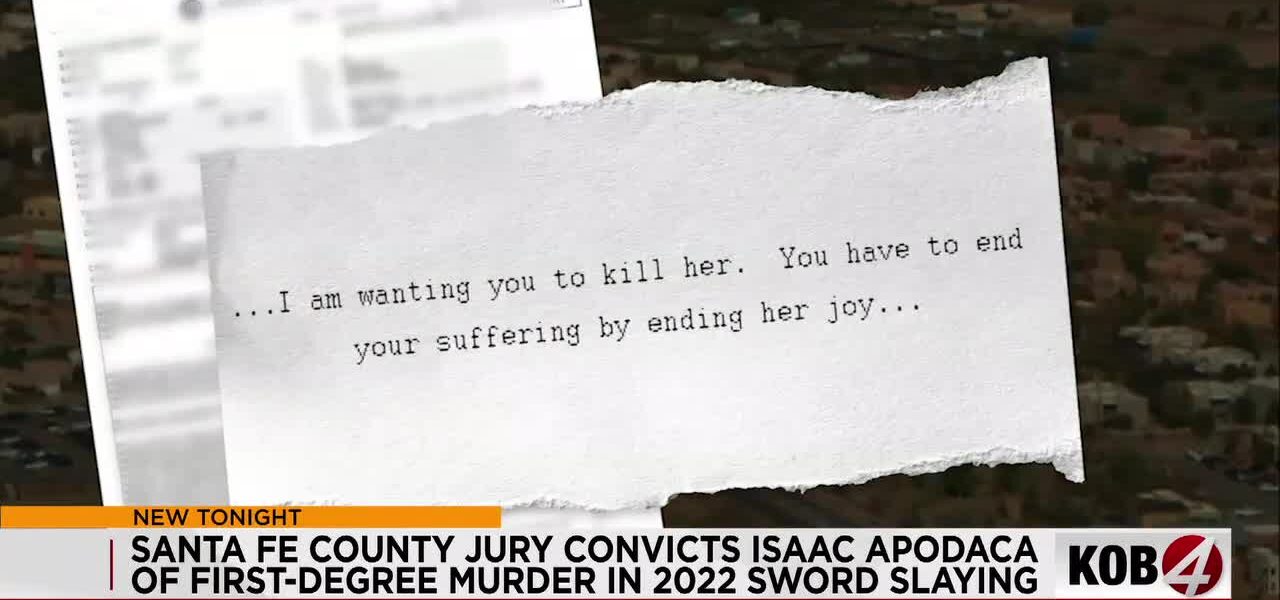
POLICY WIRE — Santa Fe, New Mexico — It wasn’t just a matter of who wielded the sword that night, but who sharpened the intent, twisting emotional threads into a lethal snare. A jury in Santa Fe recently decided, with unnerving swiftness, that the invisible hand behind the blade belongs to Isaac Apodaca. His conviction for first-degree murder isn’t merely about a crime of passion; it’s a cold, hard declaration on the insidious power of manipulation, a theme that echoes uncomfortably across varied legal landscapes.
Twenty-one-year-old Grace Jennings died at the edge of a sword, her life cut brutally short. The immediate, physical act, as prosecutors painstakingly laid out, was committed by Kiara McCulley, Apodaca’s girlfriend—a fact that, on its own, seems a standalone tragedy. But the deeper, more unsettling truth that emerged from the six-day trial wasn’t the weapon itself—an archaic, almost theatrical instrument for modern violence—it was the meticulously spun web of influence. Jurors didn’t take long to grasp the heart of the matter: McCulley, now serving a three-decade sentence after cutting her own plea deal, was deemed a puppet; Apodaca, the grim puppeteer. They found him guilty of murder, plain — and simple.
But simple it wasn’t. The narrative spun by state prosecutors painted a picture of calculated psychological warfare, where jealousy and control fermented into a deadly conspiracy. Sixteen witnesses paraded through the courtroom, each adding a brushstroke to the macabre portrait. The prosecution’s star turn, McCulley herself, delivered the damning testimony. She admitted—under oath, mind you—to being romantically entangled with both Apodaca and the victim. Then came the chilling part: the mutual agreement, she claimed, with Apodaca, to erase Jennings. One doesn’t simply “agree” to murder without significant persuasion, does one?
The state’s argument leaned heavily on this complex psychological pressure cooker. Assistant District Attorney Elena Rojas didn’t mince words post-verdict. “Justice for Grace Jennings is finally within reach,” she stated, her voice tight with conviction. “This wasn’t some impulsive act. This was premeditation orchestrated by a mind twisted by control. We showed the jury how cunning manipulation can turn an otherwise ordinary person into an instrument of horrific violence. And they bought it.” Indeed, they did.
And what of rehabilitation, or the nuances of influence? Defense attorney Arthur Chen, representing Apodaca—though obviously speaking hypothetically post-verdict—remarked, “Cases like this make you question the full extent of criminal culpability when a co-defendant is essentially testifying for a reduced sentence. The jury saw what they saw, of course, but it’s rarely as black and white as a prosecutor makes it out to be.” His words, however measured, carry the weight of a life-shattering decision. A judge will confirm Apodaca’s fate next month, but it’s all but sealed: life in prison.
The sheer theatricality of the weapon—a sword—almost obscures the clinical precision of the manipulation involved. One has to wonder what deep-seated pathologies drive such acts. It’s a question without an easy answer. This isn’t a scene from a poorly written fantasy novel; this is a stark New Mexico reality. And for Grace Jennings, it became her grim ending.
📄 POLICY WIRE WHITEPAPER PUBLISHED: PAKISTAN'S NATIONAL SECURITY POLICY PRIORITIES
👉 READ BY CLICKING HEREWhat This Means
This Santa Fe verdict isn’t just about closing a gruesome chapter; it’s a harsh spotlight on the often-invisible tendrils of coercive control and emotional manipulation. It compels us to ask harder questions about the dynamics of unhealthy relationships, both legally — and culturally. For one thing, legal systems in countries like Pakistan, for instance, are perpetually grappling with how to effectively prosecute cases where ‘honor’ or family pressure leads to violence—a societal manipulation that can echo the individual coercion seen here, albeit on a far larger scale and with different motivations. It underscores the global struggle against forms of violence born not just of rage, but of twisted influence. (For more on how different cultures confront domestic and social pressures, consider this look at South Asia’s marriage laws).
Because while we might marvel at the legal intricacies, the fundamental human cost remains the same: a life lost, lives forever altered. The U.S. Bureau of Justice Statistics reported that in 2018, nearly one in five murder victims were killed by an intimate partner. This case—even with the odd, convoluted details—fits squarely into that alarming statistic, though the perpetrator in Apodaca’s mind was surely McCulley, not himself. The conviction signals an increasing willingness in courts to acknowledge psychological coercion as a foundational element of criminal intent, even when someone else physically executes the act. It says something about justice’s evolving understanding of accountability. It also suggests that manipulating someone into murder carries the same weight, if not more, than doing the dirty work yourself. Perhaps it should. Policy circles, from local domestic violence coalitions to national justice reform advocates, can’t afford to ignore these intricate layers of culpability.
This wasn’t some random street crime. It was a methodical erosion of free will culminating in violence. A terrifying thought, isn’t it?