


Albuquerque’s Shifting Sands: Teen Fury Unleashes Urban Tragedy on Lowrider Scene
POLICY WIRE — Albuquerque, United States — A casual Sunday evening drive home from a classic car meet, often a quintessential slice of American life, devolved into stark, bloody street theater here,...

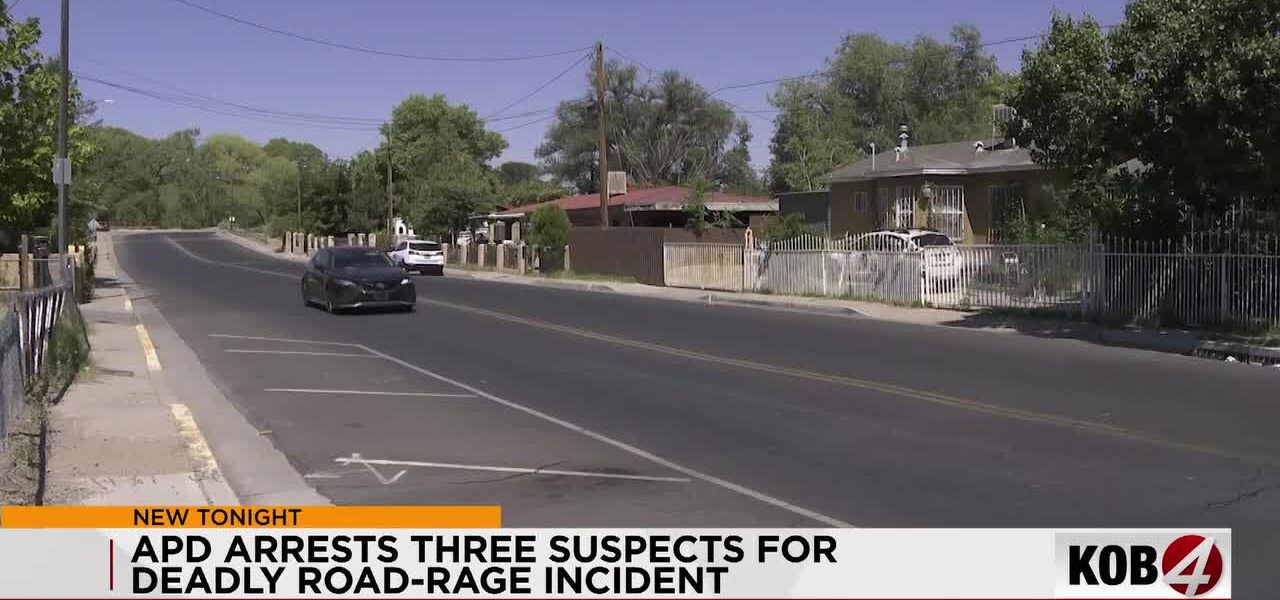
POLICY WIRE — Albuquerque, United States — A casual Sunday evening drive home from a classic car meet, often a quintessential slice of American life, devolved into stark, bloody street theater here, exposing uncomfortable truths about youth, unchecked anger, and readily available, easily modified firearms. It wasn’t a gangland turf war, nor an organized crime hit; this was a fatal altercation born of impatience and impulse, a routine traffic spat escalating into murder, fundamentally shattering one man’s peace and exposing the fragile threads of urban civility.
David Whiting, 59, a fixture in the local lowrider community—a cultural bedrock where custom cars are works of art and social bonds run deep—was just driving with his wife. They’d spent the evening meeting friends from that community at Old Town plaza, a scene usually associated with camaraderie, not cold-blooded violence. And then it happened, the mundane morphing into the horrifying. [QUOTE_PLACEHOLDER]
Albuquerque police officials report a red Chrysler sedan began to actively hound Whiting’s vehicle on Tingley Road. It’s the sort of incident many commuters have experienced, a frustrating dance of aggressive driving. The Chrysler, according to police accounts, pulled alongside and then brazenly moved in front, performing what’s commonly known as a brake-check. You know—that dangerous maneuver meant to scare or provoke, an open challenge on the asphalt.
The confrontation, they say, didn’t end there. Both cars continued onto Marquez Lane, eventually stopping at Eighth Street. Whiting, perhaps fueled by a mix of righteous indignation — and adrenaline, exited his vehicle. He strode towards the driver’s side of the Chrysler. His wife, a witness to the unfolding catastrophe, later relayed to police that she heard her husband exchange words with the driver. She also heard a female passenger in the front seat yelling, a cacophony of frayed nerves — and escalating tempers. Crucially, she noted at least two male figures in the back seat before the unthinkable happened: gunshots erupted from within the Chrysler. Albuquerque Police Department’s ShotSpotter system—an acoustic surveillance tool common in many major cities—registered the gunfire at 8:51 p.m. And then, the Chrysler sped away, vanishing down Eighth Street, leaving behind a bewildered widow and a lifeless body.
The subsequent police investigation unfolded with a chillingly modern efficiency, underscoring the omnipresent, albeit often unseen, surveillance state. Detectives, after the fact, pulled video footage from the Real Time Crime Center, tracking the Chrysler’s movements before and after the shooting. Automated License Plate readers then pinged its location, guiding investigators from Downtown to Tingley Drive, a digital breadcrumb trail. Officers eventually located the Chrysler and, armed with a search warrant, entered a South Valley home associated with the vehicle. That’s when the dominoes began to fall. The arrests came swiftly, ensnaring three individuals: Santiago Soto, 17, Alejandro Marquez Sotelo, 17, and Sebastian Soto, 23. They’ve all been charged with an open count of murder in Whiting’s death.
📄 POLICY WIRE WHITEPAPER PUBLISHED: PAKISTAN'S NATIONAL SECURITY POLICY PRIORITIES
👉 READ BY CLICKING HEREIt’s a story we hear too often. Juvenile hands, lethal weapons, — and the catastrophic outcomes. Police say Santiago Soto, one of the 17-year-olds, admitted he shot Whiting. He reportedly claimed Whiting had approached the Chrysler, punched Marquez Sotelo, and tried to grab the gun from Soto’s hands. Marquez Sotelo, also 17, painted an even grimmer picture, describing the firearm as a Glock 17 equipped with an extended magazine and a [switch] — a small, illegal device that converts semi-automatic firearms into fully automatic weapons. Sebastian Soto, the elder, conceded he attempted to dispose of bags containing guns by throwing them over a fence as officers prepared to search the home. He’s also accused of trying to encourage Marquez Sotelo to use an alternate vehicle to evade law enforcement. Santiago Soto and Marquez Sotelo were booked into the Juvenile Detention Center; Sebastian Soto landed in the Metro Detention Center. A stark delineation, perhaps, but a shared responsibility in a profoundly tragic outcome.
The lowrider scene, often unfairly stereotyped, is rich with history — and cultural identity. Yet, even in such a defined community, its members aren’t insulated from the broader, escalating currents of casual violence and instant gratification. This incident mirrors an alarming trend not just in US cities, but across the globe where easily acquired, increasingly powerful weaponry intersects with unchecked aggression. Data from the Gun Violence Archive, for instance, reported over 21,000 deaths from gun violence in the US in 2023 alone, a figure that continues to climb with devastating regularity. This particular type of firearm modification, the ‘switch,’ isn’t just a domestic issue; it points to the broader challenges of illicit arms trafficking and the availability of sophisticated weapon technology—a flow of deadly hardware that often finds its way to conflict zones and criminal elements in places like South Asia, destabilizing fragile regions and enabling far more pervasive violence. What happens on the streets of Albuquerque can, in unexpected ways, echo global struggles against arms proliferation. Just as cultures in South Asia—say, a specific, vibrant artisan community in Lahore or Karachi—might struggle against external pressures, these lowrider enthusiasts found their tranquil evening disrupted by an unforeseen force. It’s a reminder that no community, however unique, operates in a vacuum.
What This Means
This incident isn’t merely another sad statistic in the annals of urban crime. It’s a harsh spotlight on several intertwined crises: the startling ease with which teenagers acquire high-capacity, even automatic-capable, firearms; the unraveling of civil decorum, where a minor inconvenience transforms into a death sentence; and the policy gaps that allow such instruments of destruction to proliferate on our streets. For Albuquerque, a city grappling with its own socioeconomic complexities, this case reinforces the urgent need for a multi-pronged approach that extends beyond simple policing to community engagement, mental health initiatives, and, yes, stricter enforcement against illicit gun modifications. The ‘switch’ detail here is particularly chilling for policymakers; it signals a new, more dangerous escalation in street-level firepower that was once confined to military arsenals or highly organized criminal enterprises. Such readily available modifications transform minor altercations into lethal exchanges, pushing our communities further into a volatile, unpredictable space. Economically, incidents like these erode public confidence, deter investment, and drain municipal resources—funds that could be allocated to preventative programs instead are diverted to investigative and punitive measures. From a political standpoint, expect renewed calls for both more stringent gun control measures and — conversely, depending on the political spectrum — enhanced law enforcement budgets and powers, perhaps mirroring debates seen in nations struggling with similar challenges in the Muslim world, where questions of personal security often clash with broader societal freedoms.