


Fading Empire: National Mall’s ‘American Flag Blue’ Recedes to Grim Grey
POLICY WIRE — Washington, D.C. — You know, sometimes the loudest statements don’t come from podiums or campaign rallies. Sometimes they’re whispered by a drained pool in the heart of the...

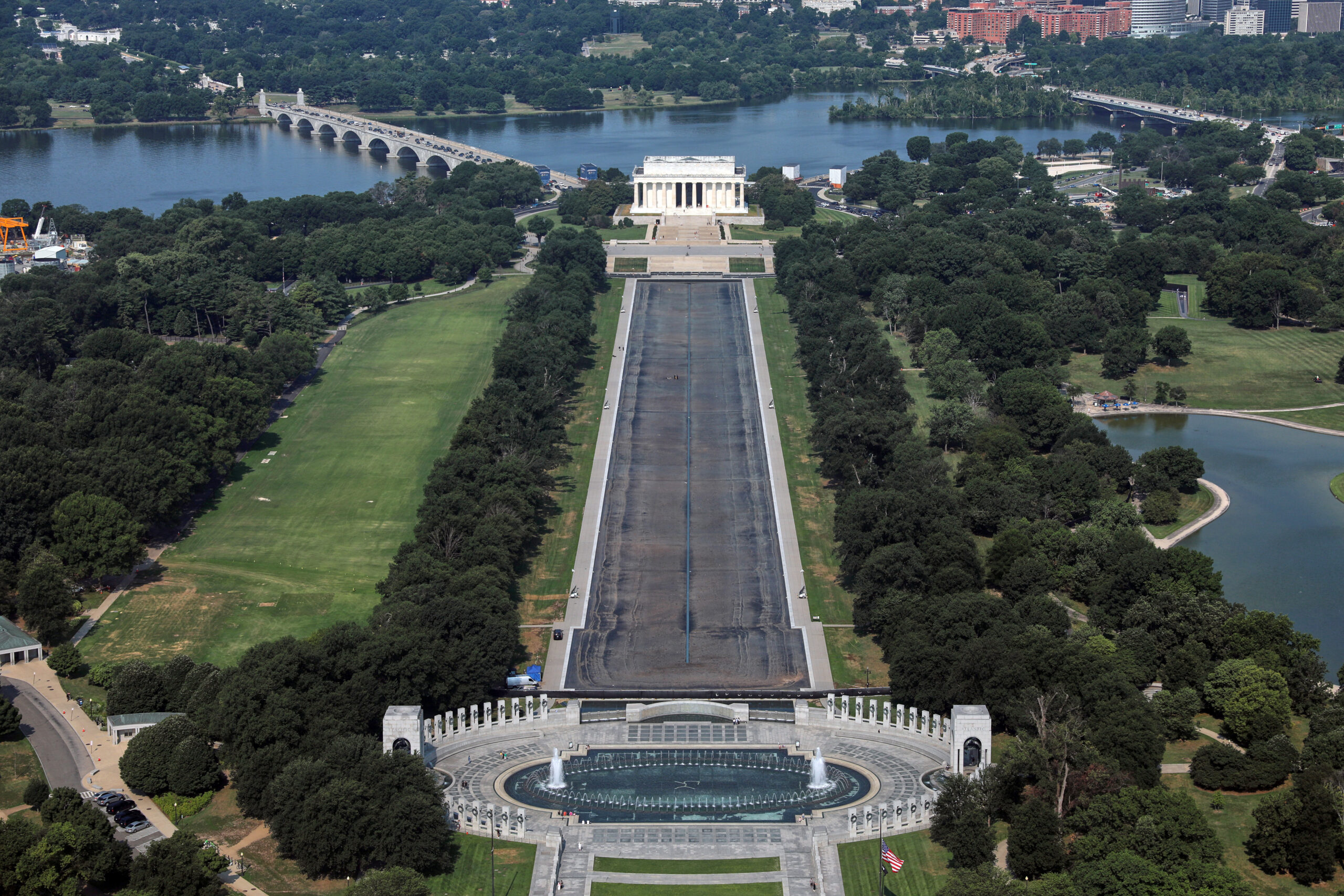
POLICY WIRE — Washington, D.C. — You know, sometimes the loudest statements don’t come from podiums or campaign rallies. Sometimes they’re whispered by a drained pool in the heart of the nation’s capital. The great Lincoln Memorial Reflecting Pool, for generations a placid mirror of national ambition, recently went dry for routine maintenance. What it revealed beneath the surface was less a pool liner — and more a visual metaphor, potent and undeniably stark.
It’s not just the water that’s gone. A specific hue, dubbed ‘American flag blue’ back in the day, applied during the Trump administration, was supposed to make the water appear an even deeper, more patriotic tone. A certain flourish, right? Well, that particular pigment, whatever its original intent, has proven as fleeting as a politician’s promise. Now, it’s mostly just — well, grey. [QUOTE_PLACEHOLDER]
The visual impact is unmistakable. We’re talking about an expensive, consciously political aesthetic choice literally weathering into something mundane. The Trump era’s ‘American flag blue’ liner is now closer to gray. It isn’t just about paint, obviously. It’s about grand gestures, the short shelf-life of performative patriotism, and how even the most vibrant colors fade when exposed to too much reality. This wasn’t some natural historical progression, mind you. This was a direct, very specific, Trump-era addition. And it didn’t last.
You’ve got to wonder what goes into choosing such a specific color for something so publicly viewed. A desire for visual unity? Perhaps an attempt to imbue a government installation with a sense of branded national pride? But wear — and tear, turns out, pays no mind to political branding. It just… does its thing. The National Mall, after all, isn’t immune to time or neglect, much like any aging public works project. It serves as a reminder, a pretty obvious one at that, of the ceaseless battle against entropy.
Consider the cost of maintenance, the persistent struggle to keep these monumental symbols pristine. In fiscal year 2023 alone, the National Park Service’s maintenance backlog for its 429 sites topped $22.8 billion across the nation, a staggering figure that casts a long shadow over aesthetic choices like pool liner color. One has to question priorities, frankly. And it’s not unique to Washington, D.C.
Think about grand civic projects across the Muslim world, in South Asia, for instance. From Islamabad’s meticulously designed administrative buildings to the ambitious, often brightly-colored infrastructure drives seen across Pakistan, the same impulse for symbolic, visually striking national representation often clashes with the harsh realities of climate, economics, and long-term upkeep. Many such endeavors, once gleaming testaments to national aspirations, quickly find their vibrant hues muted, their bold architecture softened by the persistent dust and neglect of decades. The symbolic decay of the Reflecting Pool’s liner isn’t an isolated American oddity; it’s a universal theme of political statements meeting the concrete and often underwhelming reality of physics.
It’s funny, isn’t it? For all the noise, the rhetoric, the carefully cultivated image, what’s left beneath the veneer often tells a far more honest story. The drained pool, now grey, speaks volumes about impermanence. And it doesn’t need to shout to do it.
What This Means
This subtle, yet telling, shift in the Reflecting Pool’s liner offers more than just a momentary curiosity. Politically, it’s a rather poetic commentary on the durability – or lack thereof – of political aesthetics. A president’s preferred shade of blue, meant to symbolize a certain vision of America, has physically deteriorated in a mere handful of years. This isn’t simply an infrastructure problem; it’s a quiet but forceful rejoinder to the idea that superficial changes can effect lasting, profound national character. They simply can’t.
Economically, it nudges us to examine where national resources are allocated. How much focus is placed on the superficial versus the foundational? The choice to spend on a specific pool color versus addressing the broader infrastructural decay of urban public spaces or critical maintenance backlogs signals a certain governmental mindset. And for all the bold promises made from that marble-clad Lincoln Memorial, the grey liner underneath feels like an inevitable, perhaps even deserved, dose of humble reality.