


Digital Lure, Analog Dollars: Pokémon GO Fest’s Peculiar Pull on Public Space
POLICY WIRE — Albuquerque, N.M. — In an era obsessed with digital borders and virtual existences, there are still moments when the online bleeds unashamedly into the analog—moments both baffling and...

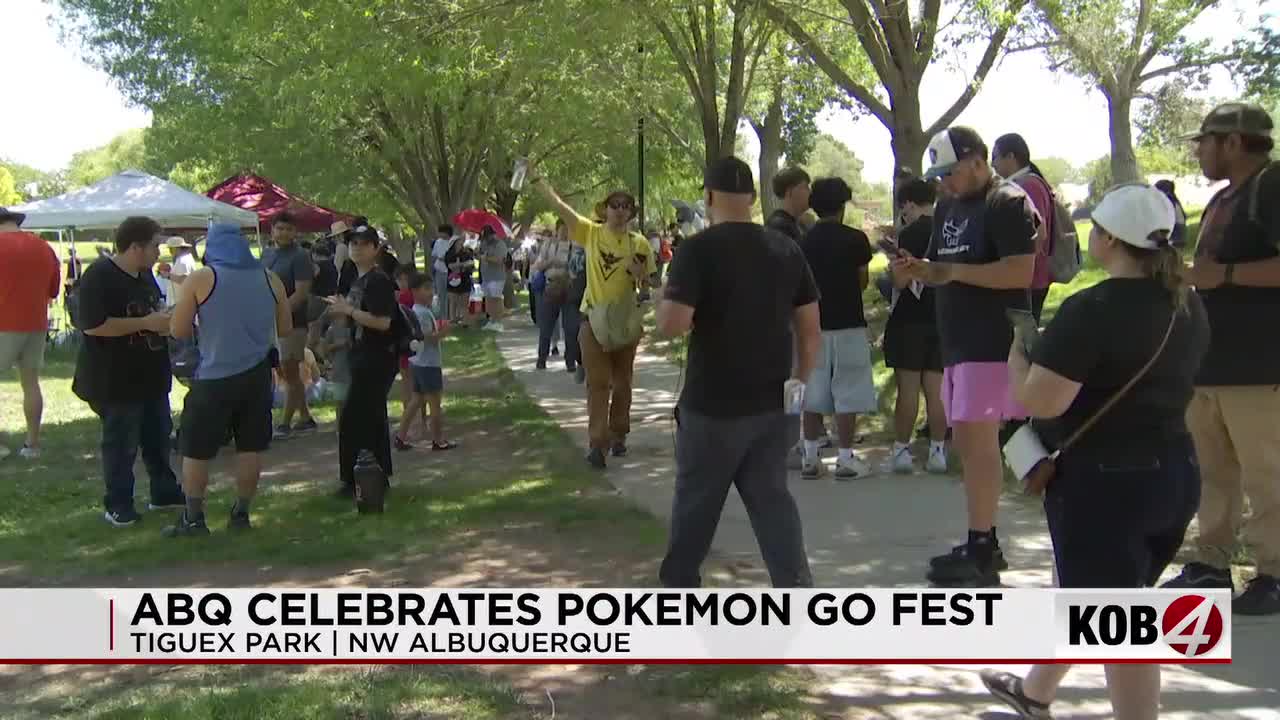
POLICY WIRE — Albuquerque, N.M. — In an era obsessed with digital borders and virtual existences, there are still moments when the online bleeds unashamedly into the analog—moments both baffling and illuminating. Consider a recent weekend in Albuquerque, New Mexico. While the chattering classes elsewhere were still picking apart geopolitical chess moves or fretting over interest rates, hundreds of folks found their policy and purpose in Tiguex Park. Their mission? To chase digital creatures with an earnestness usually reserved for electoral campaigns or oil rights.
It wasn’t a protest, wasn’t a rally for a candidate (unless you count Pikachu as a candidate, which some probably did). Instead, it was Pokémon GO Fest, a globally orchestrated shindig marking the mobile game’s tenth anniversary. And what an anniversary it’s, one that begs a closer look at the odd interplay between global digital phenomenon and intensely local economies. Here, in the very heart of the Land of Enchantment, digital ghosts prompted physical congregations. [QUOTE_PLACEHOLDER]
The original report, laconic in its simplicity, stated that people gathered at Tiguex Park for Pokemon GO Fest, a worldwide event that marked the game’s 10th anniversary. But don’t let the innocent language fool you. What happened on Saturday and Sunday—players from around the world went outdoors—was a calculated, economic ripple effect masquerading as innocent fun. This wasn’t just a spontaneous combustion of enthusiasm; it was a strategically deployed mechanism to reignite local commerce, all under the guise of pixelated monster hunting. Organizers said the event celebrated the 10th anniversary of the game. That’s true, of course, but it’s only half the picture, isn’t it?
Because beyond the pixels — and the celebrated nostalgia, real-world commerce hummed. Players enjoyed food trucks — and giveaways, while Old Town businesses offered discounts. These weren’t charitable acts. These were savvy, calculated moves by businesses trying to capitalize on a guaranteed influx of human foot traffic. Imagine the proprietors of some dusty curio shop in Old Town, maybe they’ve seen tourism falter a bit, or perhaps they’re just hungry for a bump—they’d offer any discount if it meant bringing a crowd, virtual monster hunters or not. This isn’t philanthropy; it’s hard-nosed business, disguised behind the soft glow of a smartphone screen.
And it’s a model that’s being replicated globally. From the souks of Marrakech to the bustling streets of Karachi, mobile gaming is carving out a surprising economic footprint. This game, specifically, became a worldwide event. What worked in New Mexico, drawing in what local news reported as hundreds of people, mirrors how digital platforms in Islamabad or Dhaka, even without official sponsorships, pull crowds and affect local vendors. We’re talking about micro-economies sparked by algorithms, a peculiar sort of bottom-up development, often unregulated, sometimes unplanned.
The sheer scale of mobile gaming is breathtaking. According to a recent report by Mobile Data Insights, the global mobile gaming market surpassed an estimated 90 billion U.S. dollars in 2023, indicating a significant economic footprint that even policymakers are only beginning to fully comprehend. That’s a lot of potential stimulus—or potential distraction, depending on your perspective. The numbers are astronomical; it’s not just a pastime; it’s an industry with its own gravitational pull.
So, as these virtual creatures—these digital figments of collective imagination—pulled hundreds of physical bodies out into the sunshine, eating tacos and buying trinkets, one has to wonder about the broader implications. It wasn’t a digital event, not really; it was a highly organized real-world phenomenon, facilitated by software. The software, in effect, became a sort of economic orchestrator, redirecting consumer spending from living rooms to public parks. They were all there, staring at their screens, but physically, tangibly present. It’s an interesting contradiction, if you ask me.
And that’s the fascinating thing, isn’t it? These digital escapisms, once confined to our sofas, are now compelling us back into communal spaces. Public parks, town squares, even historical sites—they’re being repurposed, reactivated by invisible boundaries and the lure of virtual rewards. It’s a strange, unexpected twist for public policy — and urban planning, something many hadn’t foreseen.
What This Means
This Albuquerque event isn’t just about fun — and games; it’s a policy conundrum wrapped in a digital package. Governments, particularly at the municipal level, have to get smart about these ephemeral events. Do they levy fees on the game developers for use of public space? Do they facilitate such gatherings for economic benefit? Or do they just let them happen, an accidental shot in the arm for local vendors?
But the broader political — and economic implications aren’t confined to small-town America. Across South Asia and the wider Muslim world, where youth populations are massive and smartphone penetration is soaring, the impact of such gaming events can be even more pronounced. Picture a similar GO Fest in, say, Lahore, Pakistan, or Kuala Lumpur, Malaysia. You’ve got huge swaths of people, primarily youth, converging on public spaces. That’s an opportunity for small businesses, street vendors, — and even for promoting public engagement. But it also raises questions about crowd control, public safety, and how city infrastructure handles these flash mob-like surges, driven not by political fervor, but by the pursuit of rare digital critters. Are municipal planners—from New York to Nankana Sahib—equipped for such digitally induced population shifts? Probably not. It represents a subtle shift in how cities function, how public spaces are used, and how economies are informally stimulated. We’re witnessing a sort of post-modern town square gathering, mediated by augmented reality, but with entirely physical consequences for both pocketbooks and public order. It’s a testament to the persistent human need for communal activity, even when prompted by glowing rectangles and fantastical beasts. The money, it’s real though.