


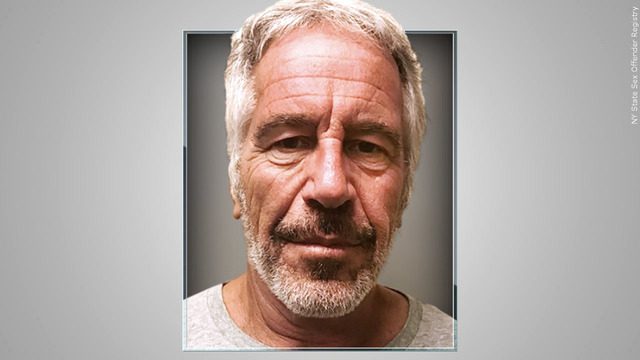
Feds Block Epstein Probe, Ignite Bureaucratic Skirmish
POLICY WIRE — Washington, D.C. — Not every door marked federal investigation leads to a room where truth resides. Sometimes, it’s just another vestibule to official obfuscation. Case in point: the...

POLICY WIRE — Washington, D.C. — Not every door marked federal investigation leads to a room where truth resides. Sometimes, it’s just another vestibule to official obfuscation. Case in point: the spectacle unfolding between New Mexico’s Attorney General and the seemingly inscrutable apparatus of the United States Department of Justice.
It’s a peculiar thing, seeing a state AG get a firm smack on the hand from federal authorities, particularly when the subject matter involves a figure as notorious as Jeffrey Epstein. But that’s precisely what transpired when New Mexico’s Attorney General’s office, in pursuit of unredacted files, received a rather blunt dismissal from the Southern District of New York. [QUOTE_PLACEHOLDER]
This wasn’t a quiet bureaucratic shrug, mind you. No, this was an overt refusal. According to the New Mexico Department of Justice (NMDOJ), communicated via a post on X (the platform formerly known as Twitter, of course), the Southern District of New York called to say it would NOT cooperate and won’t support the only active criminal investigation into Jeffrey Epstein. A rather unequivocal stance, you’d agree.
And what makes this refusal sting a little more than usual is the direct, head-on collision with prior federal assurances. Only last month, the very top federal prosecutor in New Mexico declared that the U.S. Department of Justice—the overarching entity, lest we forget—would, in fact, fully cooperate in the Epstein case. Cooperation, it seems, is a fluid concept, subject to interpretation depending on which corner of the federal labyrinth you happen to be standing in.
The state investigators—the folks down in New Mexico still trying to get answers—were obviously banking on those files, especially the unredacted kind. But you see, federal offices speak in different tongues. While New Mexico was still digesting that ‘no,’ a spokesperson for the U.S. Attorney’s Office in New Mexico had already told local news, KOB 4, that the Department of Justice had already fulfilled its obligations. Oh, really?
The (U.S.) Department of Justice timely and substantively responded to requests from the New Mexico Attorney General’s Office on June 30, 2026, this spokesperson claimed in an email. A future date, perhaps a typo for 2024? Either way, the NMDOJ spokesperson countered directly to KOB 4 that their office had received precisely zero such records, neither via email nor through the quaint, old-fashioned United States Postal Service. It begs the question, doesn’t it? Where exactly did those records go? Lost in the digital ether? Consumed by an exceptionally efficient paper shredder?
Attorney General Raul Torrez wanted everything—the complete, unredacted files—by July 31. Not some redacted half-measures, not vague assurances. Transparency. Plain and simple. Yet, what he’s gotten instead is a masterclass in bureaucratic obstruction, a convoluted saga of miscommunication, or perhaps, intentional stonewalling.
📄 POLICY WIRE WHITEPAPER PUBLISHED: PAKISTAN'S NATIONAL SECURITY POLICY PRIORITIES
👉 READ BY CLICKING HEREThis isn’t just a squabble over paperwork, though it might appear that way on the surface. This is about accountability for heinous crimes that scarred countless lives, extending far beyond the borders of New Mexico. The Epstein network, a global operation touching numerous jurisdictions, demands a concerted, transparent effort.
But when you’ve got this kind of infighting, this back-and-forth about who said what and who received nothing, it chips away at public trust. It makes one wonder if some entities aren’t entirely keen on everything coming out. The lack of transparency from federal agencies isn’t unique to this case; a 2023 Gallup poll revealed only 36% of Americans trust the federal government ‘a great deal’ or ‘quite a lot,’ illustrating a persistent challenge for institutions attempting to foster public confidence. And this dance, this bureaucratic two-step, certainly doesn’t help the numbers. From Islamabad to Jakarta, leaders and citizens observe how American institutions navigate such high-profile demands for justice—often with a critical eye, especially when the perception of elite protection hovers over a case. In societies grappling with their own challenges in judicial transparency, these developments resonate profoundly, fueling existing skepticism about institutional integrity. What signals do we send globally when our own federal house appears so deeply divided on a matter of this gravity?
What This Means
The Southern District of New York’s categorical refusal to cooperate with New Mexico’s active investigation into Jeffrey Epstein signals far more than a simple jurisdictional dispute; it’s a political minefield. For Attorney General Torrez, this constitutes a direct challenge to his authority — and legitimacy. He’s been left, quite publicly, with a hollow promise from federal partners, something he won’t be able to easily overlook without facing political repercussions at home. This isn’t just about documents; it’s a contest of wills between state and federal agencies over a narrative the public has long viewed with suspicion. But then, federal bodies aren’t immune from public opinion. This stonewalling, deliberate or not, further erodes what little public trust remains in governmental institutions, especially regarding how they handle crimes involving the exceptionally powerful. The perception here—fair or not—is one of shielding, of keeping secrets rather than illuminating truth. Economically, while this specific issue might not move markets, it feeds into a broader climate of regulatory uncertainty and mistrust. Businesses and individuals operate best with clear, consistent governance, not contradictory messages and inter-agency feuds. The cost of continued perceived opacity, in terms of damaged faith in justice systems, is immeasurable and carries a hefty price tag in the long run for democratic norms and expectations.
And let’s not forget the international reverberations. In nations across the Muslim world and South Asia, where the US often champions rule of law and transparency, cases like Epstein’s—shrouded in secrecy and inter-agency squabbles—are often cited as examples of hypocrisy. It gives adversaries ammunition. It undercuts American credibility abroad. It truly does.
So, New Mexico’s Attorney General sending yet another letter to the Justice Department, even after SDNY’s pointed refusal, demonstrates persistence—or perhaps, sheer political necessity. Because turning away from such a public challenge would suggest complicity, a charge no aspiring political figure—or frankly, any government body—wants near their name.