


Pacific Pivot: Canberra’s Discreet Chess Move in the Island Stakes
POLICY WIRE — Canberra, Australia — It wasn’t the fanfare of a presidential summit or the bluster of a UN Security Council declaration, but the quiet signing of an understanding between...

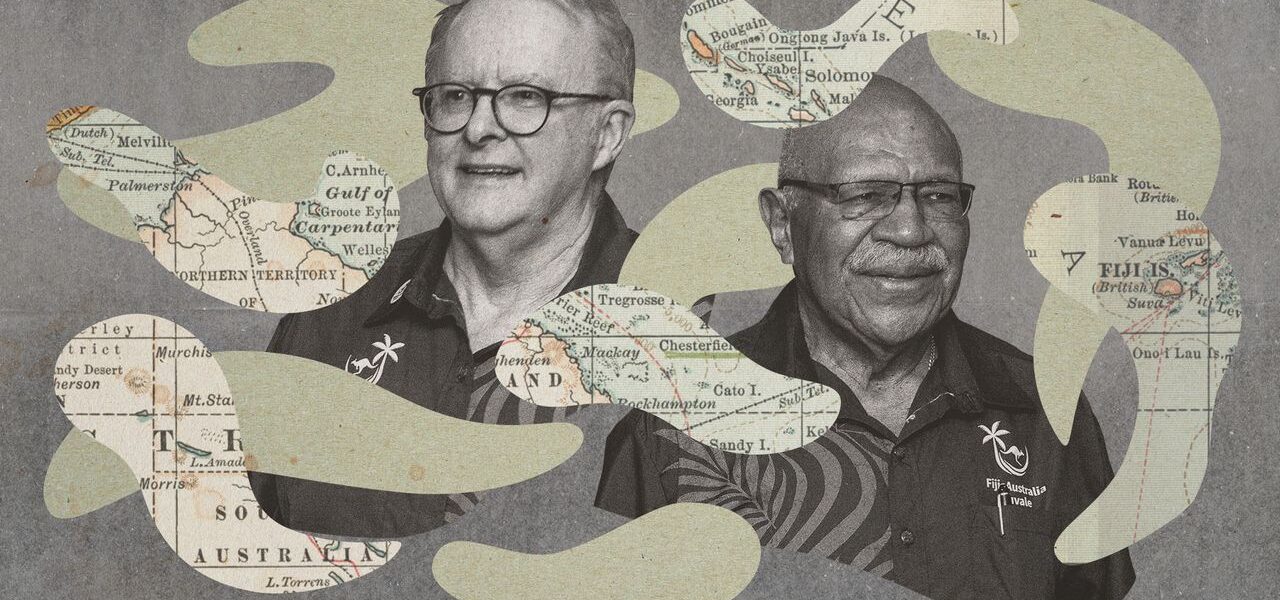
POLICY WIRE — Canberra, Australia — It wasn’t the fanfare of a presidential summit or the bluster of a UN Security Council declaration, but the quiet signing of an understanding between Australia and Fiji — a humble South Pacific island nation. Yet, for all its understated ceremony, this new defence pact signals a significant strategic recalibration in a region too often treated as merely a vacation backdrop. It’s Canberra subtly planting its flag in shifting sands, pushing back against a rising tide of rival influence in its backyard.
For decades, the Pacific Islands were seen as Australia’s undisputed domain, a comforting blue expanse where diplomacy amounted to development aid and seasonal goodwill missions. But that easy comfort’s gone. China’s not playing by the old rules. And really, why would they? The Indo-Pacific has become a chess board, and every small square — every island atoll, every maritime route — suddenly carries outsized importance. This particular agreement, termed Australia and Fiji’s new defence pact, reportedly formalizes and expands cooperation on maritime surveillance, joint training exercises, and humanitarian assistance—disaster relief operations. Not exactly thrilling headlines, but don’t let the dry terms fool ya; these are the muscle fibers of a renewed regional commitment. [QUOTE_PLACEHOLDER]
But this isn’t just about Australia being a good neighbor, or even a watchful one. It’s about the great power competition playing out in miniature, thousands of miles from the main theatres. Fiji, a Melanesian archipelagic nation, holds strategic value well beyond its 900,000 citizens. It’s a key maritime hub, a significant voice in regional forums, and crucially, an island that’s flirted with other suitors in recent years, testing the depth of its traditional allegiances. You can’t blame them, honestly. A nation, no matter how small, always looks out for its best interests, balancing one powerful friend against another.
This pact, for Australia, offers a firmer footing for its long-term strategy, what they’ve called an emphasis on resilience and security across the Blue Continent. It’s part of a broader effort to counter Beijing’s escalating charm offensive—an offensive that frequently includes debt-trap diplomacy and infrastructure projects with fuzzy dual-use potential. But let’s be straight, Canberra’s primary motivation here isn’t altruism. It’s geo-strategy, plain and simple. And let’s not pretend Fiji’s completely immune to the perks; improved capabilities for natural disaster response, a growing issue for them given climate change’s hammer blow, and potential boosts to local economies through defense spending are nothing to sneeze at.
And speaking of strategic geography, it’s not hard to see parallels reaching far beyond Oceania. Just cast your eyes west, towards the Indian Ocean and South Asia, where Pakistan, for instance, navigates its own delicate dance between China’s Belt and Road Initiative and its longstanding, if sometimes strained, alliances with Western powers. Consider the port of Gwadar—a crown jewel in the China-Pakistan Economic Corridor (CPEC)—which analysts often view with the same geopolitical lens: ostensibly commercial, but carrying undeniable strategic weight. Both situations feature a smaller, though sovereign, nation hosting a major power’s infrastructure or military presence, creating a domino effect for regional security architecture. It’s the same old tune, just a different band.
This move comes when Australia has increased its development assistance to Pacific Island countries by approximately 30 percent in the last five years, according to data compiled by the Australian Department of Foreign Affairs and Trade (DFAT). It’s money, certainly, but also expertise — and a whole lotta subtle political pressure. This pact’s just one more layer to that. Because at the end of the day, these nations — whether in the Pacific, or along the Arabian Sea’s coastline — they’re looking for security and opportunity. And frankly, the competition to provide it has never been stiffer.
📄 POLICY WIRE WHITEPAPER PUBLISHED: PAKISTAN'S NATIONAL SECURITY POLICY PRIORITIES
👉 READ BY CLICKING HERESo, we’re watching the ripples spread. Not just across the azure Pacific, but all the way across the vast Indo-Pacific theatre. It’s a game of inches, this regional influence struggle. And every single, seemingly minor, agreement tips the scales just a bit. Who’s winning? It depends on who you ask, doesn’t it?
What This Means
This agreement, despite its lack of dramatic flair, represents a significant diplomatic victory for Australia in its ongoing contest for influence with China across the Pacific. For years, Beijing’s checkbook diplomacy had seemingly gained traction, prompting worries in Washington D.C. and Canberra about a gradual erosion of Western hegemony in a historically crucial region. This pact suggests a renewed pushback, consolidating traditional alliances by offering tangible security and disaster relief cooperation rather than just abstract promises. It’s a subtle flex, demonstrating that while China offers economic lures, Australia and its allies still control significant strategic levers.
Economically, stronger defence ties could translate into increased Australian investment and aid, funnelled into critical infrastructure with a security-focused lens. This also presents Fiji with improved regional stability, which can boost confidence for tourism and other foreign investments. But for smaller nations like Fiji, navigating such relationships is always a tightrope walk. They’re balancing the benefits of new pacts with the risk of being seen as taking sides, potentially inviting unwanted pressure from Beijing. For Pakistan and other Muslim-majority nations in South and Southeast Asia, where similar power plays are constant—sometimes in naval agreements, sometimes in port infrastructure deals—this pact underscores the intensifying, global competition for allegiance. They’ve gotta choose wisely—or at least pretend they’re doing so—who gets to stand on their side of the fence.
The geopolitical upshot is clear: this pact further solidifies Australia’s commitment to its ‘Pacific family’ narrative, seeking to rebuild trust and fortify strategic depth against encroaching great power interests. It’s a long-term play, signaling that regional security isn’t just about naval destroyers, but also about the painstaking work of fostering resilient partnerships, one modest, quietly effective agreement at a time. This isn’t a game, it’s the future of regional stability on the line, and everyone’s watching who plays their cards right. It’s a testament to the old adage that geography often dictates destiny—and these island nations are at the heart of it all. Economic shifts and global parallels are always in motion, and these kinds of agreements just highlight how intertwined everything actually is.