Urban Frontier: Albuquerque’s Old High School Becomes Battleground for Public Space
POLICY WIRE — ALBUQUERQUE, N.M. — In the desert air of New Mexico’s largest city, some battles aren’t fought with fists or firearms, but with forgotten covenants and a city’s sudden interest in...

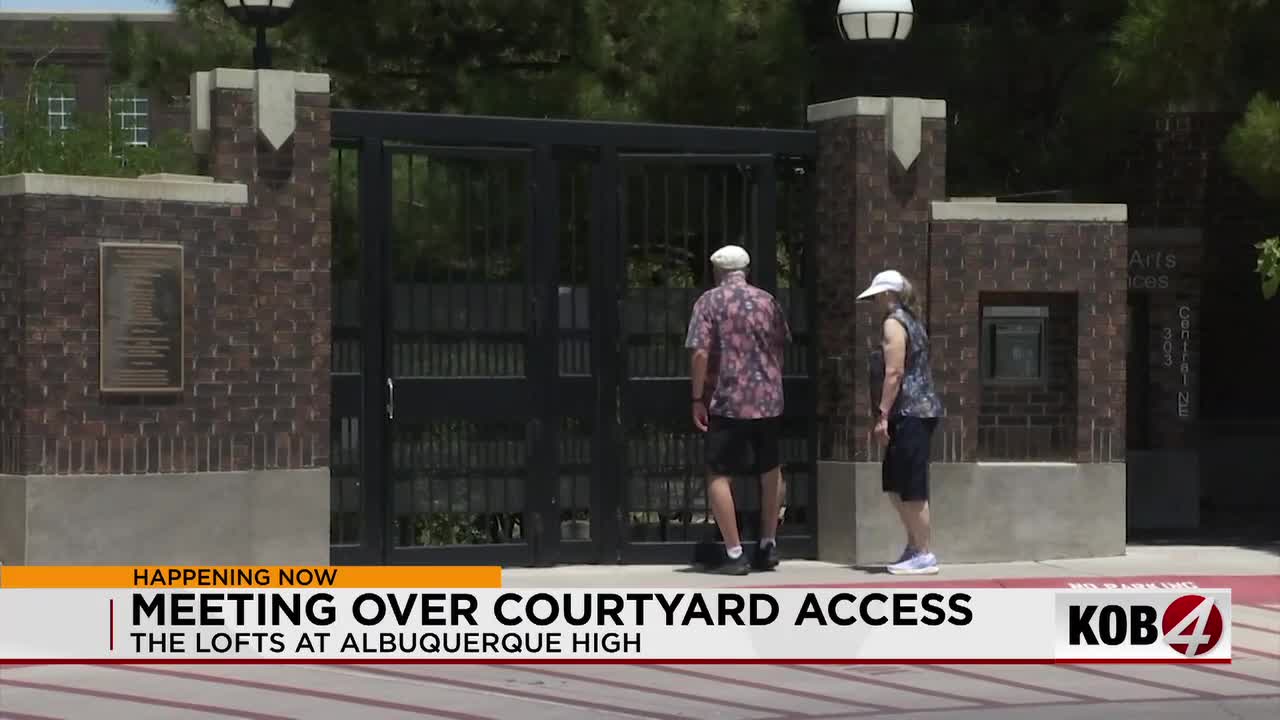
POLICY WIRE — ALBUQUERQUE, N.M. — In the desert air of New Mexico’s largest city, some battles aren’t fought with fists or firearms, but with forgotten covenants and a city’s sudden interest in a gate—a very specific gate, guarding what used to be a high school courtyard.
For a quarter-century, the towering gates of the Lofts at Albuquerque High stood as a quiet sentinel. They’ve marked a boundary, a divide between a private residential oasis and the vibrant, sometimes gritty, urban pulse of downtown. But like a ghost from bureaucratic archives, the city has suddenly resurfaced, demanding these very gates swing wide open, or the residents — now deeply entrenched in their self-contained world — had better be prepared to cut a new deal.
It’s a peculiar twist in the urban narrative, one where a twenty-five-year old agreement, seemingly dormant, sparks a full-blown community uprising. You see, back in 2001, when the venerable high school buildings were lovingly — and quite expensively — transformed into chic apartments, city and federal dough fueled much of the conversion. And with that cash, apparently, came strings: a clause stipulating the courtyard, now a sanctuary for residents and businesses alike, remained public domain. The city, according to Metropolitan Redevelopment Agency Director Terry Brunner, figures it’s high time they actually, well, acted like it. “That’s part of the current agreement we have, which is they’re required to keep that area open from 9 a.m. to dusk,” Brunner reiterated, sounding a touch exasperated by the sudden fuss over a decades-old policy.
But ask Laura Jepsen, a board member of the Historic Campus Association — and a resident — and you’ll get a vastly different picture. Her concerns, echoed by her neighbors, aren’t about denying public enjoyment. They’re about stark, lived realities. “Look, this isn’t about keeping people out. It’s about keeping the 400 plus of us here safe,” Jepsen said, her voice strained, probably because this fight feels like it’s come out of nowhere. “Sometimes, and it’s a harsh truth, people not doing so well have used our fountain to bathe, or the sides of our buildings for other… unsanitary purposes. We’re not running a charity; we’re trying to live.” The subtext here, clear as a bell, is that ‘public’ sometimes comes with liabilities that private citizens feel shouldn’t be their sole burden.
The sudden enforcement smacks of a financial squeeze, or perhaps a sudden philosophical shift in city hall. Brunner, however, insists it’s about squaring the books — and clarifying roles. He’s suggested negotiations, even offered a temporary reprieve on the gate closure if residents are playing ball. “We’re willing to keep that gate locked as long as we’re making progress on an agreement,” he conceded, seemingly understanding that forcing an issue this fast doesn’t exactly build bridges. But, crucially, part of those discussions reportedly involve the loft owners effectively paying rent for this formerly ‘public’ space they’ve long enjoyed exclusively. And that’s where the residents’ suspicion starts to really curdle: “Is this about money or is this about making this public and opening this up to the community?” Jepsen countered, posing a question many are asking silently.
The economic stakes here aren’t trivial. Beyond the residential units, the Lofts house Fat Pipe, a bustling coworking space home to over 40 businesses. These aren’t just people’s homes; they’re also livelihoods. John Simmons, a fixture at Fat Pipe, puts it bluntly: “For the people who live in the condominiums, and for the people who are doing businesses, this was a secure area. That was sort of part of the agreement people knew when they moved in here, or set up office here, and it’s not a city park.” Losing that sense of security could trigger an exodus. Jepsen, also Fat Pipe’s director, estimates a 10% revenue drop if leases pull out. And for businesses in this post-pandemic economic landscape, a 10% hit? That’s not a cut, that’s a gaping wound.
This whole kerfuffle — private security versus public access, contractual minutiae versus real-world risk — it’s not unique to Albuquerque. In Karachi, for instance, we’ve seen similar urban battles erupt over what were once accessible parks — and beachfronts. Wealthier enclaves have slowly, almost imperceptibly, walled off vast sections of public domain, ostensibly for security but effectively privatizing communal resources. It’s a common dilemma in rapidly urbanizing regions across South Asia, where the lines between ‘mine’ and ‘ours’ are constantly being redrawn by developers and city planners, often to the detriment of general accessibility. And you see similar discussions about what ‘public’ truly means.
What This Means
The showdown at Albuquerque High’s Lofts signals a broader trend in urban governance, where cities, starved for revenue and eager to reclaim public spaces, are revisiting long-standing informal agreements. This isn’t just about a single gate; it’s a test case. If the city pushes this through, it sets a precedent for challenging other similar de facto private uses of public property across Albuquerque. But the economic impact of displacing businesses — and upsetting residential stability could also be a major blow. A 2021 study by the Trust for Public Land found that access to parks and public spaces boosts nearby property values by an average of 20%, but the fear here is that opening gates could, paradoxically, depress commercial and residential interest due to perceived safety risks. This dynamic — prioritizing theoretical public access over demonstrated economic stability and resident safety — highlights a disconnect in urban planning, one that could lead to unforeseen consequences, particularly if the businesses flee, leaving empty commercial spaces and undermining the very vibrancy the city claims to be promoting. it complicates civic engagement; the Metropolitan Redevelopment Agency’s refusal to attend a recent community town hall, citing a preference to negotiate with “representatives of their association” rather than 60-80 concerned citizens, shows a potential bottleneck in transparent local governance.
And so, the gates remain a focal point. They represent the delicate balance between a city’s ambition for public commons and the citizens’ fierce protection of their perceived safe havens. It’s an unfolding drama, one that speaks volumes about who owns our cities and how those ownership claims are enforced, or ignored, then resurrected decades later, almost on a whim. The future of downtown Albuquerque’s architectural gem— and potentially many like it — now hangs on whether a door, once closed for convenience, must now be prised open for principle.
But the residents, they’re digging in. They don’t see a public space. They see their home. And they’ve already demonstrated their willingness to fight.