


Phantom Homes, Green Dreams: New Mexico’s Costly Post-Flood Reclamation Battle
POLICY WIRE — Ruidoso, N.M. — It isnt just the sight of their homes mangled by raging water, or the echoes of loss, that haunt folks in Lincoln County, New Mexico. No, it’s the quiet dread that...

POLICY WIRE — Ruidoso, N.M. — It isnt just the sight of their homes mangled by raging water, or the echoes of loss, that haunt folks in Lincoln County, New Mexico. No, it’s the quiet dread that twists every waking hour—a peculiar purgatory where an email, or a lack thereof, determines your next breath. But this isnt just about one town’s disaster; it’s a policy quandary writ large, an echo of what far-flung, water-scarred communities across the globe—from the deserts of Balochistan to the banks of the Rio Ruidoso—are learning to live with: how exactly do you buy back a future after it’s been washed away?
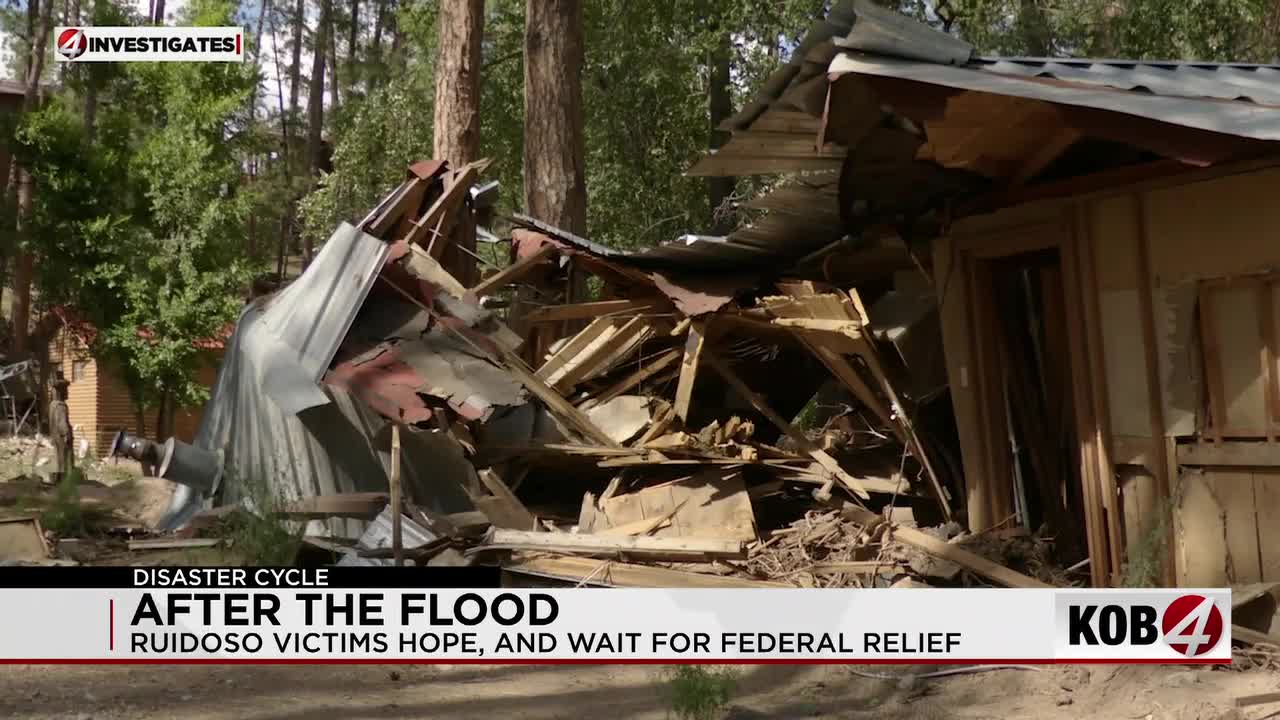
Jennifer Brewer, a retired teacher who’d planted her retirement dreams in Ruidoso nine years back, knows this particular waiting game intimately. Her house sits a mere stone’s throw from the Rio Ruidoso, which, last July, became a monstrous beast. She says, It was terrifying
— and I had never seen anything like that much water
. The water obliterated her patio, her shed—a minor mercy, perhaps, when homes nearby were just gone. When the river’s flowing like that you hear this base drum sound going boom…boom…and it’s the boulders going down
, she told us, conjuring the destructive music of displacement. [QUOTE_PLACEHOLDER]
But this tale of devastation leads to an offer, a federal safety net many hoped would materialize faster. New Mexico finds itself in an unwelcome spotlight, the first state tapping into a specific federal property buyout program for post-wildfire flooding recovery. Because in this part of the world, wildfires often set the stage for flash floods, stripping hills bare, turning rains into deluges.
And so, hundreds have applied, hopeful their phantom limbs—the memory of a home, a business—might finally be compensated. Brian — and Connie Willingham, who owned Paws on the River Dog Boarding and Grooming, were among them. The floods claimed their business and, tragically, six dogs, two of which were their foster pups. Brian describes the trauma, saying, You don’t want to misuse or not respect the term PTSD but it’s…it’s real
. Connie, still reliving the catastrophe, confessed, The names of the dogs, every day I think of them…
—then added a heart-wrenching thought: I almost feel like if I go in there, that it’ll be the same but I know it’s not
.
They’d sunk their retirement savings into that business. They’re still wrestling with an out-of-state bank over the wreckage. We make sure we go to bed happy with each other every night and know that somebody else is carrying us, and that it will be, it’ll be a new day, and we’ll find a way
, Brian stated, a testament to resilience amidst ruin. They got an eligibility letter in May, a glimmer, but are stuck waiting for what comes next.
This initiative, formally the Lincoln County NRCS Emergency Watershed Protection (EWP) Program, enables homeowners and business folks to offload their hazard-prone properties to Uncle Sam. The idea is to turn that dangerous land into county-owned green space. Lincoln County Manager Jason Burns isn’t shy about the scale of it all. The doom and gloom is real, the negativity is real and getting and drawing people back to town is the overall goal
, he admitted. They want to prevent a similar future. During their initial plea to the USDA, the county asked for an estimated $609 million to cover more than 1,100 homes and businesses, ranked by destruction level. The Feds, ever pragmatic, trimmed that to fund properties ranked 1 and 2—destroyed or significantly damaged—to the tune of $235 million. That money breaks down: about $176 million, or 75%, from the U.S. Department of Agriculture, — and New Mexico is on the hook for the remaining 25%, some $59 million. The state has already earmarked $25 million from this year’s budget.
As of July 1, 2026, a specific point in time Burns confirmed, 312 individuals had applied for the program, with 278 making it past the initial eligibility screening. Currently, 212 properties are caught in the appraisal process. Being able to give them an out for these homes that are destroyed – and they’re not relying on insurance and the FEMA programs – that we can actually come in and not only help them but eliminate a future potential hazard and risk is, you know, a win-win for everybody
, Burns mused, highlighting the program’s preventative element. Once the appraisals are done—based on market rates *before* the 2024 wildfires (a small but important detail, wouldn’t you say?)—property owners get a simple choice: accept or decline. Jennifer Brewer, like so many others, is stuck checking her inbox, a poignant digital ritual. We’re all just hoping, you know every day checking our email 53 times like a girl waiting for a boy to call and hoping we get an offer
.
What This Means
This saga in Lincoln County isn’t just a local drama; it’s a case study in disaster economics and adaptive policy that ripples far beyond New Mexico’s borders. The decision to invest millions in buying out properties, rather than rebuilding in place, signals a painful but necessary acknowledgment of climate change’s persistent hand. Politically, it’s a tightrope walk: securing federal funds to appease desperate residents while managing taxpayer money—some $59 million from the state—in the face of mounting climate risks. This pre-emptive strategy, turning hazardous areas into open space, is an evolution from the perennial cycle of rebuilding, only for the next flood to take it all away. Economically, while it offers a lifeline to individuals, it also means a reallocation of property value, perhaps chilling future development in once-desirable but now-dangerous areas.
But there’s a wider lesson here. This struggle for equilibrium between federal purse strings and local catastrophe is a mirror to issues in countries far less equipped. Take Pakistan, for instance, where catastrophic floods in recent years—fueled by erratic monsoon patterns, another symptom of global climate upheaval—have displaced millions. The challenges faced by communities in Sindh or Balochistan often dwarf New Mexico’s plight, lacking robust federal safety nets or buyout programs. Their governments contend with overwhelming displacement, inadequate housing, and the Sisyphean task of rebuilding infrastructure without the same deep pockets or administrative capacity. Both scenarios, however, spotlight the creeping costs of a changing climate and the political will—or lack thereof—to manage mass internal migration. It asks a profound question: What is the true cost of allowing communities to rebuild in harm’s way, versus the upfront cost of managed retreat? Policy decisions like this, here in New Mexico, could offer models—or cautionary tales—for vulnerable regions around the world striving for a similar level of managed adaptation, though with significantly less bandwidth to deal with it.