
Suffocation From Afar: North America’s Air Quality Crisis Isn’t Just Local Anymore
POLICY WIRE — New York City, USA — For residents of the Twin Tiers, the air itself has become a phantom invader, an unseen siege arriving not with a sudden impact, but a slow, choking embrace. What...

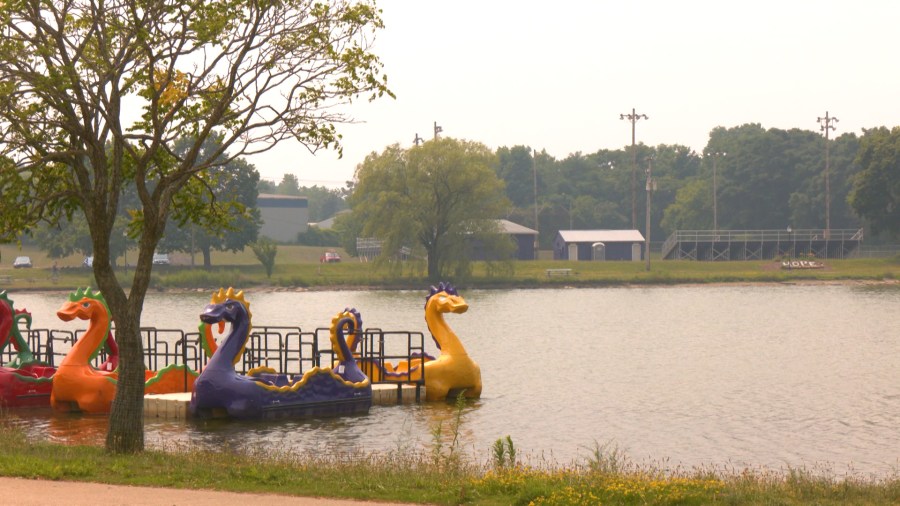
POLICY WIRE — New York City, USA — For residents of the Twin Tiers, the air itself has become a phantom invader, an unseen siege arriving not with a sudden impact, but a slow, choking embrace. What used to be crisp, Northeastern autumn or vibrant summer skies have repeatedly dissolved into a sickly, amber-tinted haze, courtesy of wildfires burning hundreds, sometimes thousands, of miles away. It’s not just local pollution anymore. This isn’t the industrial grime we grew up with; it’s a grim, continental exchange of atmospheric detritus, driven by a changing climate and-frankly-a global indifference to its early warnings.
It’s a stark reminder that geography offers little sanctuary when the elements decide otherwise. Wildfire smoke, heavily laden with fine particulate matter (PM2.5), has blanketed vast stretches, turning outdoor activities into health hazards. Think about it: a barbecue turns into an inadvertent lung irritant, a morning jog becomes a risk calculation. And this isn’t some rare, anomalous event; it’s rapidly becoming the region’s uncomfortable “new normal,” demanding a different conversation from politicians than the usual election-cycle platitudes.
“We’re telling folks to stay inside, to filter their air, to fundamentally alter their daily lives,” remarked Mayor Evelyn Reed of Elmira, reflecting the growing exasperation among local leadership. “But you can’t run an economy from a sealed bunker. This isn’t just an inconvenience; it’s a genuine threat to livelihoods and well-being, pushing our already stretched public health systems to the brink. We need systemic solutions, not just advisories.” It’s a tough spot for anyone, caught between protecting citizens and not wanting to spark widespread panic.
Because, make no mistake, the health impacts aren’t minor. Short-term exposure can trigger asthma attacks, exacerbate heart disease, — and cause respiratory problems. But long-term exposure? That’s a different, much grimmer narrative playing out across emergency rooms — and doctor’s offices. According to the U.S. Environmental Protection Agency (EPA), an Air Quality Index (AQI) exceeding 100 is considered unhealthy for sensitive groups. Often, during these persistent events, parts of the Twin Tiers region have witnessed sustained readings well into the ‘unhealthy’ (151-200) and even ‘very unhealthy’ (201-300) categories, pushing even healthy individuals into risky territory.
This North American problem isn’t unique; it’s a grim echo of the suffocating realities in mega-cities across the Muslim world and South Asia. Think about places like Lahore or Delhi, where winter brings an annual, deadly smog season, where particulate matter often far exceeds healthy levels, sometimes for weeks on end. It demonstrates that the global climate crisis doesn’t discriminate based on economic standing or geography—it’s just a matter of who feels the brunt first, and most often. But eventually, it gets around to everyone.
“What we’re seeing across the Twin Tiers—and frankly, across the continent—isn’t an isolated incident, it’s not just ‘bad luck’,” stated Dr. Lena Khan, a climatologist at the American Geophysical Union, whose work often connects climate patterns to global human migration. “It&s a stark, hazy reminder that climate dynamics don’t respect borders, and our largely reactive policy frameworks are struggling to keep pace. We’re effectively importing the ecological disasters of one region into another’s lungs.” It’s a particularly pointed assessment of what’s become an ongoing policy blind spot.
📄 POLICY WIRE WHITEPAPER PUBLISHED: PAKISTAN'S NATIONAL SECURITY POLICY PRIORITIES
👉 READ BY CLICKING HEREBut the real costs run deeper than coughs — and cancelled ball games. There’s the economic drain from reduced productivity, the strain on healthcare, the depressed tourism. And, for agricultural regions in the Twin Tiers, there’s the obscured sunlight affecting crop yields, not to mention the psychological toll of a constant, oppressive grey sky. The landscape shifts not just ecologically, but psychologically, becoming a perpetual source of low-grade anxiety for families trying to live their lives. It’s a classic example of what happens when grand environmental narratives become intensely personal, everyday irritants. For more on how global environmental strains are leading to unforeseen consequences, you might consider how "Flashes in the Dark: Hokkaido’s Fireworks Bear Signal a Global Squabble for Scarce Space" are reshaping international dynamics.
What This Means
The persistent degradation of air quality in the Twin Tiers region, mirroring similar incidents elsewhere in North America, throws into sharp relief the inadequacy of current environmental policy, both at home and abroad. Economically, we’re talking about tangible losses—lost workdays, healthcare expenditure spikes, and depressed consumer activity in affected areas. It hits small businesses hard, particularly those relying on outdoor commerce or foot traffic. Politically, these events intensify pressure on elected officials to acknowledge and address climate change directly, rather than offering short-term mitigation advice. There’s a subtle but palpable shift in public discourse; it’s no longer just about melting glaciers in far-off lands, it’s about what folks breathe in their backyard.
And then there’s the broader social equity concern. Who can afford high-end air purifiers? Who has the flexibility to work from home when outdoor air quality turns abysmal? Low-income communities and minority populations often bear a disproportionate burden from environmental hazards, and polluted air is no exception. This ongoing airborne crisis thus transforms from a purely ecological issue into a complex web of economic justice, public health equity, and legislative accountability. It becomes harder and harder for policymakers to defer or deny the consequences when the proof is quite literally in the air we all inhale.