

Pigskin Palaces and Policy Priorities: Arizona’s Latest $55 Million End Zone Opus
POLICY WIRE — Tempe, Arizona — Forget the ivory towers. The real architectural marvel drawing eyes at Arizona State University these days isn’t some groundbreaking research lab or an expanded...

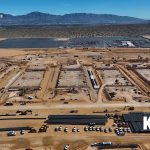
POLICY WIRE — Tempe, Arizona — Forget the ivory towers. The real architectural marvel drawing eyes at Arizona State University these days isn’t some groundbreaking research lab or an expanded library. No, it’s a gleaming new monument to the gridiron, a $55 million indoor football facility. Soon enough, it’ll stand where a mere parking lot, Lot 59, once did. Imagine that.
It’s the kind of spending that raises eyebrows, particularly when state budgets remain perpetually tight. Football, it seems, has become less a collegiate sport and more an arms race for premium experiences, each new amenity designed to out-dazzle rivals for recruits and donor dollars. This colossal practice pad, spanning 78,000 square feet, isn’t just for sweat and drills; ASU’s plans sketch out a multi-use fantasy, even serving as an expanded tailgating zone for future game days. Talk about priorities. From car fumes to victory fumes, a true evolution, one might say.
And yes, the facility is billed as essential. Athletic Director Graham Rossini, always quick with an upbeat assessment, confirmed the massive investment. “We’re talking about elevating the entire game-day experience, not just for the players, but for the folks who pack these stands. It’s about engagement,” Rossini told Policy Wire, alluding to the recent reconfigurations of stadium seating, including refreshed sections and some spiffy new North boxes near the Tillman statue. They’re refining those premium sections. And for good reason, apparently; the university boasted selling out all seven home games last season in its 54,000-seat Mountain America Stadium – a feat not every Big 12 school can claim. Money talks, crowds roar.
But the numbers involved in such endeavors consistently dwarf other, arguably more pressing, academic and community investments. Dr. Anya Sharma, an ASU economics professor who often tracks local development and university spending patterns, didn’t mince words. “When you earmark sums like $55 million for an athletic facility, you’re making a loud statement about where your institutional focus truly lies. It’s a competitive landscape, granted, but one has to ask if the student-athlete experience should consistently supersede, say, endowments for underfunded humanities programs, or perhaps more pressing local infrastructure needs.” Her observations, shared off-the-record in a coffee shop downtown, certainly underscore a growing sentiment.
Because let’s be honest, this isn’t just about throwing a ball around. This is big business, dressed up in school colors. The NCAA itself reported a record $1.28 billion in revenue for the 2023 fiscal year, a number largely fueled by its Division I men’s basketball tournament, yes, but emblematic of the sheer financial gravity within college sports. This kind of capital infusion into Arizona State’s athletic empire perfectly illustrates a broader trend; it’s an incessant push for expansion, for prestige, for the competitive edge – just like Old Trafford’s Shifting Sands reflects endless squad reboots.
📄 POLICY WIRE WHITEPAPER PUBLISHED: PAKISTAN'S NATIONAL SECURITY POLICY PRIORITIES
👉 READ BY CLICKING HEREThe groundbreaking is set for this fall, — and the fanfare, you can bet, will be considerable. Another jewel in the crown, they’ll call it. But while Tempe’s parking lot transforms into a sports cathedral, halfway across the globe, nations like Pakistan grapple with foundational issues that could only dream of such robust funding. Education, healthcare, sustainable infrastructure—these are the projects in places like Karachi and Lahore that strain against far tighter budgetary constraints, where millions are urgently needed not for improved tailgating, but for basic sustenance or a functional classroom roof. It makes one think, doesn’t it, about the wildly divergent scales of investment in human potential and public spectacle.
What This Means
The construction of Arizona State’s lavish new facility isn’t merely a local interest story; it’s a stark policy statement on the economic priorities of higher education in America. On one hand, it represents the continued professionalization and commercialization of collegiate athletics, where universities function as quasi-professional sports franchises vying for market share and public attention. The expectation is that such investments pay dividends in recruiting top talent, generating fan loyalty, and attracting larger media contracts – all contributing to the university’s overall brand value, however tangential it might be to its primary academic mission. It’s an escalating ‘arms race’ that makes mid-level universities mortgage their futures for momentary competitive advantage. On the other hand, this considerable expenditure sparks critical questions about resource allocation within the public university system. With state funding for higher education often diminishing, the funneling of tens of millions into athletic infrastructure—money that could hypothetically support academic departments, financial aid, or critical research—reveals a significant divergence from traditional educational objectives. For a broader, global policy perspective, the vast chasm in funding priorities between a burgeoning sports facility in Arizona and critical development needs in nations struggling with poverty, political instability, or natural disaster preparedness in the Muslim world (or any developing region) serves as a potent reminder of the uneven distribution of capital and focus in our interconnected world.