


Cardiff’s Green Wicket: India’s Sporting Ascent and England’s Lingering Imperial Ghosts
POLICY WIRE — London, United Kingdom — The thud of leather on willow on Welsh turf typically signifies an age-old sporting contest. But in Cardiff, where India’s cricket squad squares off...

POLICY WIRE — London, United Kingdom — The thud of leather on willow on Welsh turf typically signifies an age-old sporting contest. But in Cardiff, where India’s cricket squad squares off against England for the second One-Day International of 2026, the stakes transcend mere runs and wickets. What’s truly on display here is a subtle, yet undeniable, recalibration of global power, writ small across a cricket pitch.
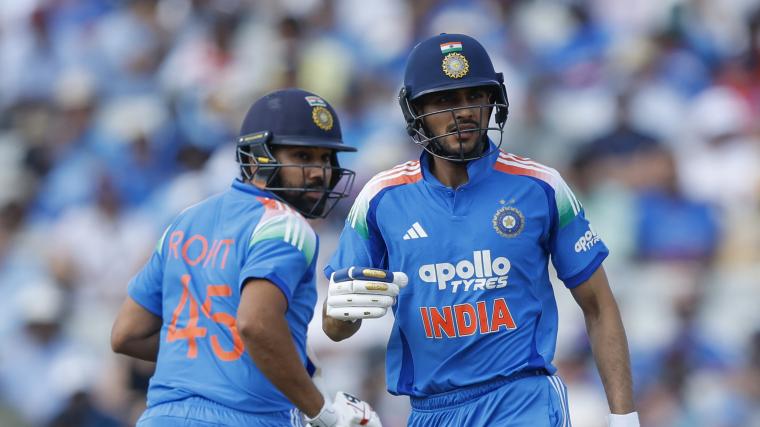
No, this isn’t just about Shubman Gill’s rumored hamstring tweak, though that matters greatly to fans glued to their screens—or the fate of captain Rohit Sharma, facing questions about his place as a senior statesman. This, frankly, is about a sporting nation’s inexorable climb, powered by an economy that now casts long shadows, challenging narratives once held sacred. England, scrambling to save a series at home after a brutal whitewash in the preceding T20s, isn’t just battling a visiting team; it’s grappling with the echoes of a changing world where its former colonial gem has outstripped it in myriad, often surprising, ways.
India’s six-wicket trouncing of England in the opener at Edgbaston wasn’t just a win. It was a statement. Axar Patel’s all-round masterclass—four wickets and an unbeaten 57 runs—alongside rookie Washington Sundar’s maiden fifty, offered a peek into India’s bottomless well of talent. These weren’t the star names, mind you, but players proving the bench strength could clinch games. It’s a national sporting project now; it really is.
“We’re not just playing for ourselves; we’re playing for the aspirations of over a billion people,” declared India’s Minister of Youth Affairs and Sports, Anurag Thakur, speaking from Delhi. “Our success on the field is a reflection of our nation’s growing confidence — and its economic dynamism. It’s a point of immense pride for every Indian, at home and abroad.” And when the Indian Premier League (IPL) alone pumped an estimated $1.2 billion into the Indian economy in 2022, according to D&P Advisory, you grasp that this isn’t simply sport—it’s serious business. A thriving economic engine, often powered by private investment, that’s quite separate from government coffers, thank you very much.
England, on the other hand, finds itself in an awkward spot, like an aging empire attempting to recall its lost dominion. Their captain, Harry Brook, will lead a team looking to shake off the mental rust—and perhaps a certain historical baggage. “Home advantage isn’t just about the crowd; it’s about understanding these conditions, leveraging the local support,” offered Claire Connor, a spokesperson for the England and Wales Cricket Board (ECB). “We know what’s at stake. This rivalry, it defines the sport. We owe it to our fans, and to the legacy of English cricket, to force a decider at Lord’s.” But even then, can they hold back the tide? It feels like pushing water uphill.
But the real tension isn’t necessarily on the scorecard; it’s the uncomfortable shift. India’s probable XI remains largely unchanged, barring Gill’s expected return, reflecting confidence. England’s side, featuring names like Ben Duckett and the perennial Joe Root, will be under intense scrutiny—especially after their top order wilted in Birmingham. It just shows how deep this disparity has gotten.
What This Means
This match, frankly, provides a fascinating, if subtle, lens through which to view geopolitical shifts. India’s ascendancy in cricket mirrors its broader aspirations as a global power—a significant player in the developing world, challenging established norms. Its substantial investments in sports infrastructure, coaching, and a highly competitive domestic league like the IPL, fuel not just athletic prowess but a tangible source of soft power and economic influence across South Asia and beyond. Think of how this ripples through the subcontinent: a successful Indian team offers a certain collective regional pride, even for its neighbors, like Pakistan, whose own cricketing ambitions are often viewed through the prism of India’s towering success. The economic clout generated isn’t merely theoretical; it creates jobs, drives tourism, and cements India’s position as a cultural trendsetter across the Muslim world. The financial might of the BCCI means India’s voice in global cricketing bodies often carries more weight, impacting everything from tournament schedules to rule changes.
For England, the stakes are different. A loss isn’t just a cricketing defeat; it’s another subtle chipping away at its self-perception as a global sporting hegemon. As former colonial powers struggle with post-Brexit economic realities and shifting international influence, even sporting contests become arenas for affirming, or denying, historical dominance. They’re struggling for identity—just look at the constant introspection over sports funding, stadium costs, and individual leadership.
The match in Cardiff isn’t simply a quest for a series trophy. It’s a compelling tableau of a world in flux, where former colonial subjects are carving out new narratives of success, both on the field and in the global arena. The ball’s in England’s court now—literally and figuratively. Can they find their footing?