
From ‘MyPillow Guy’ to Governor? Trump Bets Big on Populist Outsider in Minnesota
POLICY WIRE — Washington D.C. — The trajectory from late-night infomercial pitchman to gubernatorial hopeful in a Midwestern battleground state isn’t exactly a traditional one—it’s more of a wild,...

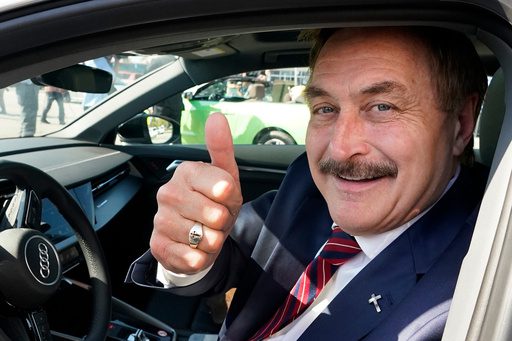
POLICY WIRE — Washington D.C. — The trajectory from late-night infomercial pitchman to gubernatorial hopeful in a Midwestern battleground state isn’t exactly a traditional one—it’s more of a wild, winding path paved with grievances and unwavering loyalty. This week, America witnessed that peculiar journey solidify, courtesy of a former president’s highly vocal blessing. It wasn’t just the endorsement of Mike Lindell, affectionately known as the ‘Pillow Man,’ that sent ripples through political circles. It was the chillingly familiar rhetoric accompanying it, the repetition of debunked narratives, and the precise, racially charged target of its scorn that truly underscored the enduring nature of Trump’s influence.
Donald J. Trump, never one to shy from theatrics, threw his considerable weight behind the MyPillow founder for Minnesota’s top job, painting him as “one of America’s greatest and most hard working Patriots.” Lindell, a perennial fixture on conservative media, had already cemented his national profile as arguably the former president’s most ardent public defender, echoing—loudly and often—the thoroughly debunked claims of a rigged 2020 election. But backing a fellow election denialist right before delivering a national address on “election security”—that’s not just timing, it’s performance art.
On his Truth Social platform, Trump didn’t mince words. “Mike will be SPECTACULAR!!!” he posted, the triple exclamation marks a classic flourish. “He truly loves Minnesota, as do I, — and wants to bring it back from oblivion and embarrassment. He can do it!” It’s the kind of pep talk designed to ignite a base, isn’t it? To conjure an enemy, then present the improbable hero.
And boy, did Trump conjure an enemy. He tore into incumbent Governor Tim Walz, whom he framed as a hapless progressive—and, in a particularly barbed move, painted Walz’s administration as rife with fraud, particularly singling out federal childcare spending. This is where it gets ugly. Trump didn’t just critique policy; he leaned hard into xenophobic undertones, targeting Minnesota’s sizable Somali immigrant population as the supposed architects of this alleged financial malfeasance. It’s a classic play from the populist handbook: find a scapegoat, demonize an ‘other,’ then rally the faithful.
Governor Walz, no stranger to Trump’s rhetorical jabs, didn’t flinch. “Frankly, we’re focused on actually governing, improving Minnesotans’ lives, not chasing conspiracies or validating celebrity endorsements for people who hawk fantastical election theories,” Walz retorted in a brief press conference. “Mr. Trump’s racist dog whistles — and fact-free accusations against our vibrant immigrant communities? They’re simply beneath the dignity of public office. We don’t dignify that garbage with anything but our record of progress.”
Because, you know, some things just require a blunt response. The claims of rampant fraud against Somali immigrants? They’ve been thoroughly debunked by multiple state — and federal investigations. But facts, for this wing of the Republican party, often feel secondary to narrative.
What This Means
Trump’s embrace of Lindell isn’t just about Minnesota politics; it’s a strategic move that broadcasts several signals across the American political landscape. Firstly, it reaffirms that loyalty to Trump’s election denial narrative remains a prerequisite for high-profile endorsements, especially in swing states. Secondly, it signals that the populist, outsider-candidate model—even for figures of unusual backgrounds—is still the preferred GOP flavor for a segment of the electorate. It also underscores a troubling pattern of racialized political attacks, an approach that has found fertile ground among segments of the American right. Consider, for example, the enduring accusations of vote fraud that have taken hold among a certain demographic, influencing how elections are perceived globally, much like allegations of voter irregularities have been weaponized in nations from Brazil to Pakistan, often targeting specific ethnic or religious minorities.
For Minnesota, this endorsement turns a gubernatorial race into a national referendum on election integrity (or lack thereof, depending on who you ask) and cultural identity. Walz’s campaign will undoubtedly use Lindell’s often outlandish statements and fringe beliefs to paint him as extreme and unserious. Lindell, on the other hand, will ride the anti-establishment wave, tapping into grievances amplified by conservative media. For instance, in the 2020 election, despite Trump’s rhetoric, over 2.7 million Minnesotans cast ballots for Joe Biden, a 7.1 percentage point margin over Trump, according to the Minnesota Secretary of State’s office, illustrating the uphill battle any Trump-backed candidate faces in the state. And yet, the fervor from the base can often overcome such inconvenient truths, especially if packaged correctly. The danger, politically, is that this kind of race can further polarize an already fractured electorate, diverting attention from tangible policy debates to a perpetual culture war.
Beyond American shores, particularly in places like Pakistan, the narrative surrounding a business personality-turned-political figure like Lindell – complete with claims of electoral fraud and thinly veiled xenophobia – probably resonates, but not in a good way. The targeting of a Muslim immigrant community in a Western democracy for political gain simply adds to existing tensions and distrust, impacting how American values are perceived. The same themes—questions of democratic legitimacy, charges of institutional corruption, and nationalist appeals—play out differently in other contexts, from political chess games in Freetown to Karachi, but the core machinery of populist grievance feels universal. Ultimately, this isn’t just a Minnesota race; it’s another chapter in a sprawling saga of American politics wrestling with its own reflection, an image both captivating and unsettling.