

Desert’s Thirst: New Mexico Holds Breath for Monsoon’s Long-Awaited Embrace
POLICY WIRE — ALBUQUERQUE, N.M. — The high desert holds its breath. It’s an old ritual, this patient vigil under an unrelenting sun, but this year, it feels different. It’s sharper. You can...

POLICY WIRE — ALBUQUERQUE, N.M. — The high desert holds its breath. It’s an old ritual, this patient vigil under an unrelenting sun, but this year, it feels different. It’s sharper. You can practically taste the desperation hanging in the dry air, a collective yearning that has little to do with meteorological arcana and everything to do with the quiet, persistent pulse of life in an arid landscape.
It’s Wednesday. A day that, for some time now, has been whispered about, marked on calendars, and discussed with the fervent, superstitious reverence usually reserved for elections or family reunions. The promise? A proper monsoon. Not just a tease, a rogue cloud dropping a few pathetic sprinkles, but the real deal. The kind of atmospheric deliverance New Mexico relies on, year after weary year, to keep its rivers from running entirely dry and its sprawling alfalfa fields from turning to dust.
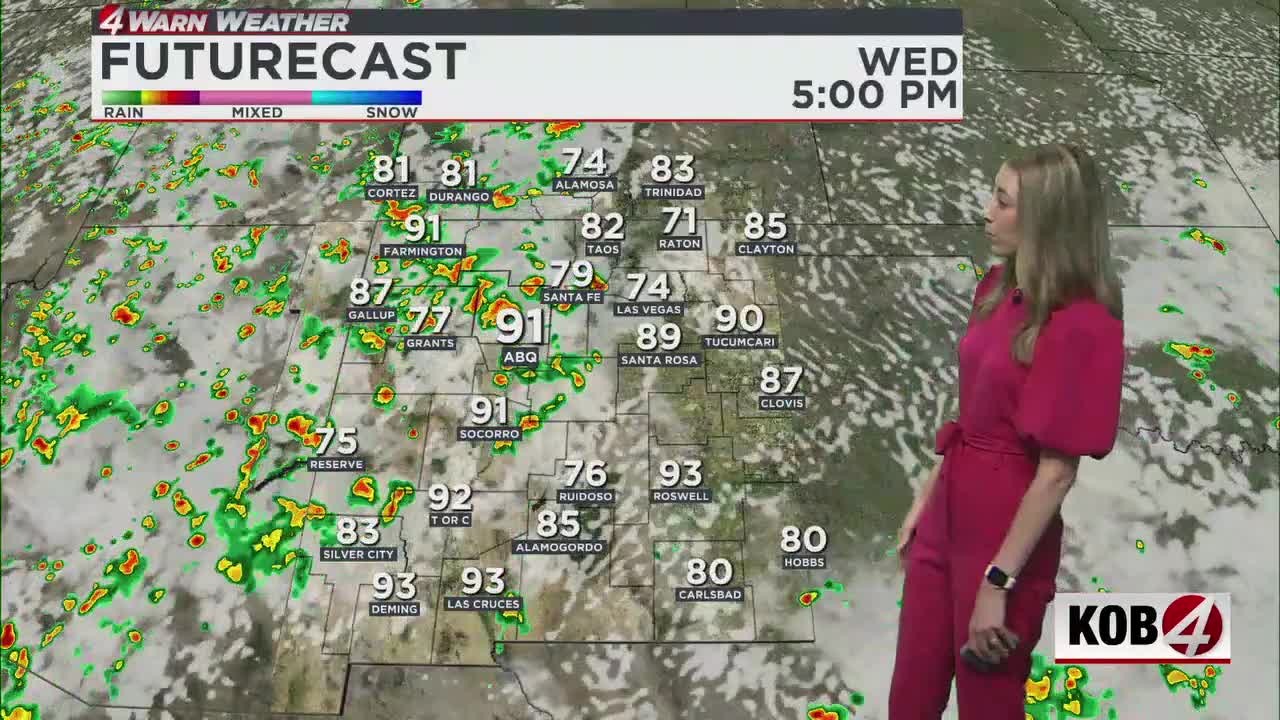
And yes, according to the boffins glued to their radar screens, it’s coming. Meteorologist Amanda Goluszka, whose name is practically synonymous with southwestern atmospheric anxieties, has painted a rather promising picture. Expect wide-ranging temperatures, from the upper 80s in the sun-baked valleys to a remarkably cool upper-60s flirtation in the highest reaches of the southern Sangre de Cristos. But the mercury, it turns out, is a bit of a sideshow. The main act? Precipitation.
Showers and storms—plenty of ’em—are slated to bubble up in the late morning, especially along the Central Mountain Chain and westward. That’s good news, but don’t count your raindrops just yet. General storm motion, we’re told, favors the south and west, pushing that coveted moisture into lower-lying areas by mid-afternoon. The Albuquerque metro area, a concrete sprawl that feels acutely the rhythms of the desert, is looking at a decent 40% chance of getting drenched, mostly late afternoon through dinner. It’s the best shot they’ve had in weeks.
But how do we get here? Blame—or credit, depending on your water bill—the slow, ponderous dance of continental air masses. A high-pressure system parked in the Midwest and another stubborn brute over the northern Rockies are essentially acting as enormous atmospheric paddlewheels, funnelling precious moisture straight into New Mexico’s dry maw. What that means on the ground is simple: any passing thunderstorm now packs a serious punch. They’re little self-contained deluges, capable of delivering heavy downpours, strong gusts, small hail, and enough lightning to make even the most seasoned desert dweller eye the sky nervously.
The city’s officials, pragmatic sorts, are trying to keep a lid on outright jubilation. “We’ve all been looking skyward, haven’t we?” quipped Albuquerque Mayor Janet Reynolds, a politician rarely accused of overstatement. “This isn’t just about breaking a dry spell; it’s about giving our infrastructure a test run, ensuring our storm drains can handle what nature throws at them. We’re ready, but everyone’s gotta stay sharp.” Her words, carefully measured, hint at the city’s recent past—the unexpected floodwaters that turn normal thoroughfares into temporary canals, the scramble to keep everything from sewage lines to retail storefronts dry.
Dr. Lena Sanchez, who heads New Mexico’s State Water Conservancy, has a more academic, yet equally stark, view. “The desert, she whispers patiently. But this monsoon… it’s been more of a shout this year, a cry for sustained hydration. We haven’t had consistently above-average precipitation here since 2018. Even this one day won’t undo years of aridification. We’re talking about a multi-year deficit.” She isn’t wrong. New Mexico’s water reserves, the lifeblood of its agricultural sector which accounts for a staggering 75% of the state’s total water use, have been under continuous strain for nearly two decades, data from the Bureau of Reclamation indicates.
And then there’s the subtle irony in the name itself. “Monsoon.” It rolls off the tongue with echoes of distant, verdant lands – the torrents of the Indian subcontinent, the life-giving, and sometimes devastating, rains that define entire seasons in places like Pakistan and Bangladesh. Their monsoons are an all-encompassing force, a deluge tied inextricably to national economies — and human migrations. Here, in New Mexico, our monsoon is a humbler cousin, a vital but often fickle benefactor. Still, its psychological grip on the population feels remarkably similar. The waiting, the watching, the profound relief or disappointment; it’s a shared human drama, scaled differently perhaps, but just as deeply felt.
What This Means
Beyond the immediate relief from dust and heat, this potential turn in weather has economic and political tentacles stretching surprisingly far. Farmers, especially those raising chile and pecans—New Mexico’s cash crops—are watching with hawk-like intensity. Good rains mean less irrigation, less strain on dwindling aquifers, — and hopefully, better yields. Bad rains, or insufficient ones, mean tough decisions, likely higher food prices at the local co-op, and a continuation of the state’s long-term water rights squabbles, often spilling over into legislative sessions. Because water, out here, isn’t just a resource; it’s a political currency. A consistent monsoon season could ease the perennial tensions between agricultural, municipal, and indigenous claims on the Rio Grande. But it’s not just about today’s rain; it’s about the climate future. The erratic nature of these seasonal events hints at deeper, more unsettling changes afoot. The politics of drought relief, federally subsidized water projects, and the accelerating retreat of mountain snowpacks are becoming less fringe issues and more central to Albuquerque’s —and the whole state’s—fiscal health. One might even argue that the humble Wednesday forecast isn’t just about the weather at all. It’s about the very economic resilience of a high desert state teetering on a hydrological edge.