


Shadow Play: A Former Street Urchin Unpicks South Africa’s Corrupt Police State
POLICY WIRE — Pretoria, South Africa — It’s a cliché, the narrative of the ‘new South Africa,’ a Rainbow Nation rising from apartheid’s ashes. But out on the streets, where...

POLICY WIRE — Pretoria, South Africa — It’s a cliché, the narrative of the ‘new South Africa,’ a Rainbow Nation rising from apartheid’s ashes. But out on the streets, where the rubber meets the harsh, cracked tar, things often feel less like a sunrise and more like an eternal, smog-choked dusk. And now, the arc of justice, bent by institutional rot and plain old greed, might just find its straightest path thanks to someone who once called those same grimy streets home.
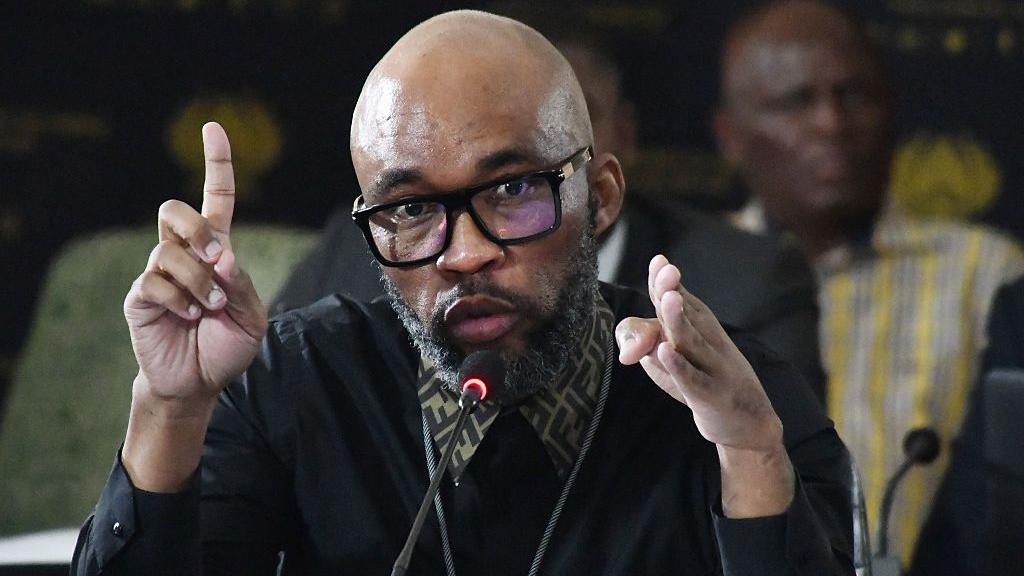
No clean-cut detective, no seasoned prosecutor, but a man—let’s call him ‘The Oracle’ for anonymity’s sake—whose life story reads like a gritty street epic, is peeling back layers of graft within the South African Police Service (SAPS). He wasn’t trained in forensic accounting; he learned surveillance — and survival the hard way, hustling just to eat. Now, he’s the key, allegedly, to dismantling networks that have strangled public trust for decades. You’d think high-ranking officials, clad in shiny badges, would be the ones to know where all the bodies were buried. Turns out, sometimes you need an archaeologist who knows where the dirt started.
His testimony, given under the usual heavy security that comes with rattling serious cages, reportedly details intricate payoff schemes, compromised investigations, and the cozy relationships between uniformed officers and the underworld figures they’re supposed to be chasing. It’s a gut-wrenching tale, honestly. Because who patrols the police, right? And what happens when those guardians become, well, partners in crime? This isn’t just about a few bad apples; it’s about orchards going sour, systematically, from the root.
“We’re absolutely committed to rooting out this cancer,” stated Justice Minister Palesa Mokgadi, her voice echoing the standard governmental resolve during a recent press conference. “But make no mistake, it’s a deep cut, one that requires brutal honesty to heal.” Sounds good on paper, doesn’t it? But behind closed doors, you can bet there’s panic. Because if someone from outside the system can expose this much, what else is lurking?
This saga speaks volumes about the challenges confronting nations striving for democratic maturity while battling ingrained corruption. Transparency International’s 2023 Corruption Perception Index, for instance, rated South Africa 72nd out of 180 countries, a slight decline from previous years, indicating persistent, serious issues. That isn’t just a number; it’s a measure of citizen disillusionment, of wasted resources, of a nation’s potential being actively suppressed. But, who truly hears those silent cries for integrity until a voice like ‘The Oracle’ dares to speak up?
It’s not just local cronyism we’re talking about, either. The international dimensions of this kind of institutional decay are sobering. Police corruption in one region, South Africa for example, often provides soft entry points for transnational criminal organizations. Think about illicit arms dealing, drug syndicates, even human trafficking. These networks, they don’t respect borders, do they? And their operations often connect seemingly disparate parts of the globe—like, say, smuggling routes that might find safe haven or transit through ports in the Arabian Sea, funneling illicit goods towards eager markets, and profits into waiting offshore accounts. It’s a global disease, requiring more than just localized antibiotics.
📄 POLICY WIRE WHITEPAPER PUBLISHED: PAKISTAN'S NATIONAL SECURITY POLICY PRIORITIES
👉 READ BY CLICKING HEREFor those living within this shadowed reality, ‘The Oracle’s’ emergence is less a revelation — and more a vindication. “The system’s eaten itself alive, hasn’t it?” remarked Thabo Nkosi, head of Citizens Against Graft, his weariness evident even through a phone line. “These revelations aren’t surprising; they’re just finally getting a voice that can’t be silenced by threats or promises of promotion.” It’s true. Often, the individuals with the clearest view of corruption are those at its margins, the ones forced to navigate its ugly contours daily.
The entire inquiry isn’t just about putting a few bent cops behind bars; it’s about a nation wrestling with its identity, with the very fabric of its public service. Can a nation truly move forward if the institutions designed to protect its citizens are the ones preying on them? Because the trust lost isn’t easily regained. It takes courage—raw, unvarnished courage—from people who’ve got nothing left to lose but their story.
What This Means
The unfolding drama in South Africa isn’t merely a local policing scandal; it represents a barometer for governmental integrity across developing economies. Economically, persistent corruption deters foreign investment, siphons public funds, and ultimately stifles growth, perpetuating cycles of poverty. It makes the country a riskier bet for international players—money moves to places perceived as stable and law-abiding. Politically, the implications are dire: a compromised police force erodes the social contract between citizens and the state, fostering widespread cynicism and occasionally leading to civil unrest. This deep dive into SAPS could, if handled effectively, mark a watershed moment for governance, potentially catalyzing broader reforms aimed at rebuilding public institutions. Or, conversely, it could demonstrate the entrenched nature of power — and the immense difficulty in cleaning house. How the South African government manages the aftermath of these testimonies, the inevitable scapegoating, the difficult pursuit of higher-ups—this will speak volumes about its commitment to true justice, not just public relations.