

The Pencil’s Edge: Pat Oliphant, Fearless Satirist and Unsparing Truth-Teller, Dies at 90
POLICY WIRE — Washington, D.C. — Imagine a world where humor still sliced through political posturing like a surgeon’s scalpel—sharp, precise, and without anesthetic. That was the landscape Pat...

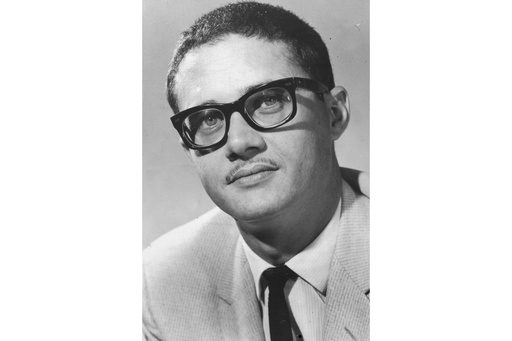
POLICY WIRE — Washington, D.C. — Imagine a world where humor still sliced through political posturing like a surgeon’s scalpel—sharp, precise, and without anesthetic. That was the landscape Pat Oliphant, who died Monday at 90 in Santa Fe, New Mexico, didn’t just observe; he helped shape it with ink and paper for over fifty years. Forget starting with his age or Pulitzer—though he did have one, and he didn’t even care for it. This was a man whose genius lay in skewering presidents with such audacious flair they became iconic, like Jimmy Carter with exaggerated teeth and lips, nodding to his farming roots, or Ronald Reagan sporting a cork in his ear, an acid comment on perceived indifference to suffering.
It’s a peculiar thing, the capacity for bluntness in a profession often constrained by polite company. Oliphant didn’t do polite. He was, as his son Grant Oliphant noted, someone who [QUOTE_PLACEHOLDER] wanted to be the best in the world, and he made a strong case for it. He rose from a copy desk aide in Adelaide, Australia, to become what many considered the most syndicated editorial cartoonist across the United States. During the 1980s alone, his daily political cartoons landed in more than 500 publications in the country and around the globe. That’s reach—a digital-age kind of virality, long before broadband existed.
But his brilliance wasn’t without its jagged edges. While Bill Banowsky, director of a documentary about him, said Pat Oliphant redefined what it meant to be a political cartoonist and to be fearless in his work, that fearlessness cut both ways. He didn’t shy away from touchy subjects: the Catholic Church’s pedophilia scandals in 2002? He tackled that. Israel’s offensive against Hamas in Gaza in 2008? Also on his radar. And this is where things often get messy.
Because some of his depictions, particularly those involving ethnic caricatures, drew serious complaints. Organizations like the Asian American Journalists Association and the American-Arab Anti-Discrimination Committee weren’t amused, flagging his work for false stereotypes and racism. It’s a reminder that humor, especially satire, operates on a fine line. What’s incisive commentary to one, becomes offensive distortion to another, particularly when it touches on already marginalized or misunderstood communities. Just as cartoonists in the West have sometimes struggled with representations that respect the nuances of a diverse Muslim world or South Asian populations, Oliphant’s work inadvertently highlighted this recurring global dilemma.
He first found his cartooning niche at The Advertiser in his hometown, making the leap across the pond about a decade later. Landing at The Denver Post in 1964, he snagged a Pulitzer Prize in 1967. But—and here’s the kicker—he thought the winning piece was the weakest submission. He then publicly bashed the prize process itself. The man simply didn’t stand on ceremony; he dissected it, with a sneer — and a sharp nib.
The arc of his career took him through The Washington Star before he settled in Santa Fe in 2002. Eventually, glaucoma started snatching his eyesight around age 80, forcing him to step back from the daily grind of political cartooning. Still, he kept painting at home. Hampton Sides, a writer — and friend, remembered him saying, He loved the creative ferment of Santa Fe. We had constant parties at his house far into the night with a wide range of thinkers, musicians — and writers. He enjoyed the constant interplay of ideas. It seems a fitting coda for a mind always buzzing with critique and creation.
And now, we’re in an era Grant Oliphant feels has lost something precious. Society, he posits, has shed the capacity to receive humor, debate, — and contrary opinions. My father challenged the idea of the political establishment being sublimely serious as it’s, Grant explained. We really need that in today’s America. Maybe he’s got a point. Can we even laugh at ourselves anymore? Can we let an artist make us squirm, forcing a new perspective?
What This Means
Pat Oliphant’s passing marks more than just the end of an individual life; it serves as a stark reminder of the evolving, and arguably shrinking, landscape for unflinching political satire. In an age of hypersensitivity, where a misplaced tweet can trigger global outrage, the kind of brutal, unsparing wit Oliphant wielded is increasingly rare. His legacy, however, is a two-sided coin. On one hand, it’s a powerful argument for the importance of holding power accountable through art, proving that a single drawing can say more than a thousand editorials. On the other, the legitimate complaints about some of his ethnic caricatures serve as a caution against satire that inadvertently reinforces stereotypes, particularly as global cultural sensitivities deepen.
From an economic standpoint, the space for widely syndicated cartoonists of his caliber has diminished drastically. Newsrooms, hit hard by declining revenue, can barely afford a staff cartoonist, let alone the extensive distribution networks that made Oliphant a household name for millions. His era, where a cartoonist could reach so many outlets, now seems almost a quaint anomaly. The ability for critical, visual commentary to broadly influence public opinion has fragmented, moving from daily newspapers to niche online platforms, losing some of its collective impact. Without a dedicated visual provocateur like Oliphant, society loses a key mechanism for grappling with uncomfortable truths—truths often best delivered through a drawing that simplifies the complex to expose the absurd. It’s a deficit we’ll likely feel for a while, particularly in nations where a bold, challenging voice is needed now more than ever.