


The Long Echo: A New March on Washington as Voting Rights Face Renewed Fire
POLICY WIRE — Washington, D.C. — Sixty years after a dream was articulated from the steps of the Lincoln Memorial, civil rights champions are again sounding the alarm, dusting off a familiar playbook...

POLICY WIRE — Washington, D.C. — Sixty years after a dream was articulated from the steps of the Lincoln Memorial, civil rights champions are again sounding the alarm, dusting off a familiar playbook for what they insist is an existential threat to democratic participation. It isn’t just déjà vu; it’s a chilling echo. They’re mobilizing for a new March on Washington, poised to remind a polarized nation that some fights, it seems, are never truly over.
It’s a peculiar moment for such a summons. For all the bluster of contemporary politics, the physical act of marching on the nation’s capital felt, to many, like a relic of a bygone era. But here we’re, facing legislative tides that advocates contend are systematically eroding access to the ballot box, particularly for minority communities. Statehouses across the country—they’ve been busy. Restrictions on mail-in voting, stricter ID requirements, aggressive purges of voter rolls, and limitations on early voting: it’s all on the table, and civil rights groups are feeling the squeeze.
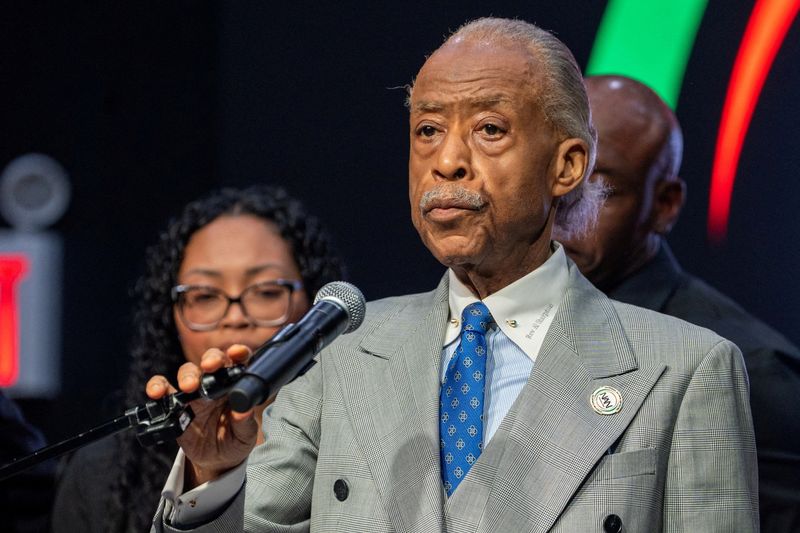
“We didn’t march all those years ago just to find ourselves back on the Capitol steps, begging for what’s already ours,” declared Rev. Al Sharpton, president of the National Action Network, his voice a familiar thrum of righteous indignation during a press briefing that felt less like an announcement and more like a warning shot. “This isn’t a plea; it’s a declaration. Our votes aren’t suggestions; they’re rights. Period.” His words, delivered with a preacher’s cadence, cut through the Capitol Hill din like a buzzsaw.
And he’s not wrong. The landscape’s shifted, no doubt, but the foundational concerns? They remain eerily similar. The push for federal legislation, notably the long-stalled John Lewis Voting Rights Advancement Act, feels like a direct repudiation of states’ increasingly muscular efforts to manage—critics would say manipulate—electoral processes. But without enough votes in Congress, its future looks dimmer than a coal mine on a moonless night. That means turning to direct action; it’s what activists do when legislative avenues feel blocked off, don’t you know?
Because, for many, the very integrity of the system is at stake. “My parents emigrated here, believing in the sanctity of the ballot box—the idea that every voice matters,” explained Dr. Jamila Khan, a prominent civil rights attorney and advocate for immigrant voting rights, speaking after the press conference. “To see that threatened now—it’s not just an American problem; it’s a challenge to the very idea of representative governance, globally. What message are we sending to fledgling democracies, say, in places like Pakistan, if America itself can’t protect its most basic democratic franchise? It’s not just a domestic issue anymore.” She makes a decent point.
The numbers don’t lie. According to the Brennan Center for Justice, by October 2023, at least 15 states had enacted 24 laws making it harder for Americans to vote in 2024, many disproportionately impacting Black and brown voters. That’s a stark figure, a clear trajectory. It certainly provides ample fodder for concern, doesn’t it? It suggests a concerted effort, not just isolated incidents.
The upcoming march isn’t just about nostalgia; it’s a strategic play, a full-throated attempt to resurrect public attention and pressure Washington power-brokers. Will it move the needle in the halls of Congress? That’s always the billion-dollar question. History offers lessons, but rarely guarantees. Still, there’s something undeniably powerful in bodies on the street, voices united. It’s a reminder of when change *did* happen.
What This Means
This renewed call to the streets for voting rights carries substantial political and, by extension, economic weight. Politically, it signals a deeper entrenchment of the culture wars, transforming procedural electoral debates into frontline battles for the soul of democracy. For the ruling party, it’s a tricky dance: alienating activist bases by failing to pass federal protections versus trying to cobble together unlikely bipartisan support—a notion more mythical than real these days. Expect the legislative impasse to solidify, forcing the issue into state and local courts, and, inevitably, into the narrative leading up to the 2024 elections.
Economically, persistent threats to voting access contribute to instability. When large segments of the population feel disenfranchised, it erodes trust in institutions. And fractured trust doesn’t exactly breed robust economic growth or foreign investment, especially in the long run. Corporations, wary of being drawn into political minefields, might face increased pressure to take stances, or simply avoid areas where controversies are simmering. Think about the discussions around how global entities view democratic stability; this kind of turmoil isn’t exactly a selling point for the ‘American model’ abroad. It’s akin to how a sudden crisis can redefine a nation’s standing, like when Gibraltar finally sheds a physical shackle but the economic uncertainties linger, or how other nations struggle to present a stable front.
the focus on voting rights resonates internationally, particularly in the Muslim world and developing democracies, where the U.S. often casts itself as the gold standard of democratic practice. Any perceived backsliding here, or public outcry about access to the ballot, provides ready ammunition for critics and autocratic regimes looking to delegitimize Western democratic norms. It makes America’s moral authority in pressing for democratic reforms elsewhere—say, in South Asian nations navigating their own complex electoral landscapes—sound a little hollow. The march itself, while American in context, plays on a global stage, inviting scrutiny from Kabul to Karachi. This isn’t just a D.C. story; it’s a world headline.