


Rhine’s Fleeting Reprieve: Rain Offers Breath, But Economic Currents Still Turbulent
POLICY WIRE — Cologne, Germany — There’s a peculiar kind of relief washing over Europe right now—a grudging, slightly cynical one. You see, the great Rhine River, Europe’s industrial circulatory...

POLICY WIRE — Cologne, Germany — There’s a peculiar kind of relief washing over Europe right now—a grudging, slightly cynical one. You see, the great Rhine River, Europe’s industrial circulatory system, is finally getting a bit of a top-up. Not a torrent, mind you, just a whisper more water thanks to southern German rains. But don’t let anyone kid you; this isn’t a fix. This is a pause button, a collective deep breath before the inevitable return of very dry times. We’re patching over cracks with a wet paper towel here.
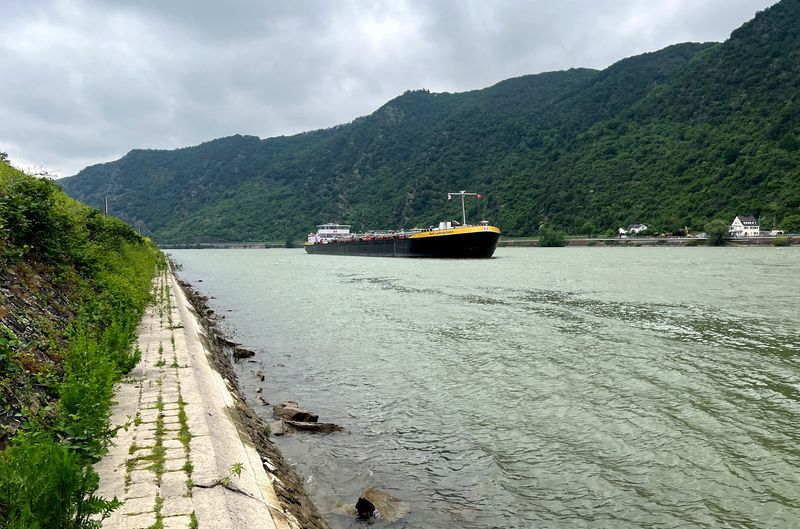
For weeks, industry bosses and logistics folks across Germany, France, and the Netherlands have been biting their nails, watching the water levels drop, drop, drop. Barges, the backbone of continental shipping, sat half-empty, scraping bottoms, or simply stranded. And now? A bit of precipitation, — and suddenly the headlines whisper ‘recovery.’ Recovery from what, exactly? A problem that’s only going to get worse? It’s almost laughable—if the economic consequences weren’t so decidedly unfunny.
“It’s a welcome sip of water for a parched throat, but hardly a full glass,” quipped Jürgen Haas, Germany’s Deputy Transport Minister, during a rather terse press conference earlier this week. His smile seemed painted on, a weary acknowledgment that everyone understands this is temporary. “We’ve gained perhaps a few days, maybe a week, before we’re right back where we started. But that marginal gain? It does allow some backlog to clear, some vital components to move.”
But for those slogging through the actual numbers, it’s a different tune entirely. The average daily cost of shipping critical commodities via the Rhine had soared by approximately 35% during its lowest points, according to data compiled by the Kiel Institute for the World Economy. Thirty-five percent. That’s not a rounding error, folks. That’s real money bleeding from balance sheets, getting passed down to consumers, and fueling the already raging fires of inflation.
Because, make no mistake, even with this ephemeral bump in water levels, those extra costs don’t just vanish into thin air. Fuel surcharges, insurance premiums for low-water transit, rerouting fees—they’re all baked in now. You don’t just turn off a supply chain’s cost faucet with a sudden downpour. “These ripples hit hard, far beyond the riverbanks,” explained Elke Richter, President of the Association of German Freight Forwarders, her voice flat, devoid of the cautious optimism spouted by politicians. “Businesses have adapted by using more road and rail, which aren’t cheaper, and certainly aren’t as efficient for bulk goods. This isn’t a return to normal; it’s just a slightly less painful abnormal.”
📄 POLICY WIRE WHITEPAPER PUBLISHED: PAKISTAN'S NATIONAL SECURITY POLICY PRIORITIES
👉 READ BY CLICKING HEREAnd let’s zoom out for a second, because Germany’s struggle on the Rhine isn’t happening in a vacuum. The global supply chain, already teetering from pandemics and geopolitical squabbles (ever seen the price tag on shipping something through the Red Sea lately?), just can’t catch a break. The same climatic instability drying up Europe’s ancient waterways is hammering agricultural yields and displacing populations thousands of miles away. Look at Pakistan, for instance, a nation grappling with its own extremes—devastating floods one season, acute water scarcity the next. Its agricultural backbone, just like industrial Europe’s, is utterly reliant on capricious natural systems. The parallels are chilling, a stark reminder that even seemingly localized weather events have global economic echoes. This isn’t just about German barges; it’s about the ever-fragile global dance of production — and delivery.
What This Means
This fleeting rise in the Rhine isn’t just a quirky weather report; it’s a microcosm of deeper systemic vulnerabilities that governments across Europe (and frankly, the world) are struggling to manage. Politically, it amplifies calls for massive infrastructure investment—deepening riverbeds, developing alternative transport networks, investing in climate-resilient planning—projects that cost billions and take decades. We’re talking about shifting entire economic models here. Economically, this translates into persistent inflationary pressure. It isn’t just fuel and food that are getting more expensive; the very act of moving goods around the globe is becoming a costly, high-wire act. Businesses will inevitably look for greater localization or diversify supply chains, often at an added cost. Expect Europe’s industrial heartland, which has historically relied on cheap, efficient river transport, to continue feeling the pinch for the foreseeable future. The illusion of a quick fix only postpones the reckoning.
But also, it exposes a kind of psychological fatigue. Decision-makers — and the public alike are exhausted by one crisis after another. A small dose of good news, however flimsy, gets embraced a little too enthusiastically, masking the ongoing, gnawing structural issues. It’s not just water levels; it’s a symptom of a world wrestling with changes far larger than a few days of rain can possibly assuage. It forces Europe to stare hard at its climate commitments, knowing full well that failing to adapt will literally leave its most important riverbed dry—and its industries gasping for air.