


Beijing’s Economic Machine Sputters: Ripples Beyond the Wall
POLICY WIRE — Washington, D.C. — They say when Beijing sneezes, the world catches a cold. But sometimes, it’s more like a subtle cough – deep in the lungs of a gargantuan economic engine – that...

POLICY WIRE — Washington, D.C. — They say when Beijing sneezes, the world catches a cold. But sometimes, it’s more like a subtle cough – deep in the lungs of a gargantuan economic engine – that leaves everyone else just feeling a bit chilly, wondering if a fever’s coming. China’s celebrated march to unceasing prosperity has hit a patch of thick fog, a reality far less glossy than the meticulously curated projections.
It’s not about the boom everyone expected. It’s about a slowdown—a measurable, undeniable deceleration. The second quarter, we’re told, saw China’s economic growth slow to 4.3%, an official figure reported by financial newswires globally. That number, it must be said, is still robust by most Western standards. Yet, within the gilded halls of Zhongnanhai and in the bustling, increasingly anxious metropolises, it hints at something heavier. Because it’s a stark recalibration from the meteoric ascents folks got used to. What does a ‘robust slowdown’ even mean, anyway? It’s economic newspeak for ‘trouble on the horizon,’ if you ask me. [QUOTE_PLACEHOLDER]
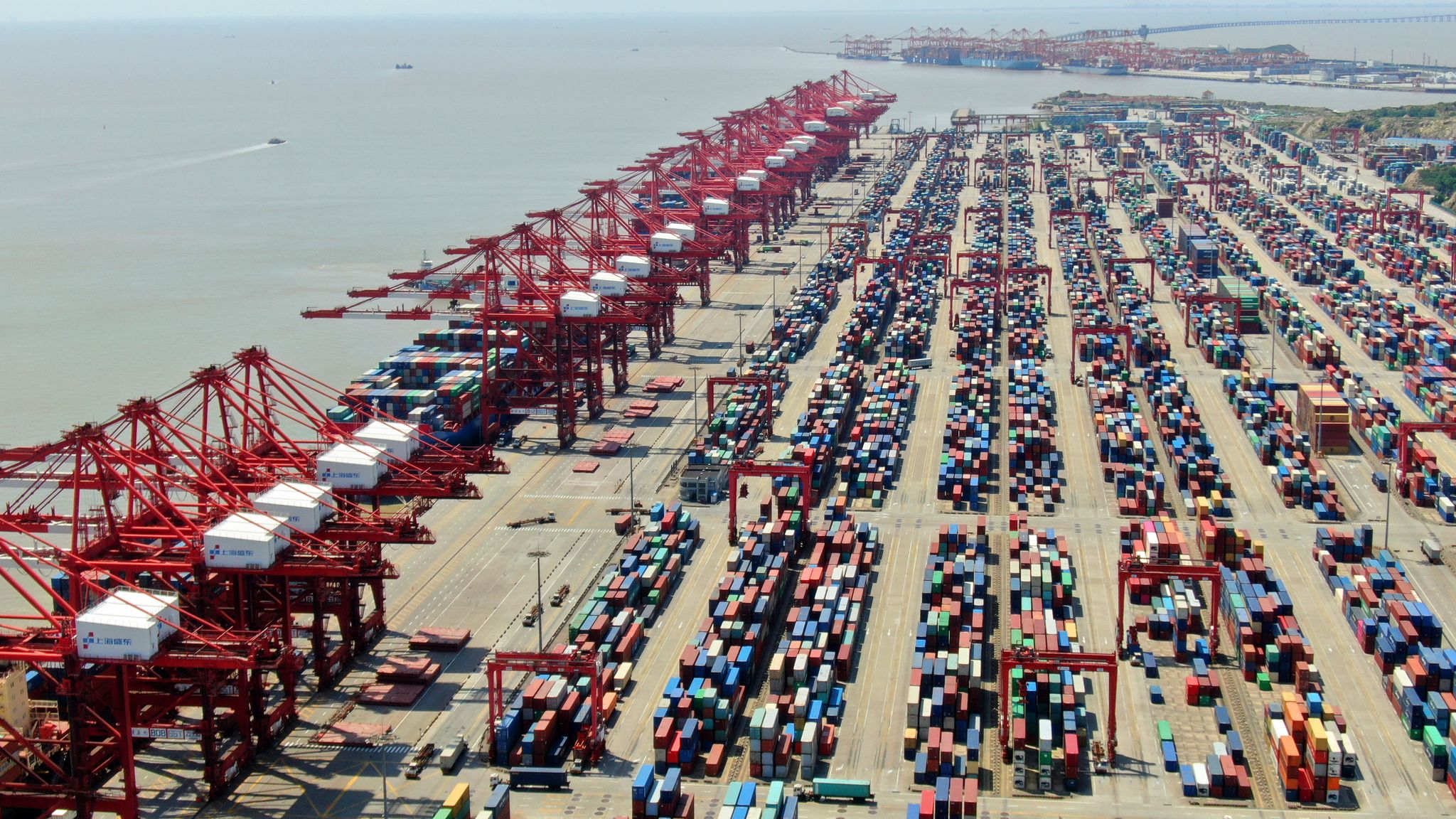
For years, China served as a relentless anchor for the global economy, pulling it forward through crisis after crisis. Its manufacturing might and insatiable consumer base meant the world always had somewhere to sell its widgets, some engine of demand to keep production lines humming. But this cooling doesn’t just impact China’s internal calculus. It messes with the global equilibrium, especially in developing regions deeply tied to Chinese trade and investment—think Belt and Road countries, those folks relying on Beijing’s deep pockets.
And those regions include places like Pakistan, whose economy has become intrinsically, some might say precariously, linked to China’s largesse via the China-Pakistan Economic Corridor (CPEC). When Beijing’s internal balance sheet tightens, or when its appetite for outward investment wanes even a touch, those grand projects in Islamabad, Karachi, or Lahore start to look a whole lot less like a guaranteed future and a lot more like a liability. It’s simple arithmetic, isn’t it? Less cash flowing from China means less cement for a dam, fewer rail lines connecting crucial hubs, slower payments to contractors. These are the intricate, often overlooked gears grinding together when a number like 4.3% flashes across a Bloomberg terminal.
You can bet your bottom dollar—or yuan—that every single policymaker in a nation with significant ties to Beijing is currently burning the midnight oil, redrawing economic forecasts. Pakistan, for instance, isn’t just balancing its own budgetary woes; it’s got to contend with the potential downstream effects of China’s tempered exuberance. We’re talking about potentially slower demand for Pakistani exports, a reevaluation of future Chinese investment pledges, and maybe a little less leverage at the negotiation table when Islamabad really needs a hand. But it’s not just Pakistan. Many countries throughout South Asia and the broader Muslim world, many having welcomed China’s investment where Western alternatives were scarce or came with too many strings, are now likely reassessing their exposure. It’s a pragmatic pivot, not a condemnation, because cold hard numbers rarely lie about intentions.
That 4.3% isn’t just a number, is it? It’s a statement. It reflects complex domestic challenges, like youth unemployment climbing (sometimes topping 20%), a property market teetering on the brink of significant corrections, and local government debts piling up like autumn leaves. But because everything is interconnected in this globalized sandbox, China’s internal wrangles become everybody else’s external pressures. It’s a cascading effect, a ripple moving outward from the epicenter, reaching distant shores where leaders are trying to chart their own course through increasingly choppy economic waters. It means global commodity markets get a bit jumpy. It means boardrooms across continents recalculate risk. It means the kind of certainty big business thrives on becomes, well, a whole lot less certain. The world’s just watching — and waiting, you know?
What This Means
This economic slowdown in China is more than just a momentary blip; it represents a significant structural challenge with profound geopolitical ramifications. First, it forces Beijing to prioritize internal stability, potentially diverting attention and resources from its aggressive foreign policy objectives. Don’t think for a minute that this slows China’s geopolitical ambitions, but it sure makes them harder to finance, potentially influencing its stance in the South China Sea or its posture toward Taiwan. There’s a subtle recalibration underway, a recognition that the economic bedrock underpins everything else.
Second, for the smaller nations, particularly those indebted through projects like CPEC, China’s economic moderation spells reduced flexibility and potentially tougher conditions for future engagement. Nations like Pakistan might find themselves with less diplomatic leverage and fewer immediate pathways to further development funding. It puts their leaders in a real bind, actually—balancing national development aspirations with the realities of a shifting global economic titan. This scenario could, interestingly, open a narrow window for renewed engagement with Western lending institutions, assuming those nations are willing to accept the attached conditions—a trade-off few found appealing when Chinese money seemed limitless and unconditional. Dollar diplomacy has a way of returning when other avenues shrink. But it also means other rising economies—Indonesia, India, even Turkey—could see an opportunity to court investment or expand their own influence as the gravitational pull of the Dragon moderates, at least temporarily. For a closer look at regional complexities, one might consider how digital narratives ignite tensions, as explored in articles like Digital Dynamite: Manipulated Clip Ignites Deadly Kashmir Protests.