


The Price of a Pop Fly: What a 433-Foot Home Run Reveals About Global Obsessions
POLICY WIRE — Chicago, USA — When Miguel Vargas launched a baseball a staggering 433 feet the other night, the Philadelphia crowd went predictably wild. But for some of us, perched on the older,...

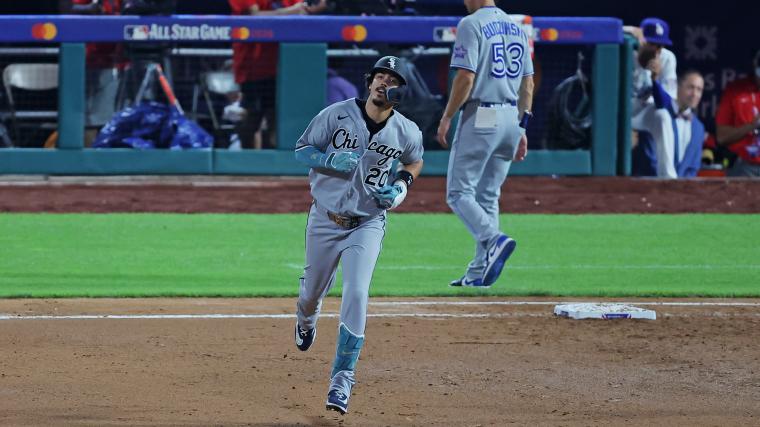
POLICY WIRE — Chicago, USA — When Miguel Vargas launched a baseball a staggering 433 feet the other night, the Philadelphia crowd went predictably wild. But for some of us, perched on the older, grittier benches of policy analysis, the trajectory of that white sphere suggested something more than athletic prowess—it traced the unseen lines of global economic disparities, and frankly, America’s often curious fixation on homegrown spectacle.
It was Tuesday night, at the 2026 MLB All-Star Game. Here’s a young man, a slugger for the Chicago White Sox, making what the popular press termed ‘special White Sox All-Star Game history.’ Before this season, no one would’ve thought of Vargas as being in that same category. Now, though, he’s shining bright, and on the big stage at the Midsummer Classic, Vargas got a pitch to clobber and didn’t miss it. An absolute smash. It was the game’s first extra-base hit, no less. But pause for a second: a moment like that, fleeting yet amplified by broadcast rights and sponsorship deals, embodies a peculiarly Western construct of ‘heroism’—one inextricably linked to immense financial capitalization and market share. [QUOTE_PLACEHOLDER]
And yes, Vargas didn’t miss that slider hanging up in the zone. Good for him. With that big blast, Vargas joined some exclusive White Sox history. He’s the third player from the White Sox to hit a home run in the All-Star Game, according to MLB Network’s Sarah Langs. For context, the market for such niche statistical tidbits, especially those linked to storied franchises, is, ironically, a massive industry unto itself—tens of billions, easily, when you tally media rights, merchandise, and associated tourism. The first to do so was Frank Thomas in 1995. Then it was Magglio Ordonez in 2001 leaving the yard while representing the White Sox. Vargas joins those two guys, two of the best hitters in franchise history. This isn’t just about baseball; it’s about the commodification of achievement, the elevation of specific, easily quantifiable feats into moments of manufactured transcendence.
Compare this singular, widely televised spectacle to the quotidian struggles of a rickshaw puller in Lahore or a street vendor in Karachi—whose daily economic output might, if he’s lucky, stretch to the cost of a single major league hot dog at one of these very stadiums. It’s an inconvenient contrast, sure, but a necessary one, especially when considering where global priorities actually lie. The fanfare around Vargas’s home run, while perhaps understandable within its own bubble, becomes almost absurd when viewed against the backdrop of critical infrastructure shortfalls, burgeoning energy crises, and perennial geopolitical friction gripping the broader South Asian landscape. And let’s not pretend sports exist in a vacuum; they don’t.
The sheer velocity of the pitch, the raw power of the swing—it’s captivating, I get it. But there’s a certain irony in a society that dedicates prime airtime and breathless punditry to a fleeting sporting event while less visible, yet far more impactful, policy decisions about trade agreements or climate accords are buried in footnotes. Beijing’s economic tremors, for example, send ripples across entire continents, influencing fuel prices from Riyadh to Rawalpindi, yet a significant segment of the public remains largely unconcerned, opting instead for the escapism of the Midsummer Classic. It’s a convenient distraction, an opioid for the masses, offering simple narratives in a world that craves them.
What This Means
This Homeric blast—a personal triumph for Vargas, undoubtedly—represents something far grander than mere statistics. It underscores the vast chasm between economies of spectacle — and economies of necessity. In a world where every flicker of celebrity is monetized, regions like South Asia often find themselves on the periphery of this particular brand of global attention. They’re often seen as consumers of outsourced goods or as geopolitical chess pieces, rarely as producers of the kind of marketable individual athletic heroism celebrated in this baseball arena. Because while cricket reigns supreme from Islamabad to Dhaka, baseball remains, for many, an abstract American pastime, its intricate histories and star-studded pantheons largely irrelevant to daily life.
The implications are subtle but profound. It speaks to a global attention economy where cultural soft power, like that embodied by MLB, continues to cement Western narratives and priorities, sometimes at the expense of understanding diverse cultural value systems. It’s a moment he’ll never forget, they say of Vargas. But across the Gulf, for those facing monsoon flooding or fluctuating food prices, it’s an event that never truly registered. The global market isn’t monolithic, — and neither is its attention span. We’re witnessing the persistent segmentation of global entertainment, where a home run’s impact diminishes dramatically east of the Suez Canal, replaced by its own set of heroes, its own grand narratives. This isn’t a criticism of baseball; it’s an observation of its carefully cultivated niche in a world grappling with vastly different definitions of what constitutes a ‘big blast’ and what truly counts.