

America’s Game Halts for Engineered Nostalgia Amidst Global Shifts
POLICY WIRE — Seattle, United States — For three brief, perfectly choreographed minutes, the unrelenting commercial machinery of Major League Baseball—a league raking in an estimated $10.8 billion in...

POLICY WIRE — Seattle, United States — For three brief, perfectly choreographed minutes, the unrelenting commercial machinery of Major League Baseball—a league raking in an estimated $10.8 billion in revenue during its 2023 season, according to Statista research—hit pause. It wasn’t for an injury. It wasn’t for a protest. It was for childhood. Specifically, it was for the kind of idealized, sun-drenched, celluloid-filtered childhood that likely costs several million dollars to reproduce for a national television audience.
This mid-game intermission, coming after the fourth inning of the All-Star Classic, had the unmistakable aroma of a meticulously crafted PR event. A nostalgia bomb, you could call it. It served not just as a nod to an iconic film but as a broad, sweeping invocation of a perceived simpler American past. A whole stadium full of fans and millionaire athletes were invited to participate in this grand theatrical exercise, complete in its calculated earnestness. [QUOTE_PLACEHOLDER]
It’s fascinating, really. Baseball, with its deep roots in American soil, finds itself, ironically, often competing with newer, faster, more globally accessible sports. But here, on this one evening, it consciously retreated to an era—or at least, the romanticized version of an era—where the game seemed pure, unsullied by player salaries, TV rights negotiations, and the sprawling tentacles of international sports betting.
As All-Stars took the field, they were joined by a group of kids on bicycles
, recreating a scene from the classic baseball movie, The Sandlot
. It wasn’t just any old group of kids, mind you. No, this was a carefully curated tableau designed to tug at the collective heartstrings. Actor J.K. Simmons, a familiar voice across a myriad of platforms, delivered the narration
and a certain soulful rendition of America the Beautiful
by Ray Charles underscored the entire proceedings. It’s a full-spectrum assault on cynical reason, isn’t it?
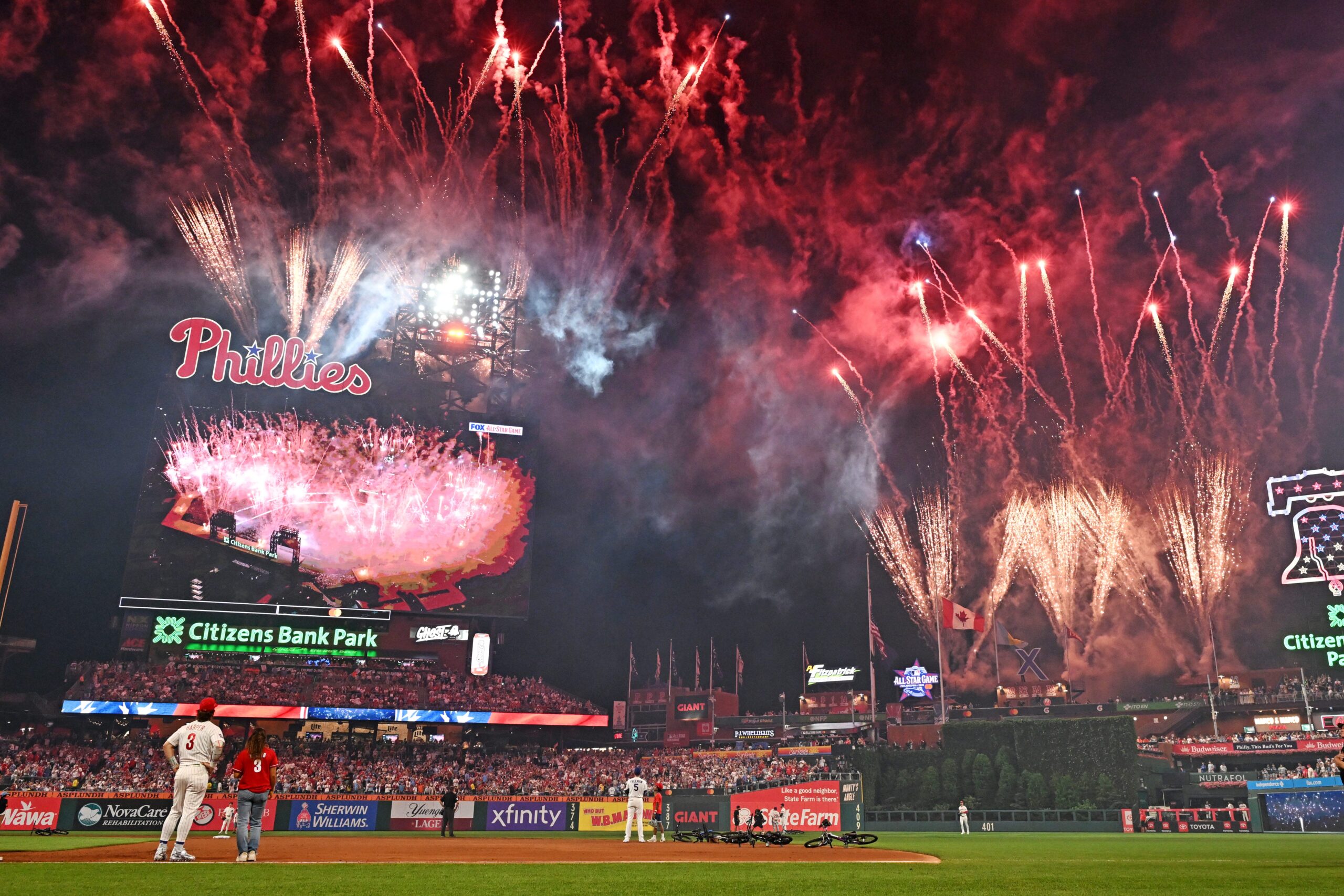
The display ended with a barrage of Independence Day-worthy fireworks display
—never understated, always maximum impact—a posthumous cheer for the nation’s 250th birthday that occurred earlier in the month. Then, just as swiftly as the collective illusion began, it dissolved. The game, bless its heart, resumed. The American League was leading the National League, 3-0. Back to business, then. The curated sentiment had served its purpose, briefly, like a fleeting dream from an analyst’s PowerPoint presentation. A clever bit of branding, you know?
But consider this: while America celebrated its gilded baseball past, in other parts of the world, national sports often carry a far heavier, more immediate weight. Take Pakistan, for instance. Cricket, for its fans there, isn’t merely entertainment—it’s a passion, a national identifier, often a respite from pressing geopolitical realities and economic strains. A similar event in Karachi, perhaps a street cricket match recreated with young enthusiasts, wouldn’t just be nostalgia. It’d be an affirmation of cultural resilience, a collective exhale. But our experience, over here, is so often packaged and processed into digestible, easily consumable moments of feel-good commercialism.
They’re selling more than just tickets or jerseys during these segments, they’re selling an idea. An image of wholesome, idyllic America, even as its complexity defies such simple portrayal. And really, isn’t that what all big industries do? Control the narrative. Manage the message. Keep everyone smiling. Or, at least, sentimental.
What This Means
This carefully orchestrated spectacle, framed as an homage to the game’s intrinsic purity, speaks volumes about the evolving interplay between corporate strategy and national identity in modern America. For the MLB, such an intermission isn’t just about entertainment; it’s a strategic investment in cultural capital, attempting to tether an ever-more commercialized sport to a romanticized notion of community and childhood. It’s an interesting bit of legerdemain—projecting a grounded, accessible image while operating as a global behemoth.
Politically, these public displays, especially ones invoking national symbols and anniversaries (like the nation’s 250th birthday), serve a subtle unifying function. In a fractured sociopolitical landscape, shared cultural touchstones become incredibly potent, even if superficial. They offer a moment of collective agreement, however fleeting, on what ‘America’ is supposed to represent. It’s an easy patriotism, mass-produced.
Economically, this is pure brand management. By linking the contemporary MLB—with its mega-contracts and international player pipelines—to a humble, community-centric past, the league attempts to broaden its appeal beyond hardcore fans, recruiting new generations by tapping into deeply ingrained societal values. But it also highlights a distinct Western phenomenon: the commodification of national feeling. Elsewhere, especially in developing nations, sporting identity is less often an elaborately produced segment and more often an organic, fervent expression of shared heritage, often driven by scarcity rather than abundance. So this makes you wonder, doesn’t it, about the future of national sports identities in a world so increasingly flattened by commercial design? The performance is over, folks. Now, buy some merch.