


Albuquerque’s Vicious Cycle: ‘Bonnie and Clyde’ Edition Ignites Policy Debate
POLICY WIRE — ALBUQUERQUE, N.M. — It’s a familiar dance, isn’t it? The one where justice system gets a hold of someone, only to let them go, often too soon. And then, well, the whole city holds...

POLICY WIRE — ALBUQUERQUE, N.M. — It’s a familiar dance, isn’t it? The one where justice system gets a hold of someone, only to let them go, often too soon. And then, well, the whole city holds its breath, waiting for the encore. This particular number, featuring Adrian Prevatt and Kaylyn Reynolds—an Albuquerque duo affectionately (or perhaps resignedly) dubbed the local ‘Bonnie and Clyde’—played out yet again. Just seven days after their last release from jail, they were back behind bars, pulled from a stolen truck after a gunpoint robbery. Call it recidivism. Or maybe, just plain predictable.
Police reports read like a low-budget action film, complete with erratic driving, a dramatic park detour, and the ever-present, watchful eye of a police helicopter. The alleged accomplice, Terrance Jackson, driving the stolen vehicle, apparently held employees at a Savers store on Carlisle Blvd. at gunpoint with Hailee Lovato before a high-speed chase commenced. Prevatt and Reynolds were, cops say, passengers during the initial chaotic spree, only to be conveniently dropped off under a parking garage before Jackson and Lovato smashed into a parked car. Because, why make it easy?
The Albuquerque Police Department (APD) spokesperson, Gilbert Gallegos, doesn’t sound surprised. He’s seen this show before. “It’s a revolving door, isn’t it? We nab ’em, the system lets ’em out, and then we’re right back at it a week later,” Gallegos quipped, a detectable weariness in his voice. “Doesn’t feel much like justice sometimes, does it?” He’s got a point. When officers—armed and focused—risk their necks, only for their arrests to stick for little more than a vacation, it makes you wonder about the long game.
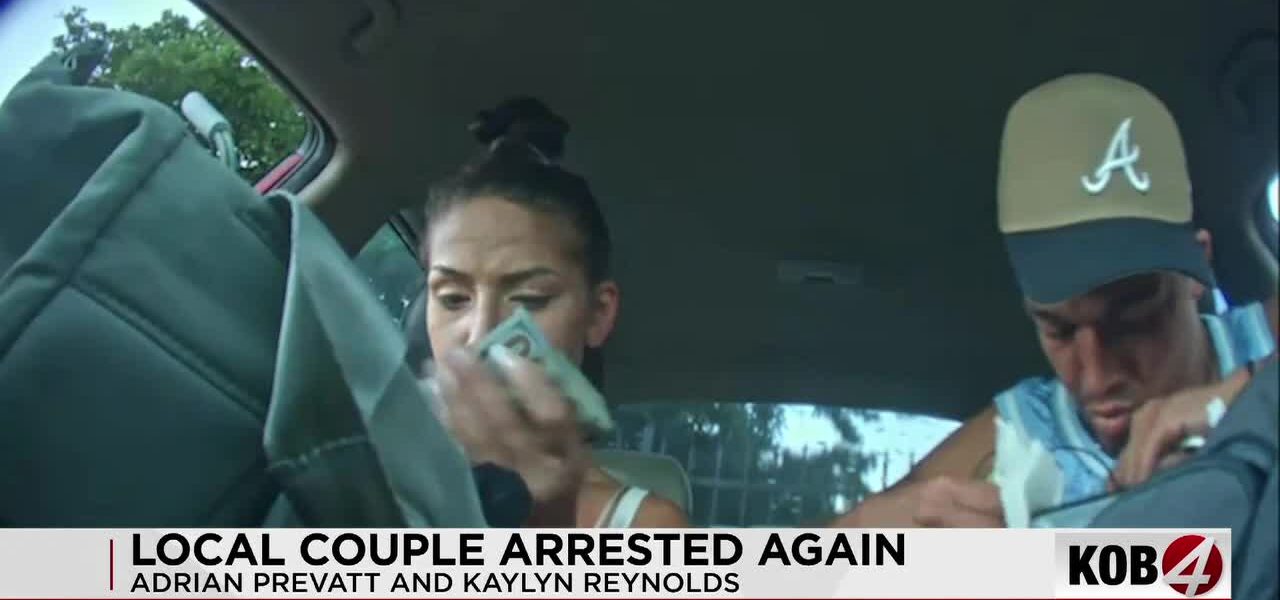
This wasn’t Prevatt — and Reynolds’ first tango with the law, not by a long shot. They’d been cuffed barely a week prior, on June 29th, for allegedly swiping an APD bait car. Inside that vehicle, the footage tells a story, captured before their second act. Reynolds, supposedly high-fiving Prevatt, crowed, “Bro, I’m smart, babe. Give me a high-five.” To which Prevatt, ever the romantic, responded, “I love the f*** out of you. You’re my ride or die.” These are not lines from a particularly heartwarming rom-com. And their loot? Cash, guns, ammunition—stuff you don’t typically acquire from a garage sale.
They walked free on July 2nd, with conditions. By July 9th, they were celebrating their freedom anniversary by getting arrested again. It’s almost clockwork. Gallegos articulated the systemic frustration clearly. “The fact is, they previously stole items. They were specifically looking. They were excited that it was someone from the military, and they were able to find guns and magazines with ammunition.” He emphasized, “Hopefully they stay in jail, and we shouldn’t have to be waiting and keep doing this over and over again to determine whether they’re a danger to society.” It’s an exasperated plea from the front lines.
Their alleged compatriots aren’t exactly choir boys either. Jackson, police allege, previously served time for voluntary manslaughter back in 2018. Lovato was facing a DWI charge in 2025. It seems this foursome has quite the rap sheet collectively. Charges from the recent July 9th escapade range from armed robbery and stolen motor vehicle charges for Jackson and Lovato, to receiving stolen motor vehicles for Reynolds and Prevatt. They all face conspiracy charges, because teamwork makes the dream work, apparently, even for petty crime.
📄 POLICY WIRE WHITEPAPER PUBLISHED: PAKISTAN'S NATIONAL SECURITY POLICY PRIORITIES
👉 READ BY CLICKING HEREThe ongoing saga of Albuquerque’s ‘Bonnie — and Clyde’ isn’t just a sensational local headline. It’s a stark, neon-lit indicator of profound systemic frailties, mirroring concerns reverberating far beyond New Mexico’s borders. And it’s not just about a few bad apples; it’s about a deeply tangled web of legal loopholes, insufficient rehabilitative programs, and strained judicial resources.
The financial burden on taxpayers alone from these repeat offenders is staggering. Each arrest, investigation, booking, court appearance, — and brief incarceration costs substantial sums. A 2019 report by the Bureau of Justice Statistics, for instance, indicated that nearly 62% of state prisoners released in 2008 were re-arrested within three years. This isn’t just a number; it’s a policy nightmare, manifesting as concrete fears in communities when public safety is repeatedly compromised. When individuals like Prevatt and Reynolds are caught red-handed, brag about it, are released, and then within days commit new, equally brazen crimes, it chips away at public trust—in law enforcement, in the judiciary, and in the very idea of predictable justice.
Such glaring gaps in enforcement — and follow-through don’t just stay within city limits. In the broader geopolitical landscape, the efficacy and fairness of a nation’s justice system can subtly, or not so subtly, impact its international standing. Developing nations, from Pakistan to Morocco, often face similar, if not more pronounced, challenges with judicial backlog, prison overpopulation, and reintegration failures, sparking debate on rule of law and good governance. The image of a developed country repeatedly failing to curb obvious criminal cycles can, for outsiders, undermine perceptions of domestic stability and effective governance—something international partners, and even adversaries, pay attention to. If a system can’t contain its ‘Bonnie and Clydes,’ what does that say about its capacity to tackle more complex, entrenched issues? It’s a question worth asking, even if it hurts to hear the answer. The cycle continues, — and so too does the exasperated sigh of a city caught in its orbit.