

Redrawing Deserts: Trump’s Monument Cuts Spark Ancient Echoes, Modern Ire
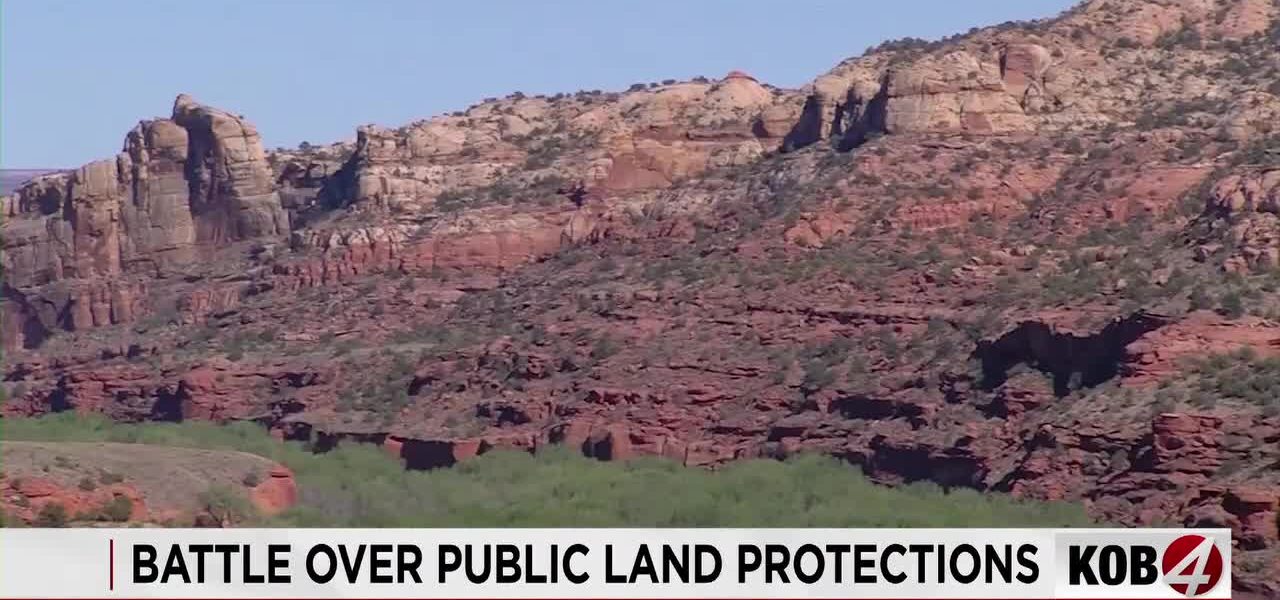
POLICY WIRE — Albuquerque, N.M. — A vast canvas of sun-scorched earth and ancient rock, stretching across nearly 3 million acres, doesn’t just hold petroglyphs and ancestral spirits. It holds...

POLICY WIRE — Albuquerque, N.M. — A vast canvas of sun-scorched earth and ancient rock, stretching across nearly 3 million acres, doesn’t just hold petroglyphs and ancestral spirits. It holds political dynamite—and the promise of buried riches. Ex-President Donald Trump’s unilateral decree to slash the protected status of two iconic southern Utah national monuments, Bears Ears and Grand Staircase-Escalante, by roughly 90% each, was less a standalone event and more the latest blast in a land war waged for generations. It wasn’t about conservation in any simple sense. It never is.
It was a decision that sent tremors of outrage through Indigenous communities — and environmental advocates. And it brought a weary, gut-wrenching sense of déjà vu. Back in 2017, President Trump took a chisel to protections forged by his predecessors, claiming these designations were nothing short of a massive land grab. But then, as political tides turned, President Joe Biden later re-expanded those same boundaries. You see the pattern, don’t you? It’s a cyclical tussle over sacred grounds, a constant push-and-pull with each new occupant of the Oval Office deciding what chunks of public land—and indigenous heritage—are fair game.
For those living with these landscapes embedded in their very being, the rhetoric of changing boundaries hits differently. Davina Smith-Idjesa, an impassioned voice with Bears Ears Inter-Tribal Council, articulated the raw, exasperated sentiment shared by many. [QUOTE_PLACEHOLDER] Today I am speaking from a broken heart. I am angry, I am hurt, and I’m tired of standing here having to explain again why Bears Ears matters to me, she stated, her words resonating with generations of disregarded sovereignty. She continued with a powerful, almost spiritual defiance, adding, You can redraw a boundary, but you cannot erase our prayers from this land, you cannot erase the footprints from this land of our ancestors, you cannot erase us.
This isn’t merely about lines on a map. It’s about access—who gets it, what for, and at whose expense. Critics, like New Mexico Sen. Martin Heinrich, didn’t mince words about the underlying motives behind Trump’s moves. They suspected, as many often do in such maneuvers, that a deeper economic play was afoot. [QUOTE_PLACEHOLDER] This is about a giveaway of our public lands to international corporations that want to mine for uranium and other minerals on our lands, Heinrich warned. And he wasn’t alone in that observation; many Democratic voices saw it as another volley in a [QUOTE_PLACEHOLDER] pretty relentless war on our public lands, primarily for the benefit of extraction industries.
But wait, there’s always another side, isn’t there? Supporters of Trump’s executive action spun a different tale. They contended that the Antiquities Act, the very law that allows presidents to declare national monuments, was twisted out of shape. Its original intent, they argued, was to protect only the smallest necessary areas, not sprawling, multi-million-acre swathes. Trump himself defended the controversial move by framing it as a matter of redress, a restoration of equity to local communities. [QUOTE_PLACEER] It was very unfair to the people of Utah, he declared, [QUOTE_PLACEHOLDER] and now fairness has been brought back. It’s going to be better taken care of, — and they’ll be able to use it a little bit. That notion of usability often translates directly to mining leases, logging permits, — and other commercial endeavors.
The back-and-forth isn’t new. Presidents from both sides of the aisle have altered monument boundaries over the years, proving that these landscapes, despite their ancient heritage, remain subject to the shifting whims of political power. Autumn Gillard captured the quiet resilience when she noted, Our relationship with this land didn’t begin when it became a monument, and it doesn’t end when political administrations change its boundaries or protections. Because true connection runs deeper than legislative decree.
📄 POLICY WIRE WHITEPAPER PUBLISHED: PAKISTAN'S NATIONAL SECURITY POLICY PRIORITIES
👉 READ BY CLICKING HEREWhat This Means
The contentious slicing of these national monuments, with its 90% reduction, isn’t just a squabble over remote desert; it’s a stark reminder of the global scramble for resources and the perpetual vulnerability of ancestral lands. And the impact ripples far beyond the United States. Take, for instance, many developing nations across South Asia or the Muslim world, where mineral-rich regions often coincide with historically significant or religiously sensitive sites. Governments, desperate for economic growth or facing international pressure for resources like rare earth minerals or, yes, uranium, frequently eyeball lands long held sacred by Indigenous populations or minority groups.
The narrative echoes through places like Pakistan’s Balochistan, rich in copper and gold, where local communities often contend with federal policies overriding their customary rights for large-scale mining projects, or historical Buddhist sites in Afghanistan facing modern exploitation. Policy changes here, like the ebb and flow of monument protection, signal to international extractive industries that even ‘protected’ land can be, well, unprotected under the right political conditions. It sets a precedent, a chilling green light for corporate interests seeking new frontiers—a global implication not lost on anyone tracking global resource competition and land grabs.
This dynamic plays out endlessly, isn’t it? The very same debates over who truly owns the land, whose history counts, and whose future gets prioritized, animate political discussions from the American West to the Swat Valley. Because in these places, cultural preservation — and economic necessity often clash with brutal efficiency. And when the political landscape changes, the physical one tends to follow suit, sometimes leaving behind a trail of irreversible scars—environmental and spiritual. It’s a recurring drama that highlights how much is always at stake in what sometimes looks like a localized spat, but truly speaks to the global politics of heritage and resources.