

Dollar Signs & Gridiron Grunts: UNM’s Quest for Glory Amid Shifting Collegiate Empire
POLICY WIRE — ALBUQUERQUE, N.M. — It’s a brave new world in collegiate athletics, isn’t it? Conference realignment, media deals ballooning into obscene figures, student-athletes suddenly...

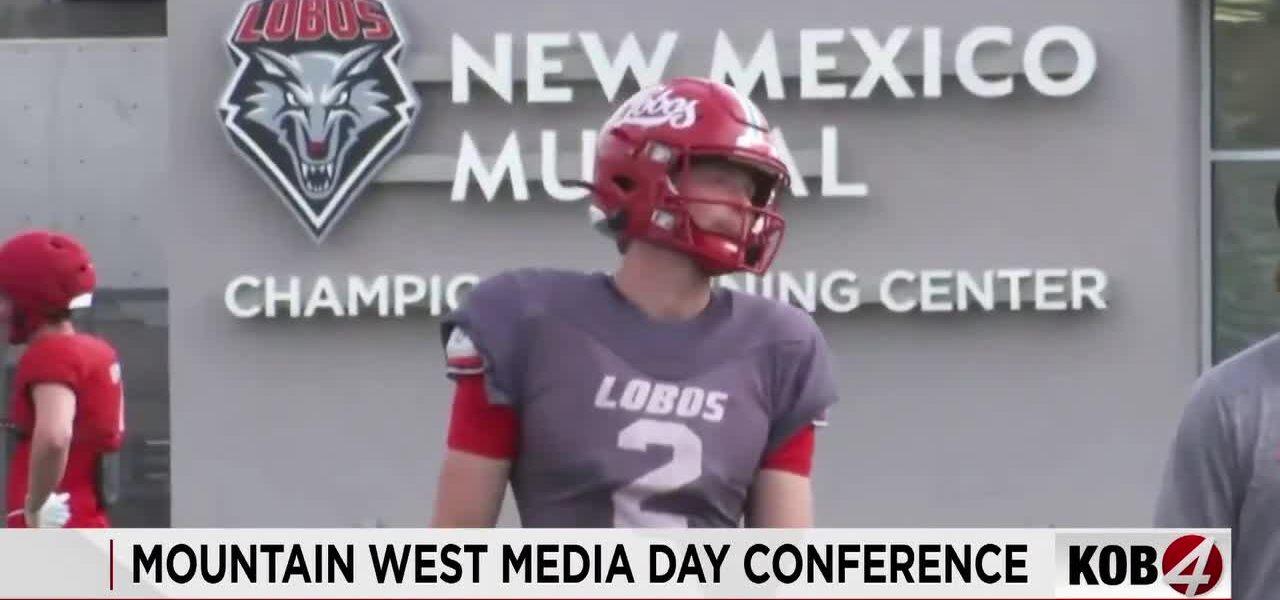
POLICY WIRE — ALBUQUERQUE, N.M. — It’s a brave new world in collegiate athletics, isn’t it? Conference realignment, media deals ballooning into obscene figures, student-athletes suddenly finding a market for their own likeness. And amidst this rather disorienting gold rush, teams like the University of New Mexico find themselves not just chasing touchdowns, but chasing dollars—big ones. They’re rolling into Mountain West Media Day in Las Vegas this week, not just with expectations, but with the quiet hum of financial anxiety and strategic maneuvering thrumming beneath their collective helmets.
Because let’s face it, last year’s surprising performance—a share of the conference title—was a nice story, a real feel-good moment. But college sports? It’s not just about feel-goods anymore. It’s a business, brutal and unforgiving, particularly for programs outside the top-tier mega-conferences that hoard television revenue like dragons hoard gold. So, when UNM coach Danny Eck speaks about his team, he’s talking about more than Xs — and Os. He’s talking about staying relevant in an ecosystem constantly trying to prune its weakest branches.
“Look, last year wasn’t a fluke. These kids put in the work, and they’ve got that chip on their shoulder,” Eck mused from his office, a week ahead of the media circus. “But let’s be real, the game’s changing, and keeping up means more than just plays on the field—it’s about budgets, exposure, and a plain old grind. Our seniors, guys like Jackson Eck, Jack Lane, and Malik Alyan—they’ve seen what it takes. They’ve tasted it.” Eck didn’t need to mention the financial pressures openly; everyone in the game already knows the score.
And those scores are becoming increasingly dramatic. The Mountain West is undergoing a substantial facelift, shedding five old members while bringing in three new football programs: UTEP, Northern Illinois, and North Dakota State. It’s a calculated gamble, meant to stabilize and, if possible, enhance the league’s economic footing. But it means New Mexico faces unfamiliar opponents and extended travel logistics—small, but meaningful, costs for a program navigating tight budgets. That’s the reality.
Commissioner Gloria Nevarez, the league’s chief architect, doesn’t sugarcoat it. “We’re not just expanding, we’re evolving. This league—this entire industry—it’s a high-stakes poker game now,” Nevarez declared at a recent press briefing, setting the stage for Wednesday’s confab. “And with UTEP, Northern Illinois, and North Dakota State joining, we’re doubling down on regional rivalries and, more importantly, new markets. The bottom line? Survival of the fittest. We’re adapting, always adapting.”
This push for expansion isn’t unique. Smaller conferences everywhere are grappling with how to compete against the behemoths. Because the economic disparity is staggering: data from the NCAA’s most recent financial report showed that power conference teams, on average, rake in three times the revenue of Group of Five schools like those in the Mountain West. That’s a canyon, not a gap. And for a player like senior lineman Malik Alyan—whose family hails from Karachi, Pakistan, maintaining strong ties to a region where football often means soccer—the stakes are more personal than geopolitical. He’s not just playing for Albuquerque; he’s representing his legacy, his heritage, on a field that’s become a professional launching pad, or at least a proving ground.
📄 POLICY WIRE WHITEPAPER PUBLISHED: PAKISTAN'S NATIONAL SECURITY POLICY PRIORITIES
👉 READ BY CLICKING HEREThe annual Las Vegas spectacle is part tradition, part sales pitch. It’s where optimism collides with cold, hard strategic reality. Expect predictions for the preseason All-Mountain West team, a showcase for players, and undoubtedly more rhetoric about “growth” and “unity” from the league’s administration. But underneath it all, every program is jockeying for position, for the slimmest advantage, in a game that’s getting more expensive by the minute. UNM gets to play UTEP and North Dakota State later this year, a chance to gauge these new additions up close, on the field, where it actually counts.
What This Means
The influx of new members and the UNM’s strong recent performance, often defying conventional talent rankings, represent two sides of the same economic coin in college football. For the Mountain West, the shift signals an attempt to solidify a revenue base in an increasingly volatile media landscape. Losing programs meant losing eyes on screens, losing a piece of the pie. Bringing in new blood, especially from diverse geographic locales, is a hedge against declining viewership and, by extension, media rights revenue, which drives conference wealth. It’s an aggressive consolidation play in a fractured market. But it’s also a high-risk proposition: will these new members genuinely bolster the league, or simply dilute resources?
For UNM, their recent success has translated into something even more important than just bragging rights: legitimacy. It provides negotiating leverage. It justifies higher ticket prices, stronger donor engagement, and crucially, gives them a stronger voice in conference decisions—like how revenue is divided. A team finishing at the top, even unexpectedly, isn’t easily ignored when millions are on the table. And as college athletes continue to gain prominence and command attention, as global fandom’s fervor grows, every victory, every well-known player from a diverse background, adds value to the larger enterprise. It’s a brutal competition, financially and physically, but one where even a mid-major upset can have cascading effects far beyond the stadium.