
Quiet Dispossession: When Flames Recede, A Small Urban Fire’s Human Toll Lingers
POLICY WIRE — ALBUQUERQUE, N.M. — It wasn’t the kind of inferno that makes international headlines. No plumes of smoke visible for miles, no heroics splashed across cable news. Just a mundane...

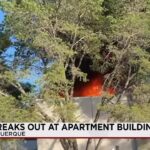
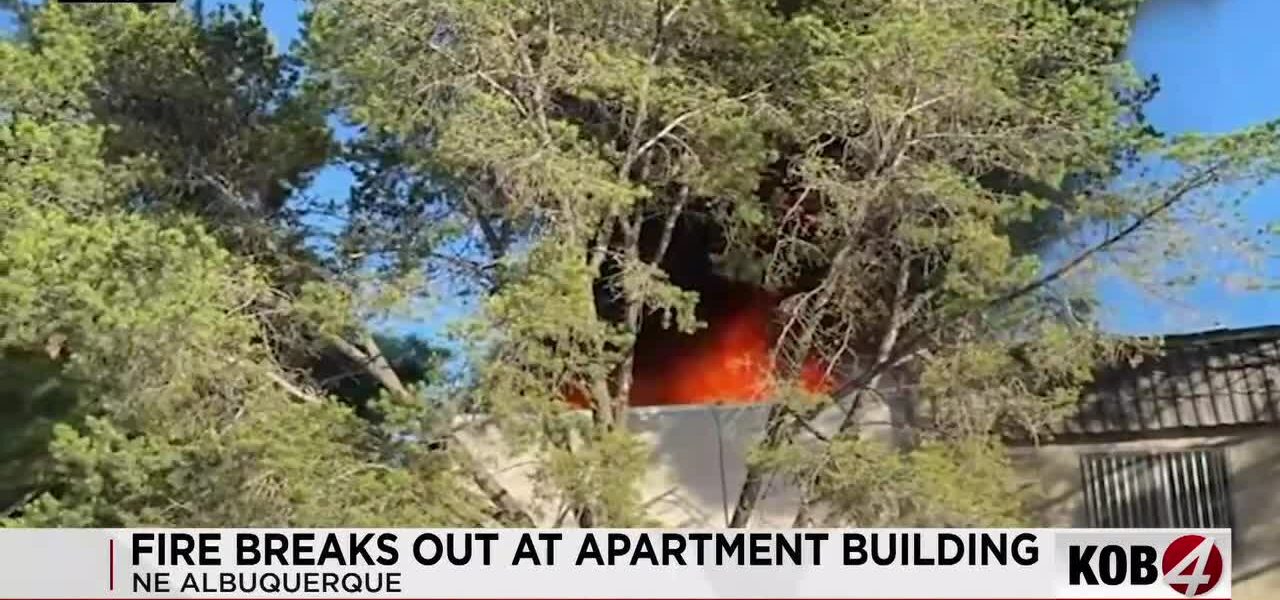
POLICY WIRE — ALBUQUERQUE, N.M. — It wasn’t the kind of inferno that makes international headlines. No plumes of smoke visible for miles, no heroics splashed across cable news. Just a mundane Monday morning blaze, over almost before it began—a brushfire of daily existence, if you will—but potent enough to send a quiet shockwave through a corner of New Mexico’s most populous city. For the unsuspecting residents of Mission Hills, the bureaucratic hum of emergency services likely felt as disorienting as the flames themselves. A sudden, unscheduled dispossession, executed with dispassionate efficiency.
Officials weren’t reporting catastrophic structural collapse, or even a drawn-out struggle against the elements. Indeed, firefighters managed to quell the immediate threat with remarkable speed. The word is they had things under control in a mere 20 minutes. But minutes, you see, stretch into lifetimes when your personal effects are singed or, worse, entirely lost to the unpredictable appetite of flame and water. One minute, home; the next, you’re looking for shelter and piecing together a future that, hours before, was utterly unimaginable. It’s a classic urban ballet—rapid response, followed by lingering aftermath.
We’re talking about an event so localized, it barely registers as a tremor in the grand seismic activity of global events. And yet, this isn’t some abstract statistical blip. It’s a vivid, unsettling illustration of how easily one’s secure perch in modern society can dissolve. Crews, upon arrival, could see [QUOTE_PLACEHOLDER] An unsettling visual, to be sure, for anyone peering out their window. No one was hurt, which is the immediate, — and certainly welcome, takeaway. Still, that particular metric, absence of bodily harm, doesn’t quite account for the other forms of damage.
Two apartments, two discrete households, two slices of humanity, abruptly rendered homeless. That’s a quiet form of disruption, isn’t it? Not a national emergency, just a personal one. These folks are now [QUOTE_PLACEHOLDER] That little phrase, ‘for now,’ speaks volumes, doesn’t it? It’s a temporary patch on a much larger rip in the fabric of their daily lives. The logistics, the insurance forms, the search for new housing—it’s all a dizzying, tedious affair that most of us wouldn’t wish on our worst enemies. Even as the system swung into action to address immediate needs.
The Red Cross, that venerable institution, showed up [QUOTE_PLACEHOLDER] And thank goodness they did. They’re a reliable hand in these smaller, more intimate crises. It’s the kind of systematic, humanitarian support that we sometimes take for granted in developed nations. Think about how that scales, or fails to scale, in regions like South Asia. In a sprawling megacity like Karachi, for instance, where unplanned urban growth often outstrips basic infrastructure, a similar blaze might well engulf an entire multi-story dwelling. Imagine the compounded displacement, the lack of immediate institutional safety nets, the starker struggle for ‘somewhere else for now.’ This incident, small as it’s, acts as a sharp counterpoint, subtly revealing the often-unseen infrastructure of security here.
Statistically, these kinds of incidents aren’t uncommon. The National Fire Protection Association (NFPA) reported an annual average of 352,200 home structure fires between 2017 and 2021 in the U.S. This isn’t an anomaly, it’s part of the urban hum—a low, insistent frequency that usually goes unheard unless it’s your building on fire. These numbers represent real homes, real lives upended. That’s a good chunk of people each year navigating the confusing bureaucracy of an unexpected homelessness.
📄 POLICY WIRE WHITEPAPER PUBLISHED: PAKISTAN'S NATIONAL SECURITY POLICY PRIORITIES
👉 READ BY CLICKING HEREBut the efficiency of modern crisis management—the rapid response, the NGO coordination, the relatively calm media messaging—it almost sugarcoats the fundamental personal shock. It makes a significant, terrifying event seem manageable, almost ordinary. It’s, perhaps, a testament to the robust if bureaucratic emergency architecture in places like Albuquerque. The two apartment units damaged will be repaired, eventually. Life will restart, surely. But the memory of that Monday morning, the scent of smoke, the scramble, it won’t dissipate so easily. And the vulnerability it exposed, that’s not something you can just hose down.
What This Means
This incident, though localized and swiftly managed, provides a snapshot into the underbelly of urban stability and resilience. Economically, while two units might not register as a market shift, for those individuals, it’s a personal financial upheaval. Renters face immediate housing insecurity and the daunting task of replacing possessions, often underinsured or uninsured. Homeowners deal with complex insurance claims — and contractors. This creates a ripple effect, adding strain to local social services and, indirectly, to local economies as residents divert funds to recovery instead of consumption. And don’t forget the Red Cross and other non-profits; they absorb the immediate shock, underscoring their critical yet often unsung role in civic stability.
Politically, incidents like this, when aggregated, highlight pressure points for urban planners and city councils: housing availability, building codes, and adequate emergency service funding. In contexts less resourced—think densely populated informal settlements or rapidly expanding cities in countries like Pakistan, for instance—a single building fire can spiral into a humanitarian challenge, testing rudimentary infrastructure and community cohesion. Here, in Albuquerque, the machinery works, which often dulls the political urgency for proactive preventative measures. But every resolved crisis simply highlights the system’s capacity, not necessarily its prevention. It also serves as a subtle reminder of global disparities in disaster response. A localized inconvenience here could easily escalate into a full-blown crisis, as observed in regions struggling with far greater institutional deficits. It’s an inconvenient truth: effective aid, even for something as quotidian as an apartment fire, isn’t uniformly distributed globally.