


Political Succession: Lindsey Graham’s Sister Sworn In, Sparking Fast-Track Campaign Scramble
POLICY WIRE — WASHINGTON D.C. — They say politics doesn’t wait for mourning, and in the South Carolina Senate race, that sentiment never felt sharper. Not even a full weekend had passed since...

POLICY WIRE — WASHINGTON D.C. — They say politics doesn’t wait for mourning, and in the South Carolina Senate race, that sentiment never felt sharper. Not even a full weekend had passed since the abrupt, unexpected death of Senator Lindsey Graham, a political institution, when his sister, Darline Graham, was suddenly propelled onto the national stage. She, an optician with no prior elected experience, now occupies his seat, a rapid-fire appointment that has sent ripples—and political aspirants—scrambling across the Palmetto State. It’s raw. It’s swift. And it’s how Washington often rolls, an urgent succession that bypasses much of the ceremony usually reserved for such transitions.
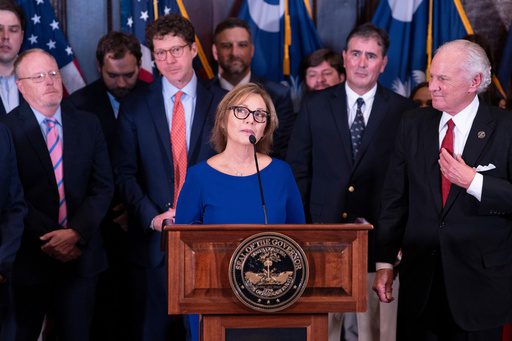
It was Tuesday when Ms. Graham raised her hand, formally accepting the interim role that had been, for barely a moment, her brother’s final tenure. Governor Henry McMaster, clearly not one for dawdling, made the pick Monday, just hours after Lindsey Graham’s sudden exit from the mortal coil due to a nasty aortic dissection. The decision, McMaster declared, even had the blessing of the former President, Donald J. Trump, who, you’ll remember, considered the late Senator one of his most fervent, vocal allies. Political machinery, you see, it just keeps grinding, no matter who’s left the scene.
And what a scene it was, a dizzying pivot from heartfelt eulogies to immediate power consolidation. Lindsey Graham’s death on Saturday, at 71, wasn’t just a personal tragedy for his family; it was a sudden seismic shift in a Senate that’s always on a razor’s edge. He’d been prepping for a fifth term, eyeing the top Republican spot on the Judiciary Committee. His passing leaves a significant void, a particular kind of absence in the upper chamber’s conservative vanguard. Darline Graham, at 69, isn’t just filling a seat; she’s standing in for a legacy.
Her path into the hallowed halls of Congress couldn’t be more unconventional. An optician. Worked for various state agencies—the South Carolina Commission for the Blind, the Department of Employment and Workforce. A professional life far removed from the brutal, bare-knuckled brawl of national politics. But then, family ties can be strong—stronger, sometimes, than any political ambition. Lindsey, who never married — and had no children, famously became her legal guardian when she was 13 and he just 22. They were exceptionally close, she often by his side during campaign events, a quiet but steadfast presence. So, it’s not entirely out of the blue. But it’s still unexpected.
“I miss him more than I can even put into words, you know?” she reportedly said as McMaster announced her appointment. “But I’m going to do this. I got it.” That’s the grit. And when asked about his pick, Governor McMaster noted, “I had wondered what you would say, and I was humbled by your quickness to see the duty that you had to serve.” Duty. There it’s. A classic political response, couching an emergency appointment in high-minded principles.
Because let’s face it, the clock’s ticking on Darline Graham’s time, a placeholder tenure until South Carolina sorts itself out. The state’s special election calendar has snapped into action, with a filing period already opening this week and primaries slated for next month. The rush is on. The seat, previously a reliably Republican hold, is now suddenly a hot commodity, with names like Lt. Gov. Pamela Evette and Representatives Russell Fry, Nancy Mace, and Ralph Norman reportedly circling like vultures over carrion. It’s not pretty, this process, but it’s effective. The brutal ballet of ambition continues, uninterrupted.
📄 POLICY WIRE WHITEPAPER PUBLISHED: PAKISTAN'S NATIONAL SECURITY POLICY PRIORITIES
👉 READ BY CLICKING HEREGraham’s sudden passing highlights another inconvenient truth of political life: health. His doctors attributed his death to an aortic dissection, a rare but often catastrophic condition where the inner layer of the body’s largest artery tears. According to the Cleveland Clinic, the mortality rate for this specific type of rupture, if left untreated, can be as high as 1-2% *per hour* in the first 48 hours. A stark reminder that even the most formidable political figures are just as vulnerable to biological reality as anyone else.
What This Means
This quick substitution isn’t just about a vacant seat; it’s a profound shake-up for Washington and South Carolina politics. First, Darline Graham’s non-political background ensures she’ll mostly be a vote-caster, rather than a legislative heavyweight, during her brief term. She won’t be chairing committees, certainly not engaging in the same high-stakes foreign policy debates—especially those concerning regions like South Asia or the broader Muslim world, where her brother often held sway and influenced American engagement, as exemplified by discussions surrounding regional stability in the Middle East. Her arrival immediately reduces the deep institutional knowledge that departed with her brother.
But there’s an upside, from a certain angle. Her tenure frees up potential candidates—those circling politicians I mentioned earlier—to focus on the upcoming special election without having to primary an incumbent, even a temporary one. It’s a pragmatic move designed to steady the ship and ensure Republican control remains uncontested by the main opposition. For the Grand Old Party, her swift appointment effectively hedges against any immediate Democratic inroads, even as it signals the start of a ferocious internal battle for what will undoubtedly become a safely Republican seat after November. The political calculus is simple: minimize instability, maximize advantage. It’s what they do, isn’t it?