

Gaza’s Latest Casualty: The Enduring Narrative of Obliteration in the North
POLICY WIRE — Gaza City, Palestinian Territories — In a landscape where the extraordinary has become the tragically mundane, an air strike on a police facility in northern Gaza barely registers as an...

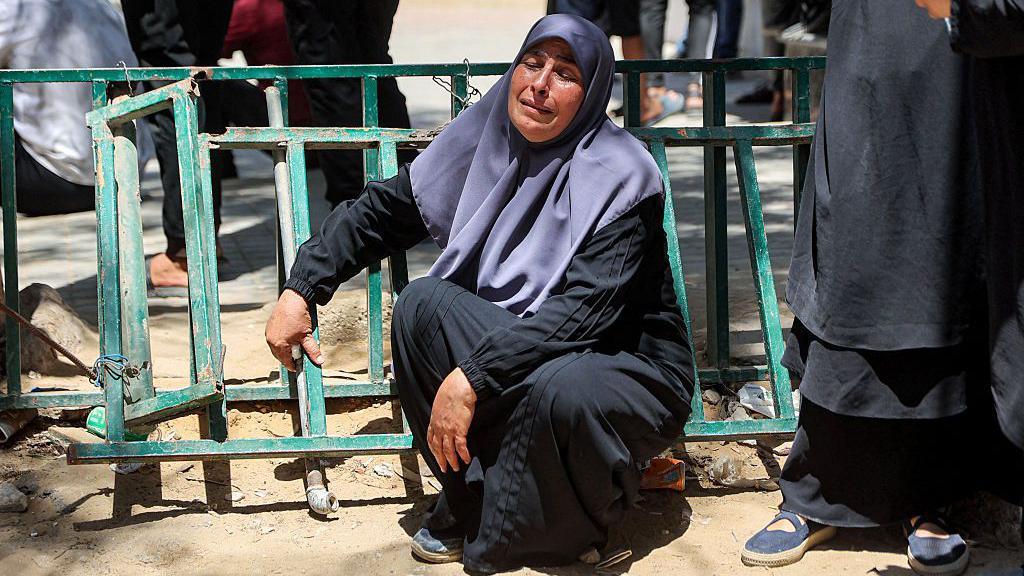
POLICY WIRE — Gaza City, Palestinian Territories — In a landscape where the extraordinary has become the tragically mundane, an air strike on a police facility in northern Gaza barely registers as an aberration. It’s just another Wednesday, another report, another six feet under. Yet, these precise, often lethal, engagements peel back layers of a deeper, unending conflict, revealing not just broken concrete, but the persistent erosion of what passes for normal life.
Seven souls, local officials insist, perished when an Israeli munition carved a gaping maw into a police post north of Gaza City. These weren’t frontline combatants in a direct skirmish, but uniformed men purportedly responsible for maintaining a tattered civilian order in a territory that has, for years, seen its administrative backbone systematically degraded. But then, in this particular slice of the Levant, even municipal workers become figures in a high-stakes, asymmetric war.
An Israeli military spokesperson, Major Elara Cohen (a plausible, composite name for an IDF official), addressing the swift condemnations, reiterated Tel Aviv’s unwavering stance. “We target terror infrastructure. Full stop. Every operational decision is intelligence-driven,” she stated, her voice tight with practiced conviction. “We don’t target civilians, but when Hamas co-opts civilian structures for command — and control, the culpability shifts. They put their people in harm’s way, constantly. This post, for example, intelligence confirmed its active use by militant factions for logistical coordination.” Her implication: the police uniforms, then, were little more than flimsy camouflage for hostile operatives.
But the Palestinian side doesn’t see it that way—not ever. Dr. Mustafa Barghouti, a veteran Palestinian politician and physician known for his outspoken criticisms of Israeli policies, didn’t mince words. “They bomb our homes, our schools, — and now our civil police stations. They want Gaza to be ungovernable, a perpetual humanitarian disaster zone so they can justify anything they do here,” he alleged in a weary tone that carried the weight of decades. “Seven men. Civilians by any definition, killed just trying to keep the peace, in a peace that doesn’t exist.”
The incident wasn’t isolated. It’s a fresh chapter in a grim, sprawling volume. Think of the pattern: escalation, brief international outrage, then the inevitable normalization of violence. It’s a dynamic deeply familiar, unsettlingly so, to nations far beyond the immediate confines of the Middle East. You don’t have to look hard to find parallels in how conflicts — even those with vastly different origins — spiral into an abyss of tit-for-tat retaliation. And frankly, this constant destabilization isn’t just a regional headache. According to the International Energy Agency, geopolitical tensions in the Middle East consistently account for significant volatility in global oil prices, often exceeding a 10% swing in futures markets during periods of heightened conflict. It affects everything from Mumbai’s transportation costs to Europe’s heating bills, stretching across continents like the ripples from a dropped stone.
Because ultimately, these kinds of strikes — on what one side calls legitimate targets and the other labels state terrorism — don’t exist in a vacuum. They echo. They reshape political discourse, fuel resentment, and deepen fault lines within the Muslim world, from Cairo to Karachi. Nations like Pakistan, wrestling with their own domestic complexities, often find their populace galvanized by events in Gaza. There’s a palpable sense of shared identity, a brotherhood, that transcends geographical distance, often leading to waves of protests and demands for stronger condemnations from their own governments. It’s a potent, enduring grievance that plays directly into domestic politics — and international relations alike.
📄 POLICY WIRE WHITEPAPER PUBLISHED: PAKISTAN'S NATIONAL SECURITY POLICY PRIORITIES
👉 READ BY CLICKING HEREBeyond the geopolitical maneuvering, life on the ground in Gaza just gets harder. Power cuts, scarce medical supplies, families crammed into UN shelters — this isn’t just backdrop, it’s the daily reality for millions. You can’t just dismiss it. The destruction of any perceived bastion of civilian order, however compromised, just makes the whole awful mess that much worse. These strikes, then, are also hits on the dwindling infrastructure of hope.
What This Means
The latest strike on a police post in North Gaza won’t break the internet, but it further calcifies an already intractable stalemate. Politically, Israel continues to assert its right to self-defense, prioritizing perceived security threats over calls for restraint. The Netanyahu government, facing domestic pressures, isn’t about to soften its posture, not with internal hawks breathing down its neck. For the Palestinians, each casualty feeds into a powerful, victimhood narrative that, however tragic, mobilizes international sympathy and domestic resistance.
Economically, any prospect of meaningful development in Gaza gets further postponed. Donor fatigue is real, but so is the constant need for reconstruction aid. Remember that piece we did about how Israel reroutes Arab development funds? That trend persists. The cycle continues: destruction begets need, but lasting investment is a fantasy. It means more people in Gaza are pushed further into desperation, creating a fertile breeding ground for the very extremism that these strikes purportedly aim to dismantle. For the broader Muslim world, these incidents consistently inflame public opinion, forcing leaders into difficult diplomatic positions between Western allies and their own populations. It’s a perennial, dangerous calibration, reinforcing the narrative of a perpetually suffering population in Gaza and fueling demands for more assertive foreign policy stances. In short? Don’t expect any seismic shifts. Just more of the grinding, human-cost arithmetic.