
Florida’s ‘Ghost Aid’ Delivers to Venezuela, Upending Geopolitics
POLICY WIRE — Doral, Florida — They’re not exactly declaring peace, but something stranger is unfolding: American military personnel, boots on Venezuelan ground, distributing aid. Not an...

POLICY WIRE — Doral, Florida — They’re not exactly declaring peace, but something stranger is unfolding: American military personnel, boots on Venezuelan ground, distributing aid. Not an invasion, no, but an astonishing display of backdoor diplomacy disguised as pure humanitarianism. It’s a shift so stark it leaves veterans of regional conflicts blinking—and raises eyebrows from Islamabad to Caracas.
Down in Doral, Florida, often called ‘Doralzuela’ for its dense Venezuelan diaspora, a quiet revolution in disaster relief is brewing. It’s an enterprise so effective it manages to bypass one of the most infamously corrupt regimes in the Western Hemisphere. The Global Empowerment Mission (GEM), usually known for rapid-response disaster relief, has become the de facto aid arm for a besieged population, and a quiet tool of U.S. foreign policy.
After a pair of devastating earthquakes tore through Venezuela last month, hitting with magnitudes of 7.2 and 7.5 within seconds of each other—killing 4,500 people, according to local officials and aid organizations—the typical aid channels seized up. Caracas, long wary of ‘foreign intervention,’ historically rejected most international humanitarian efforts. But this time? Well, this time’s different.
Michael Capponi, GEM’s founder, he’s seen it all. He’s worked countless crises, but even he admits this Venezuelan operation stands alone. “This is a whole different animal,” Capponi told Policy Wire. “We land a private plane, it gets unloaded by U.S. soldiers, it goes in a truck we pay for — and to a warehouse that we completely control. It doesn’t touch the hands of the Venezuelan government.” That last bit? It’s not a point of pride so much as a brutally effective logistical necessity.
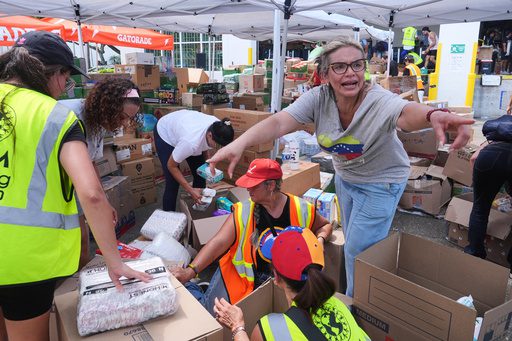
But the real muscle behind this, the heart, really, isn’t just Washington. It’s Doral. Thousands of volunteers—Venezuelan-Americans, mostly—descend daily on GEM’s sprawling warehouses. They’re driven by memories, by family left behind. Like Alessandra Izaguirre, an 18-year-old whose grandmother’s home in Caracas barely survived the quakes. She spends weeks prepping food for her compatriots, because she couldn’t just sit by, could she?
The system works with almost clinical precision. Supplies, vetted for immediate need, fly daily to Caracas. The U.S. State Department acts as an unlikely, but essential, broker, paving the diplomatic path that lets GEM’s planes land and, more startlingly, enables U.S. military assets—Marines on amphibious landing craft—to help distribute the goods directly. Think about it: a U.S. military presence in Venezuela that isn’t openly hostile, however temporarily. That’s a headline nobody saw coming.
📄 POLICY WIRE WHITEPAPER PUBLISHED: PAKISTAN'S NATIONAL SECURITY POLICY PRIORITIES
👉 READ BY CLICKING HEREIt’s not just big companies, though Goya — and Walmart are certainly chipping in. It’s individuals too, emptying their own wallets. Capponi puts it bluntly: “They’re going to Walmart with their credit card, buying 15 cans of food and bringing it in a shopping bag.” This collective effort has so far deployed nearly one million pounds (or 454,000 kilograms) of critical aid, an astounding volume demonstrating the sheer grit of the diaspora and the operational agility of GEM.
This bypass strategy isn’t unique to Latin America, mind you. In humanitarian crises across the Muslim world—places like war-torn Yemen, or parts of Pakistan during severe flooding—getting aid to people often requires navigating complex, politically charged labyrinths, frequently sidestepping official channels known for bureaucratic inertia or outright theft. The Venezuela model might just offer a new, if politically fraught, blueprint.
Of course, this novel approach doesn’t come without questions. Because America’s got billions in seized Venezuelan oil revenue sitting around. Why aren’t those funds flowing freely? “The funds are there to stabilize the interim government’s operations and ultimately benefit the Venezuelan people in their recovery,” explained a U.S. State Department official, speaking on background — and reflecting long-standing Washington policy. “It’s about ensuring accountability — and proper stewardship, especially given historical challenges. We’ve contributed over $386 million directly to earthquake response, entirely separate from those frozen assets.” It’s a dance, isn’t it? One part charity, one part foreign policy tightrope. A diplomatic high-wire act, if you will, not unlike some of the delicate maneuvering seen in international sporting power plays like The Saudi Gambit or the political complexities around Macron’s Ukrainian gambit.
What This Means
This unusual humanitarian conduit has profoundly destabilizing, yet potentially constructive, implications for both Venezuela’s internal politics and U.S. regional strategy. For Washington, it’s a soft power win, illustrating that America can deliver when direct governmental engagement stalls. It’s also a way to gain significant operational intelligence and establish a ground-level presence without igniting outright conflict. The U.S. is demonstrating its capacity to project influence, not through tanks, but through diapers — and water bottles. And they’re doing it on an adversary’s turf. This approach gives Washington leverage, allowing it to nurture local networks and bypass the often-criticized regime, thereby subtly undermining its authority and highlighting its inability to provide basic services. For Caracas, it’s an undeniable blow to national sovereignty optics, forcing tacit acceptance of U.S. military movements on Venezuelan soil—a bitter pill, but one sweetened by a dire humanitarian crisis the government can’t solve alone. Economically, the aid infusion offers temporary relief, but doesn’t address the root causes of Venezuela’s collapse, which remain tied to its mismanagement of oil wealth and crippling international sanctions. This delicate balancing act could either pave the way for future, more formalized diplomatic engagement, or it could simply highlight the deep, continuing chasm between two nations.