


Hooves of Iron: Yellowstone’s Stern Reminder to Humanity
POLICY WIRE — Gardiner, Montana — They arrive in droves, each season bringing a fresh wave, their minds awash with Instagram filters and curated expectations. Tourists, I mean. They come seeking the...

POLICY WIRE — Gardiner, Montana — They arrive in droves, each season bringing a fresh wave, their minds awash with Instagram filters and curated expectations. Tourists, I mean. They come seeking the sublime, the picture-postcard grandeur of Yellowstone, a kind of domesticated wild. But the wilderness—the real kind—it doesn’t care for your vacation plans. It’s got its own agenda. And sometimes, its ambassadors send very blunt, very hairy messages.
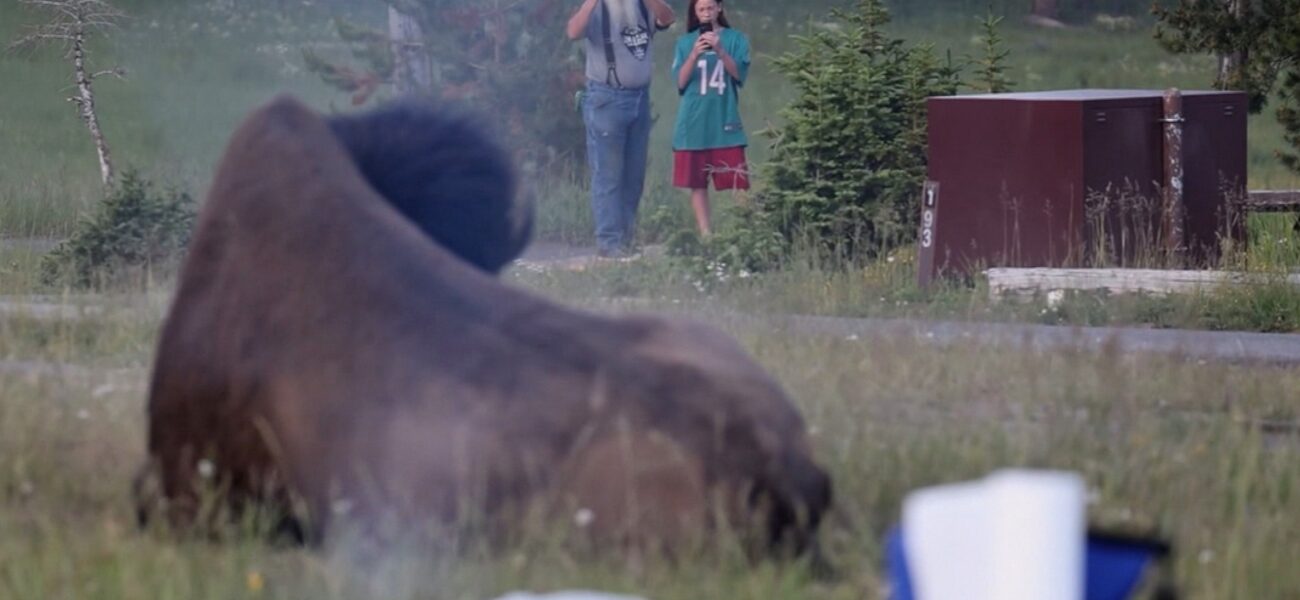
Like the one delivered recently to a 49-year-old man, a Texan by all accounts, who discovered the hard way that 2,000 pounds of prime bison doesn’t cotton to personal space. Yellowstone officials, as they inevitably must, later shared details after a bison attacks man, outlining an incident that, while jarring, serves less as a freak occurrence and more as a predictable, almost annual, ritual. [QUOTE_PLACEHOLDER]
It’s an inconvenient truth, isn’t it? We carve out these magnificent swathes of land, brand them national parks, then invite millions to come experience ‘nature,’ albeit with well-marked trails, gift shops selling plush effigies of the very beasts that might gore you, and, for a long time, surprisingly patchy cell service. We want wild, but we want it safe. We want majesty, but from a comfortable, air-conditioned distance. And because we’re human, we routinely forget that nature isn’t just a backdrop for our selfies.
But the bison? It’s just doing bison things. For millennia, these hulking, primordial creatures have roamed the plains and valleys of what’s now Yellowstone, driven by instinct, seasons, and an utter indifference to human regulations. They aren’t props; they’re the landscape itself. When an individual strays, getting too close for comfort—or rather, too close for a beast’s perceived safety—it’s less an attack and more an assertion. A forceful boundary line. Park statistics bear this out: the animals injure an average of two people annually in Yellowstone alone, according to National Park Service data, typically due to close approaches during the calving season or when bison are defending their space.
Park officials, in their characteristic dry tone, reiterate the common sense mantra: keep your distance. Specifically, they tell us to maintain a minimum of 25 yards from all large animals, and a downright cavernous 100 yards from bears and wolves. It sounds simple. And it’s. But simple doesn’t always translate into adherence, especially when an otherwise docile, grass-munching giant suddenly transforms into a furious, horned freight train. That’s when the ‘experience’ turns into a federal investigation.
It’s a clash of civilizations, really. The one that builds roads and installs interpretive plaques versus the one that relies on ancient migratory patterns and a guttural instinct for self-preservation. This man, from what the limited information suggests, found himself caught squarely in the middle. His predicament isn’t unique to American soil, mind you. Look across the globe, in Pakistan’s Kirthar National Park, for example, where efforts are made to protect Sindh ibex and Urial sheep. Or up north, near Chitral Gol National Park, managing wildlife means dealing with human encroachment and sometimes, fierce pushback from leopards whose natural prey bases are dwindling. It’s a perennial, global negotiation between preservation — and proximity. Our particular challenge here, with the sheer volume of visitors, amplifies the inherent tensions.
📄 POLICY WIRE WHITEPAPER PUBLISHED: PAKISTAN'S NATIONAL SECURITY POLICY PRIORITIES
👉 READ BY CLICKING HEREAnd so, we learn again, as generations have learned before us: the wild demands respect. Or it extracts it. Sometimes, with horns. That’s just how it works.
What This Means
This incident, far from being just a tourist misadventure, casts a spotlight on several political and economic fault lines. First, there’s the perennial funding headache for national parks. With increased visitor numbers—Yellowstone saw over 4.5 million visits in 2023—the strain on infrastructure, staffing for education, and ranger patrol hours becomes immense. Incidents like these add to operational costs, not to mention the potential PR damage. Does the National Park Service have the resources to adequately manage millions of visitors in genuine wilderness while simultaneously protecting the wildlife they came to see?
Economically, repeat incidents could impact tourism revenue, especially if the narrative shifts from pristine wilderness to dangerous playground. While most understand the risks, sustained negative headlines could deter family travel or those seeking less ‘adventurous’ experiences. Policy debates surrounding visitor limits, permit systems, or even the type of infrastructure permitted within park boundaries gain fresh urgency each time a bison expresses its displeasure. Consider also the subtle cultural imperialism embedded in our approach to such spaces—how we dictate terms to nature, expecting it to perform on cue, ignoring the ancient rhythms that truly govern these lands. We project our ordered world onto theirs, often with painful results for the individuals involved, and sometimes, for the animals, if stricter human management becomes the punitive response.
it’s a stark illustration of the challenge inherent in managing human interaction with unreclaimed wild lands. There’s a fine line between making nature accessible and sanitizing it to the point of unrecognition, or worse, making it appear safe when it’s anything but. Lawmakers and park administrators aren’t just managing animals and tourists; they’re balancing complex ideological frameworks: conservation, public access, economic impact, and—underneath it all—the fundamental respect (or lack thereof) humanity has for the non-human world. It’s not just a man and a bison. It’s a microcosm of humanity’s ever-fraught relationship with the untamed. The next time, maybe we’ll get a reminder from a grizzly. Or perhaps, another kind of beast, a human one, ignoring the warning signs — and paying a steeper price.