


London’s Silent Cuts: A Metropolitan Vignette of Urban Despair and Policy Blind Spots
POLICY WIRE — London, UK — Another Tuesday dawns, another news cycle flickers past, and tucked away amidst the daily deluge, a rather grim constant resurfaces. It isn’t a headline-grabbing...

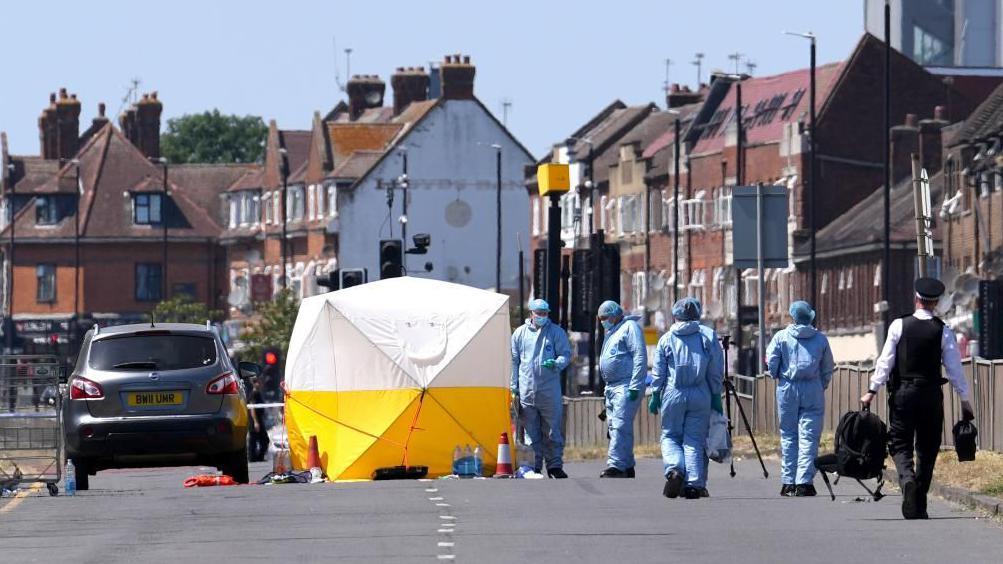
POLICY WIRE — London, UK — Another Tuesday dawns, another news cycle flickers past, and tucked away amidst the daily deluge, a rather grim constant resurfaces. It isn’t a headline-grabbing protest or a scandal rocking Parliament—no, it’s far more commonplace, more insidious. It’s the abrupt halt of a single life, abruptly, violently. Not with the grand pronouncements of global policy shifts, but with the sharp, brutal finality of steel on flesh—a woman stabbed
right in west London
, triggering a murder arrest
. For some, it’s just a data point, a statistical blip in a sprawling metropolis. But for Policy Wire, it’s a tremor beneath the city’s veneer of civility, hinting at deeper, often ignored fractures.
It’s easy to dismiss these incidents as isolated aberrations, the tragic consequences of personal conflict or random madness. We’ve become quite good at that, haven’t we? Shunting away the inconvenient truth that such violence, particularly knife crime, isn’t an anomaly but an unfortunate fixture in Britain’s urban tapestry. A person is gone. Another is in custody. Life, they say, moves on. But the ghost of these events, these silent cuts, lingers in the subconscious of a community—and in the spreadsheets of policy wonks, if they’re paying enough attention. [QUOTE_PLACEHOLDER]
Metropolitan Police statistics, for instance, frequently illustrate a bleak picture. While overall crime might fluctuate, knife crime offenses often spike—London saw a concerning rise of 21% in offenses involving a knife or sharp instrument in 2023 compared to the previous year, according to figures released by the Office for National Statistics (ONS). That’s a quarter of our lives becoming measurably riskier, at least on paper. And these aren’t always gang-related skirmishes, the kind neatly compartmentalized by cable news. Sometimes, they’re domestic, internal, bleeding from the invisible wounds of strained households and unchecked desperation.
This particular incident, stark in its brevity, throws a spotlight onto more than just crime statistics. Think about the bustling, multi-cultural enclaves that define west London
. Places where South Asian diaspora communities have long established roots, contributing immensely to the city’s character and economy. How do such acts of violence, especially those potentially rooted in domestic disputes or community tensions, ripple through these tightly-knit groups? It’s not just the immediate victim; it’s the extended family, the neighbours, the mosque-goers, the small businesses. They feel it—that low hum of insecurity, that gnawing sense that things aren’t quite right, that the social fabric might be fraying just a little too fast.
And policy, bless its well-meaning heart, often feels distant, isn’t it? Bureaucrats in Whitehall churn out reports on community cohesion, mental health provisions, or intervention strategies for at-risk youth. Good intentions, undoubtedly. But you’ve got to wonder if those intentions ever really land on the doorsteps where they’re needed most, if the resources truly reach the community leaders, the local support groups, the women’s shelters grappling with increasingly complex challenges. They’re the frontline, facing issues that don’t always fit into neat governmental departmental boxes. Sometimes, it feels like we’re perpetually discussing solutions, while the problems simply mutate, persist, and claim lives in the meantime.
But the story isn’t just local. Global politics, immigration policies, even socio-economic conditions back in countries like Pakistan, can create ripples that eventually crash on London’s shores. The pressures of migration, the clash of traditional values with a secular society, economic precarity, even unresolved trauma from home countries—these aren’t hypothetical problems. They’re lived realities that can manifest in societal strains. When families arrive seeking opportunity or refuge, they often bring with them the baggage of their pasts and the complexities of their cultures. Integrating these diverse elements, while retaining their unique identities, is a constant, delicate balancing act—one that policymakers often overlook or clumsily address. It’s a grand social experiment, happening every day, without clear instructions or guaranteed outcomes.
So, a single murder arrest
isn’t just an isolated tragedy. It’s a pinprick that releases a little pressure from a much larger, overinflated balloon of societal challenges. It reminds us that London, like any great global city, is a kaleidoscope of incredible promise and stark, persistent problems. The kind that don’t make for grand political speeches, but instead, leave gaping holes in families — and communities.
📄 POLICY WIRE WHITEPAPER PUBLISHED: PAKISTAN'S NATIONAL SECURITY POLICY PRIORITIES
👉 READ BY CLICKING HEREWhat This Means
This isn’t merely a police blotter entry; it’s an urgent prompt for an uncomfortable introspection. Politically, the recurring narrative of urban violence—even when localized—erodes public trust in governance, plain and simple. Citizens expect safety. When incidents like this become routine, confidence wavers, and it feeds into a broader sense of disillusionment that can be exploited by various political factions. We’ve seen this before, right? The demand for law and order ratchets up, often leading to knee-jerk, populist policy responses rather than thoughtful, preventative measures.
Economically, persistent street or domestic violence in any community isn’t just a moral failing; it’s a drain. It taxes emergency services, strains judicial systems, and deters investment—or at least, shifts investment away from affected areas. It also contributes to an unstable workforce — and disrupts the social capital crucial for vibrant local economies. within specific communities—like the significant South Asian populations here in the UK—such events can exacerbate feelings of alienation or, conversely, prompt internal movements towards self-governance or cultural isolation if mainstream structures aren’t perceived as adequately protecting or understanding their needs. It spotlights the inadequacy of one-size-fits-all policy, especially when dealing with the nuanced intersection of crime, culture, and economic stress.
From an international relations standpoint, these domestic incidents, while localized, don’t occur in a vacuum. How immigrant communities thrive—or struggle—in Western capitals like London often becomes a quiet point of commentary, and sometimes even a lever, in diplomatic exchanges. Countries like Pakistan watch these developments closely, for both the well-being of their diaspora and as a measure of the host country’s societal health. It’s a subtle connection, sure, but a very real one, influencing everything from consular services to trade relationships.
For policymakers, the challenge isn’t just to catch perpetrators. It’s about understanding the deep-seated factors that foster violence—mental health crises, economic inequality, social integration failures, and gender-based violence—and investing long-term in solutions that truly fortify communities, especially those that feel overlooked. But you know how it goes; long-term isn’t always sexy. Often, short-term optics win the day. Until, that’s, the next inevitable murder arrest
reminds everyone of the true cost of policy folly.
The human cost of urban decay, be it social or literal, isn’t always obvious until it bursts into tragic view. And until comprehensive, culturally sensitive, and sustained strategies replace piecemeal efforts, incidents like this one in west London
won’t remain aberrations. They’ll just be another chilling indicator that despite the bustle and glamour, underneath, some things are still silently, deeply broken. It makes you wonder, doesn’t it, how much societal pressure cooker these urban centers can really handle before they collapse under their own weight?