
Trump’s Fictional Peaks: The Unsettling Geography of Political Rhetoric
POLICY WIRE — Washington D.C., USA — It’s a strange thing when the global chessboard gets an update, not with a new player, but with a piece conjured from thin air. You’d think by now the world has...

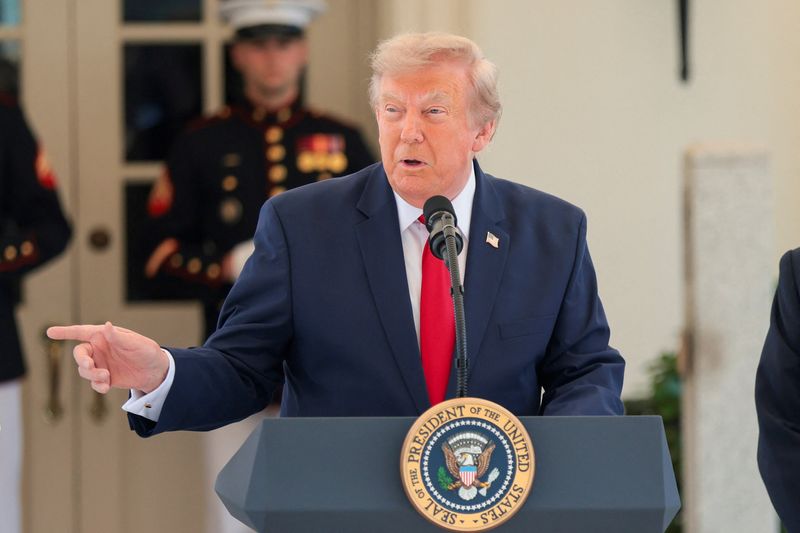
POLICY WIRE — Washington D.C., USA — It’s a strange thing when the global chessboard gets an update, not with a new player, but with a piece conjured from thin air. You’d think by now the world has grown accustomed to the particular brand of political spectacle delivered by former President Donald Trump. But his latest pronouncement—a vow to “take out Pickaxe Mountain in Iran”—managed to scratch an entirely fresh itch, prompting not just concern but a collective, bemused search on geological maps that quickly proved fruitless. There’s no such peak. None.
His remarks, delivered with characteristic confidence at a recent rally (a campaign staple, mind you, for a man no longer in office), weren’t just a misstep; they were an act of rhetorical cartography, sketching new, fictitious battlegrounds onto an already volatile region. And because it’s Trump, these aren’t just words; they’re often perceived as veiled threats, or at least a stark preview of potential policy, for better or worse. Diplomats are already scrambling, trying to decipher if this is calculated mischief or merely another stream-of-consciousness moment playing to a particular gallery. It doesn’t help when allies — and adversaries alike are trying to run coherent foreign policies of their own.
“We monitor all rhetoric from significant global figures,” offered Ambassador Mark Davies, a former U.S. Special Envoy to the Gulf, in an exclusive off-the-record briefing earlier today, carefully choosing his words. “The United States’ commitment to regional stability remains absolute. Any military action requires robust intelligence — and precise targeting. That’s just standard procedure, isn’t it?” He didn’t quite smirk, but you could tell he wanted to.
This isn’t merely about correcting a geographical oversight. It’s about the very real implications of a presidential hopeful—one with a significant following and a past record of unconventional foreign policy—shaking the fragile trust that holds international relations together. Iran, obviously, hasn’t taken kindly to even fictional threats. Sources within the Iranian Foreign Ministry, speaking anonymously given the sensitivity, reportedly characterized the statement as “delusional” and “another clear sign of American political instability,” dismissing it as theatre. But that dismissal doesn’t erase the underlying tension, does it?
The echoes of such bombastic language reverberate far beyond Washington — and Tehran. Consider South Asia, where Pakistan, a nuclear-armed state, shares a porous border with Iran. Islamabad often finds itself caught in the crossfire of major power politics, navigating complex regional dynamics. Dr. Aisha Sarwar, a seasoned foreign policy analyst based in Karachi, articulated a common regional anxiety: “When leaders speak so casually of war, even with hypothetical targets, it amplifies anxieties across our borders. It’s a reminder of the instability that can be just one impulsive comment away. We’ve seen enough conflict; we don’t need any more imagined ones creating real fear.”
Because every offhand comment like this feeds into the broader narrative of U.S. unpredictability, it directly affects regional security calculations. Governments from Riyadh to New Delhi are already wary. And then there’s the money, always the money. Global defense spending hit an all-time high of $2.2 trillion in 2022, according to the Stockholm International Peace Research Institute (SIPRI), partially driven by perceived threats and geopolitical instability. Words have a cost, even if they’re about places that don’t exist.
It raises a bigger question, really: what’s the purpose? Is it calculated strong-manning for a domestic audience? A distraction from other uncomfortable truths? Or a genuine, if bizarre, articulation of a potential strategic posture? Whatever the intent, the effect is to add more fog to an already murky landscape. It’s tough to negotiate peace, or even maintain a tense status quo, when one party seems to be making up the terrain as they go along.
What This Means
The “Pickaxe Mountain” episode, while absurd on its face, isn’t inconsequential. Politically, it signals a continuation—or even an amplification—of a populist, nationalistic foreign policy doctrine that thrives on direct, often aggressive rhetoric. For Trump’s base, it reinforces his image as a decisive, no-nonsense leader ready to confront perceived enemies. But internationally, it further erodes confidence in the consistency — and reliability of U.S. foreign policy, especially under a potential second Trump administration. Allies become warier, perhaps seeking alternative alignments, while adversaries might become either more emboldened by perceived chaos or more paranoid about unpredictable strikes. Economically, this kind of verbal escalation contributes to global instability, which in turn can spook markets, disrupt trade routes, and lead to increased defense spending—funds diverted from other areas. For Iran — and the broader Muslim world, it solidifies an image of the U.S. as hostile and unpredictable, potentially strengthening hardline factions and hindering diplomatic engagement. This isn’t just an oddity; it’s a strategic destabilizer, however unintentionally deployed. The world’s just holding its breath, hoping the former president’s future targets at least show up on Google Maps.