


DSA’s Early Presidential Obsession Exposes Fractured Vision
POLICY WIRE — Washington D.C., USA — The peculiar business of American progressive politics often manifests in anachronistic internal squabbles. Like clockwork, as the echo of the last...

POLICY WIRE — Washington D.C., USA — The peculiar business of American progressive politics often manifests in anachronistic internal squabbles. Like clockwork, as the echo of the last election’s sighs and recriminations finally fades, segments of the left-wing intellectual industrial complex seem compelled to immediately plunge headfirst into the next cycle’s drama. No rest for the weary, nor apparently, for the perpetually embattled. So it goes for the Democratic Socialists of America (DSA), currently tying themselves into knots over an endorsement for a presidential race still four years off, even as their influence feels, to some, increasingly spectral.
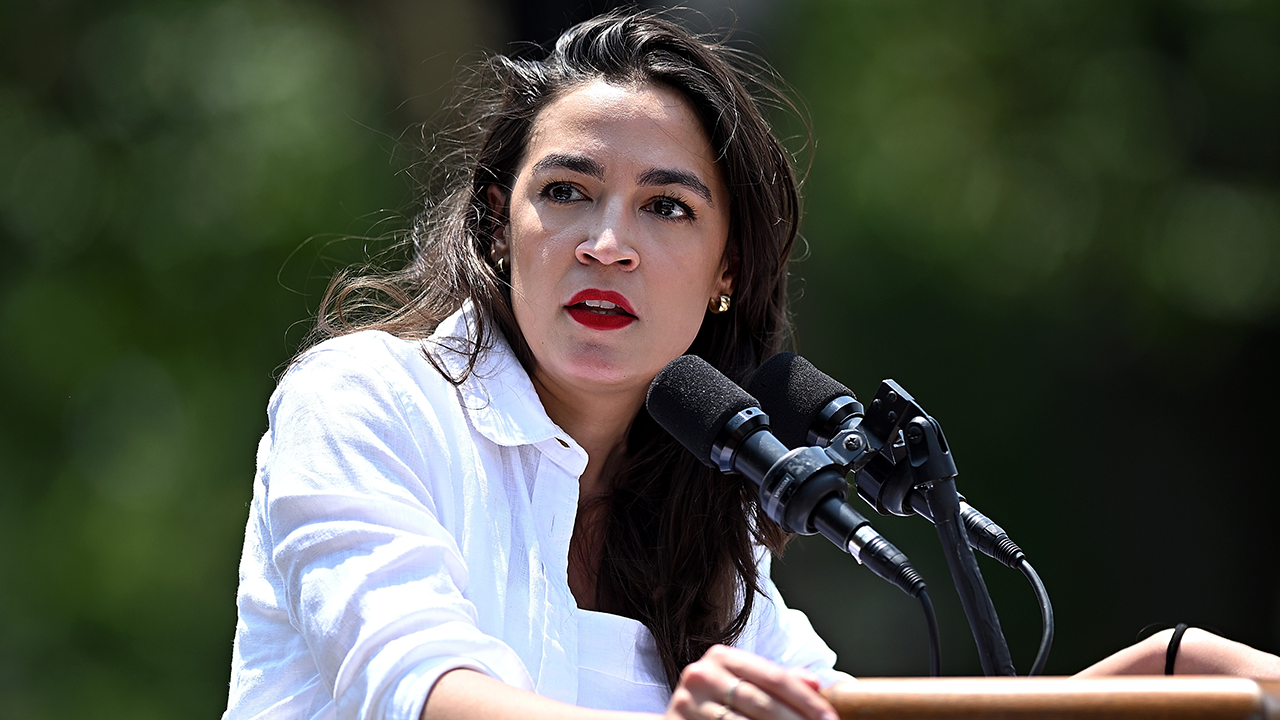
It’s not just a strategic disagreement, mind you. This early maneuvering feels more like an existential crisis wearing a primary debate’s clothing. The focus, naturally, drifts to the familiar name: Rep. Alexandria Ocasio-Cortez. There’s a palpable anticipation, almost a yearning, from some corners of the organization that she, the democratic socialist icon, would hoist their banner for 2028. But this premature coronation talk—it’s caused quite the stir, and not in the ‘let’s rally together’ way they might hope. More like a ‘pass the popcorn, we’re about to cannibalize ourselves again’ situation.
The murmurs have crescendoed into outright grumbles, even public denunciations, laying bare the profound ideological fissures that still hobble a movement trying to claw its way out of the margins. Some DSA chapters, particularly those leaning further left than what Ocasio-Cortez’s congressional career represents, have vocally bristled at the suggestion of an early endorsement for someone perceived as too, well, establishment for their liking. One couldn’t help but detect a hint of exasperation, bordering on the theatrical.
“It’s not just premature, it’s a dangerous path,” remarked Fatima Zahra, a long-time organizer with DSA’s National Political Committee, whose chapter recently passed a resolution condemning what they called ‘identity politics over class struggle’ in endorsement discussions. “We haven’t even codified our demands for the 2024 Democratic Party platform, and suddenly we’re lining up behind a centrist Democrat-with-socialist-branding for 2028? That’s not how we build power; it’s how we dilute our message.” Zahra’s sentiment, frankly, resonates with a growing faction that believes the organization has strayed too far from its anti-imperialist, anti-capitalist roots.
But there are those who see Ocasio-Cortez, and other ‘Squad’ members, as precisely the type of pragmatic standard-bearers who can shift the Overton Window—to borrow a favored phrase—closer to their goals. They argue that waiting, dithering, or holding out for a perfect, unobtainable candidate means squandering genuine opportunities for real legislative impact. It’s an old debate, one that has played out across the spectrum of American politics for generations, just with new faces and Twitter hashtags.
Take, for instance, the pragmatists. They’ll point to the fact that while some in the DSA lament perceived ideological purity tests, public sentiment might be slowly, almost imperceptibly, shifting. According to a recent Pew Research Center survey, nearly 38 percent of Americans under 30 now view socialism more favorably than capitalism, a stark contrast to older demographics. That’s a significant data point, yet the DSA seems intent on turning potential opportunity into another internecine skirmish. They can’t seem to get out of their own way, can they?
Meanwhile, the global implications of such infighting aren’t lost on observers overseas. In places like Pakistan, where left-leaning parties often wrestle with their own internal contradictions and populist temptations, the American DSA’s disunity provides little in the way of a clear, coherent model for progressive advancement. A fragmented U.S. left offers little ideological muscle on the world stage, especially when addressing issues of global equity or human rights. The crises in places like Bangladesh, for example, often demand a united, vociferous progressive voice, not one muffled by self-defeating purity tests back home. This internal U.S. ideological bickering becomes just noise.
“We can’t just yell into the void for a utopian future,” scoffed Congressman Jamaal Bowman, often considered a progressive ally of Ocasio-Cortez and part of the same Democratic cohort, when pressed on the DSA’s early 2028 discussions. “We have to engage, we have to build coalitions, we have to win elections. And if that means working with those who aren’t 100 percent aligned on every single nuance, then so be it. The alternative is perpetual irrelevance.” It’s a message that some within the DSA are clearly allergic to.
What This Means
The DSA’s premature descent into 2028 endorsement drama speaks volumes about the inherent fragility of niche political movements attempting to scale up. Economically, this internal strife can hamstring any concerted effort to push for redistributive policies that could genuinely challenge corporate power. Politically, it presents an optic of disarray within the progressive movement at a moment when unified opposition is arguably more critical than ever. It also exposes a deeper ideological tension: can a self-proclaimed revolutionary movement achieve its aims through the very electoral system it critiques? The debate around AOC, or any candidate really, isn’t just about personalities; it’s a proxy war for the soul of American democratic socialism itself. If they can’t even agree on whom to back for a distant presidential run, don’t hold your breath for a unified front on, say, universal healthcare or tackling wealth inequality.