


Germany’s Stiff Hand: A Berlin Court, Yezidi Survivors, and the Ghost of Mosul
POLICY WIRE — Berlin, Germany — It wasn’t the thunderclap of justice many hoped for, no grand international tribunal seizing headlines with sweeping indictments. Instead, in a quiet Berlin...

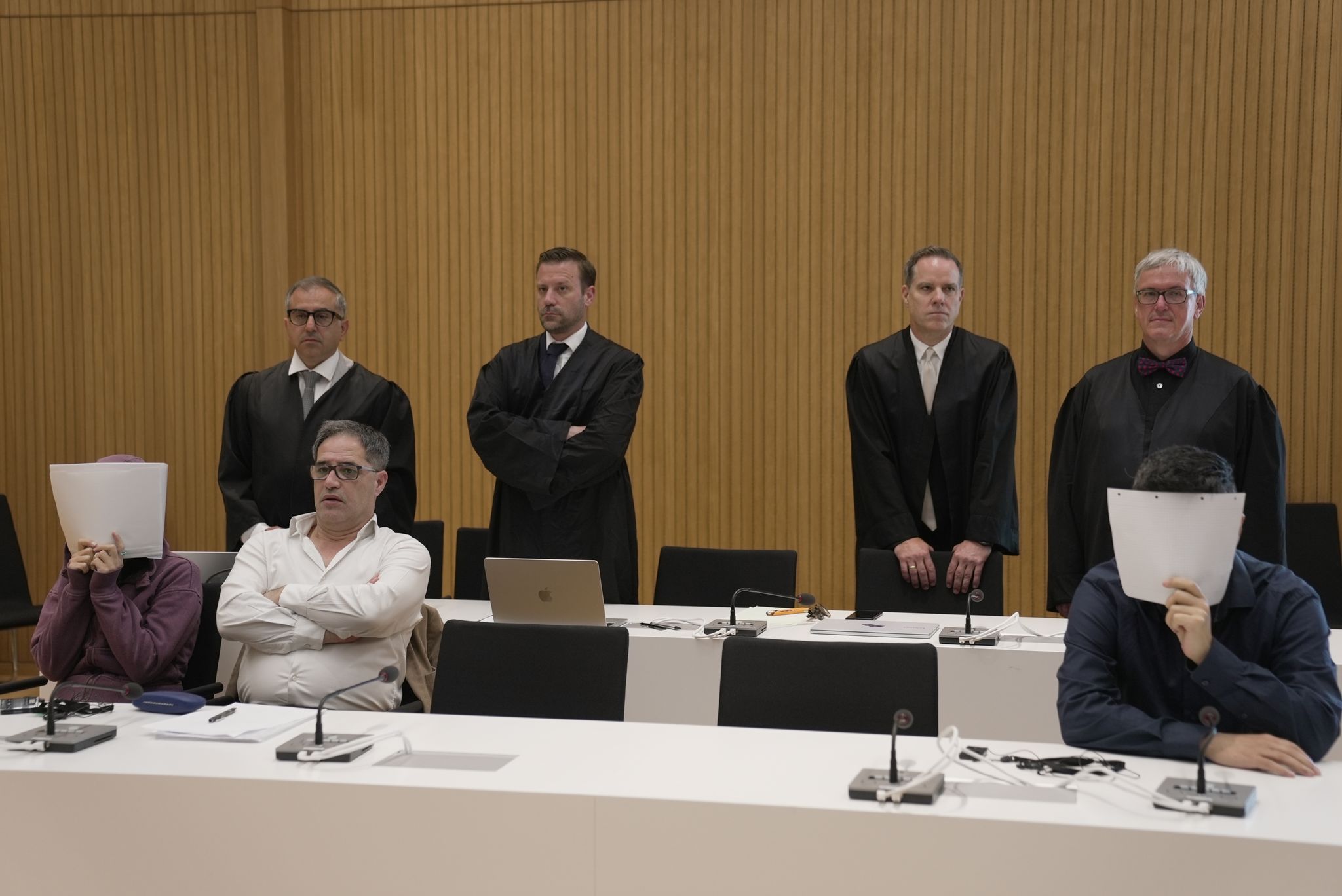
POLICY WIRE — Berlin, Germany — It wasn’t the thunderclap of justice many hoped for, no grand international tribunal seizing headlines with sweeping indictments. Instead, in a quiet Berlin courtroom, a judge methodically detailed the unspeakable—the buying and selling of human beings, specifically Yezidi girls—and then, just as methodically, handed down sentences. Life imprisonment for a man, fourteen years for his wife. Not for grand terror plots, but for the intimate, insidious horror of domestic enslavement carried out miles from where ISIS once declared its twisted caliphate. It’s a sobering reminder: sometimes the most profound justice arrives in stark, almost administrative pronouncements, centuries after the crime, against individuals whose lives now seem jarringly mundane against the enormity of their offenses.
For years, Europe’s legal systems have grappled with the grim fallout of ISIS’s reign. This latest verdict, convicting an Iraqi couple of genocide and crimes against humanity, specifically for the enslavement of young Yezidi women, represents a legal, if perhaps emotionally unsatisfying, victory for survivors. The couple, identified only as Taha Al-J. and his German wife, Jennifer W., according to German privacy laws, subjected several Yezidi girls to horrifying conditions in their Mosul home, even allowing one to die of thirst while chained. But what truly cuts through is the German state’s dogged pursuit of universal jurisdiction—the legal principle that allows serious international crimes to be prosecuted regardless of where they were committed or the nationality of the perpetrator or victim.
It’s painstaking work, prosecuting such cases in a foreign land. Imagine trying to piece together testimony from traumatized survivors, often speaking through interpreters, detailing events that happened in another continent, under circumstances few can even fathom. Yet, German prosecutors have been relentless. Their efforts underscore a fundamental belief: some crimes transcend national borders. “This verdict isn’t just about two individuals,” stated German Justice Minister Marco Buschmann, a statement provided to Policy Wire from his office. “It’s a clear signal to perpetrators everywhere that these unspeakable acts, this unique barbarism, will be pursued, no matter where they hide, for as long as it takes. Germany is committed to holding those accountable for the heinous crimes committed against the Yezidi community.” He’s not wrong; it’s an uncomfortable but necessary undertaking, isn’t it?
But this conviction barely scratches the surface. More than 6,400 Yezidis were abducted by ISIS in 2014 alone, and incredibly, over 2,700 are still missing—a statistic grimly documented by groups like Yazda, a global Yezidi organization. Many languish in mass graves; others, tragically, remain unaccounted for, their fates unknown. This German court decision, while significant, is a single drop in an ocean of trauma — and unaddressed wrongs.
And it raises profound questions about global responsibility. While the immediate horrors unfolded in Iraq, ISIS’s ideological tendrils reached far. Recruits hailed from dozens of countries, including a disturbing, albeit small, number from regions as distant as South Asia, their warped interpretations of faith fueling their brutality. Their return to their home countries or attempts to seek refuge often present immense security — and societal challenges. It’s a messy, uncomfortable truth, this global entanglement.
“We’ve fought tooth and nail for this recognition, this measure of justice,” remarked Pari Ibrahim, Executive Director of the Free Yezidi Foundation, in an exclusive conversation. “But the true battle remains: locating our missing, healing our broken, and ensuring the world never forgets what happened, lest history—it’s always history, isn’t it?—repeats itself.” She’s seen the damage firsthand. It sticks with you.
What This Means
This ruling signals a powerful, albeit slow, evolution in international justice. Germany, leveraging its universal jurisdiction statutes, has taken a leading role in prosecuting these monstrous crimes. It isn’t just about bringing perpetrators to book; it’s about providing some semblance of closure for the Yezidi people and reaffirming the international community’s theoretical commitment to combating genocide. But practically? The process is arduous — and incredibly expensive, a drain on judicial resources. Europe’s Moral Reckoning: Germany Delivers Justice for Yazidis — these are not easy victories. The political implication is clear: Germany sees itself as a guardian of international humanitarian law, particularly when other nations cannot or won’t act. It’s a morally defensible position, certainly, but one that puts immense strain on domestic legal systems. Economically, while not a direct financial play, it sends a message about stability and the rule of law, qualities that, paradoxically, underpin international commerce and trust.
But the true ripple effect? It’s about setting a precedent, however small. If individual nations like Germany can proactively prosecute crimes of this magnitude, it creates a powerful deterrent—even if the wheels of justice grind excruciatingly slow. Because impunity, ultimately, is a breeding ground for future atrocities. That, folks, is the hard reality. Berlin’s Discomfort isn’t limited to defense contractors; it extends to the very bedrock of what constitutes human decency in a globalized world.