


The Golden Handshake of Limbo: Lakers’ Priced Duo Graces Summer League Amidst Trade Scramble
POLICY WIRE — Las Vegas, Nevada — The desert heat usually brings out desperate hopefuls during Summer League, eager for a fleeting glance from an NBA scout. But this year, a different kind of...

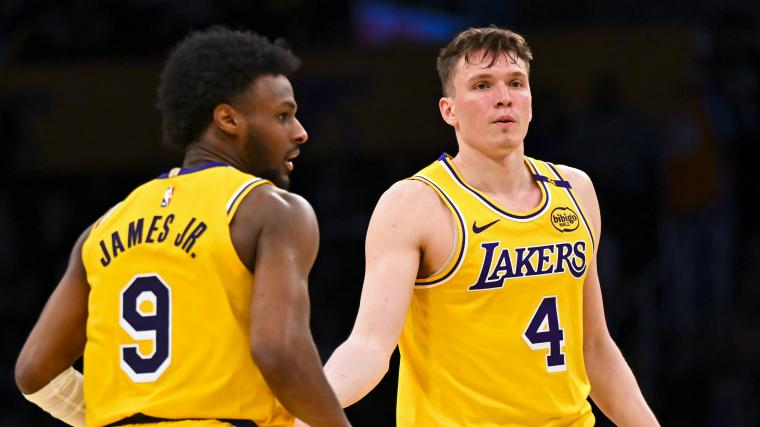
POLICY WIRE — Las Vegas, Nevada — The desert heat usually brings out desperate hopefuls during Summer League, eager for a fleeting glance from an NBA scout. But this year, a different kind of spectacle has quietly unfolded courtside: two million-dollar assets, Dalton Knecht and Jarred Vanderbilt, patiently watching, all while their current employer actively tries to offload them to the highest bidder. It’s an act of public relations, or perhaps just a very awkward goodbye, orchestrated by the same franchise, the Los Angeles Lakers, that recently saw its iconic centerpiece, LeBron James, depart for greener, or at least newer, pastures.
It wasn’t supposed to be this way. Knecht, whose rollercoaster journey from a Charlotte Hornets trade — a deal rescinded mere days after its announcement — has been the stuff of sports lore, found himself alongside Vanderbilt, whose own future has become murky in the Lakers’ frantic reshuffling post-LeBron. Both players, representing a hefty collective salary north of $66 million according to league financial projections, are openly on the trading block. And yet, there they were, donning team gear, nodding approval for players who might soon be their former teammates. Because, you know, loyalty.
“Look, no one enjoys these kinds of conversations,” Lakers General Manager Rob Pelinka was quoted saying recently in a thinly veiled nod to the ongoing trade discussions. “But this isn’t a charity. We’re in the business of securing championships for our fans, and sometimes, for the collective good, tough choices just have to be made.”
But choices impact individuals, especially in a league where contracts, while immense, rarely guarantee tenure. The Lakers, after acquiring new second-round draft picks in a deal that moved Deandre Ayton out of Phoenix, are reportedly keen to bundle those assets with Knecht and Vanderbilt to land a more immediate, starting-caliber talent. That’s the official line. The unofficial truth is, these men are living metaphors for corporate restructuring in real-time, under the glaring lights of a professional sports circus.
It’s a peculiar show of commitment from players staring down the barrel of unemployment, or at least, re-employment in a new city. And their public appearances certainly didn’t go unnoticed. “It’s a brutal reality check, frankly,” offered legendary sports analyst Adrian Wojnarowski on a recent broadcast. “But it’s also a stark testament to professional decorum in an inherently ruthless industry. You wear the jersey — and support your organization, even when they’re packing your bags. That’s the modern NBA playbook, unfortunately.”
This dynamic extends beyond basketball, echoing anxieties familiar across industries globally. From Silicon Valley tech layoffs to the precarious employment in gig economies, individuals are frequently asked to perform with enthusiasm even as their positions are made redundant. It’s a testament to the perceived value of professionalism, however cynical, in the face of institutional indifference.
📄 POLICY WIRE WHITEPAPER PUBLISHED: PAKISTAN'S NATIONAL SECURITY POLICY PRIORITIES
👉 READ BY CLICKING HEREWhat This Means
The bizarre Summer League attendance of Dalton Knecht and Jarred Vanderbilt offers more than just fodder for sports blogs; it’s a microcosm of the cold, transactional nature pervading high-stakes global economics. Politically, we’re seeing a mirroring of alliances shifting in real-time, not based on ideological principles, but immediate strategic advantage. Consider the shifting sands of allegiances in places like South Asia, where Pakistan, for instance, must constantly re-evaluate its geopolitical partners based on economic incentives and security guarantees, often maintaining public pleasantries even with entities actively pursuing contradictory agendas.
Economically, this Lakers scenario illustrates the increasing precarity of even high-value labor in dynamic markets. Elite athletes, much like top-tier consultants or executives, are often valued not for loyalty, but for fungible skills. The combined $66 million tied up in Knecht and Vanderbilt represents significant capital that the Lakers see as better deployed elsewhere. This hyper-fluid movement of high-value human capital — the athlete as a tradable asset — becomes a template for how organizations manage talent, valuing future potential and market opportunity over established relationships. It’s a harsh lesson in the capitalistic imperative: yesterday’s star can quickly become tomorrow’s trade bait, and one is expected to smile through the process. It’s an economy that values agility, often at the expense of stability, for its human components.