


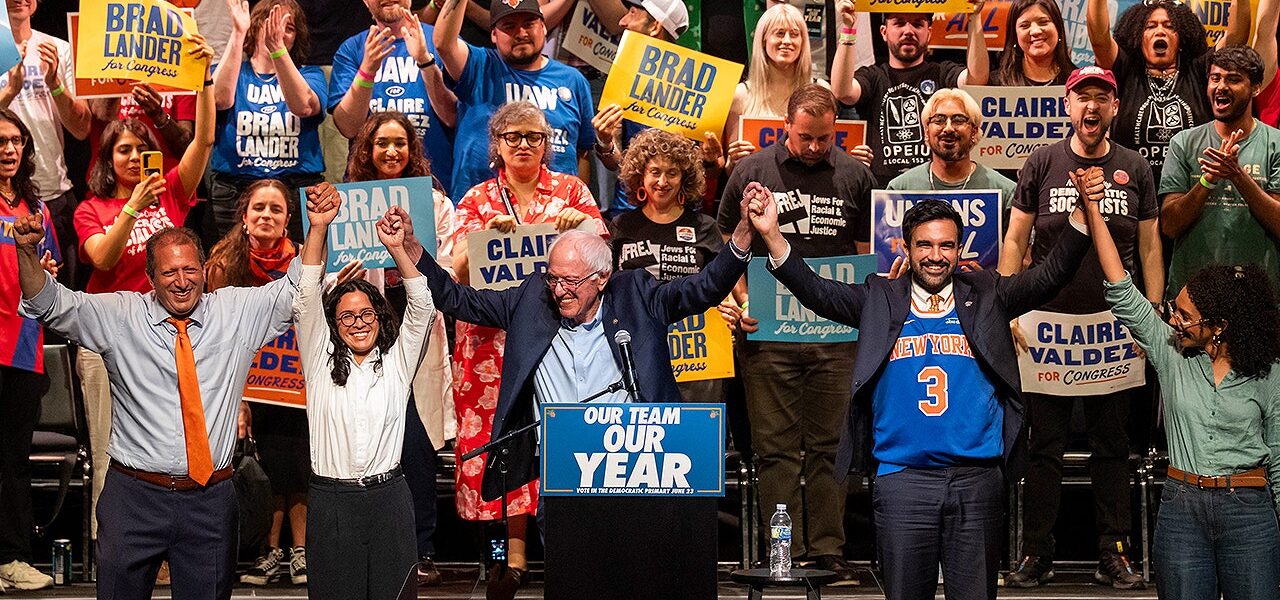
Political Elders Grumble as Far-Left Fumbles, Sparking Intra-Party Rancor
POLICY WIRE — Washington D.C., USA — The ghosts of Democratic primary battles past are getting a fresh coat of paint, it seems. We thought some internal squabbles had been shelved, buried under the...

POLICY WIRE — Washington D.C., USA — The ghosts of Democratic primary battles past are getting a fresh coat of paint, it seems. We thought some internal squabbles had been shelved, buried under the ever-present anxiety of general elections, but nah—not this cycle. The simmering tension between the Democratic Party’s old guard and its vibrant, sometimes stubbornly idealistic, progressive flank has once again boiled over into plain sight. This isn’t just about winning an election; it’s about what winning even means, and who gets to define the acceptable edges of the big tent.
It’s a classic political drama, playing out in real-time, only this time the spotlight’s on the left, not the right. But there’s always a predictable cadence to these intra-party slugfests. An elder statesman—a guy who’s seen it all, right, from the war rooms to the polling booths—steps forward to tell a generation of upstarts where they’re getting it wrong. He thinks he knows the path, the one to power. They, meanwhile, are often too busy trying to pull the party, kicking and screaming, towards what they see as moral imperative. It’s a clash, often less about policy than about temperament — and perception, about who really holds the electoral keys. And for all their talk of unity, Democrats haven’t quite figured out how to reconcile these visions without a fair bit of public airing of grievances. Honestly, it’s a spectacle.
Now, let’s be straight. This recent public flogging, triggered by those oh-so-telling primary results, ain’t new. This kinda friction, it’s built into the DNA of big-tent parties, where everybody’s got a cause, and some causes simply rub others the wrong way. Primary elections, as we’ve learned through painful experience, are often the political equivalent of family squabbles, played out on the front lawn for all the neighbors to see. They highlight deep-seated disagreements about messaging, strategy, — and electability. When the party doesn’t seem to know what it stands for, well, you don’t really have to guess why voters might not either. We’ve all been there. It’s that nagging feeling, the one that makes you wonder if your own side is more interested in being right than in winning votes. This isn’t theoretical; we’ve seen it sink campaigns before.
You’ve got a guy like James Carville, that grizzled, quick-witted maestro of southern political maneuvering. He didn’t mince words after recent primary setbacks for the Democratic Party’s progressive candidates. He essentially laid blame at their feet, contending they’re actively harming the party’s broader prospects, uttering the harsh sentiment that [QUOTE_PLACEHOLDER]. He’s not whispering it either. He’s saying it loud enough for the back rows, for cable news, for anyone who’ll listen, and you can practically hear the collective eye-roll from younger staffers in response. But his point, blunt as it’s, speaks to a broader, unspoken fear among many establishment Democrats: that chasing ideological purity too far to the left jeopardizes winnable races in the crucial swing districts necessary for actually governing. It’s simple math for these folks, and it often means leaving some lofty ideals on the cutting room floor for the sake of holding the House or Senate.
And Carville’s got a point to some degree. In electoral politics, pragmatism usually beats idealism. Pakistan’s political scene, for example, frequently mirrors this dynamic. We’ve watched parties there, too, struggle to balance calls for ideological adherence, be it religious or secular, with the bread-and-butter demands of economic stability and governance. The push for internal purity tests, while energizing to a base, often alienates the moderate, undecided voters who ultimately tip the scales. You can’t run a government on principles alone—it needs numbers. When factions within a major party prioritize rhetorical battles over strategic alliances, they invite broader public skepticism, making governing, let alone winning, an increasingly complicated dance. It’s a tale as old as politics itself.
📄 POLICY WIRE WHITEPAPER PUBLISHED: PAKISTAN'S NATIONAL SECURITY POLICY PRIORITIES
👉 READ BY CLICKING HEREA recent poll conducted by Axios/Ipsos in February 2024 revealed that just 43% of Democrats believe the country is headed in the right direction, a figure that highlights internal dissent even before primary losses really kicked off. This kind of discontent, it provides fertile ground for the sort of public finger-pointing we’re seeing now. Because if your own base isn’t feeling good, that’s a signal. A big one.
It’s messy, isn’t it? These public skirmishes are the cost of a diverse party, sure, but they also expose fundamental cracks in its foundation. The stakes aren’t small. They’re deciding who holds power, and with that power, who shapes the future course of the country, impacting everything from domestic spending to global foreign policy maneuvers and international alliances. You’d think they’d learn to keep some of these disagreements behind closed doors. But then again, maybe that’s just not the American way.
What This Means
This escalating rhetorical war isn’t merely about ego; it has tangible political — and economic implications. For one, it signals a deeper rift that could paralyze future legislative efforts, regardless of which party eventually controls Congress. If the Democratic Party can’t decide on a cohesive message or strategy, they’re handing rhetorical ammunition to their opponents, plain and simple. And it costs votes. Secondly, a party perceived as ideologically fractured might struggle to project stability, not just to its electorate, but to global partners and financial markets. Think about it: a divided America can be a less reliable America, especially on trade agreements or international commitments. This internal squabbling reduces the party’s effectiveness, both domestically — and on the global stage. The world is watching for cues on America’s political health, and constant internal feuds project weakness, not strength. Ultimately, it’s a self-inflicted wound, and it’s one that could bleed out across a wide range of policy fronts if they don’t find a way to staunch it soon. This isn’t just about optics; it’s about governance. Serious business, all told.