


Diamond Dust and Dollars: Connecticut’s Crop Navigates Pro Baseball’s Stark Realities
POLICY WIRE — New Haven, CT — In the relentless churn of professional sports, aspirations, however earnest, are often merely data points for a billion-dollar industry. The 2026 Major League Baseball...

POLICY WIRE — New Haven, CT — In the relentless churn of professional sports, aspirations, however earnest, are often merely data points for a billion-dollar industry. The 2026 Major League Baseball Draft, concluding its annual sweep across the nation’s diamonds this past Sunday, wasn’t just a moment of personal triumph for 681 young men; it was a cold, hard allocation of capital, a high-stakes lottery masquerading as a dream factory. Connecticut, that unassuming sliver of New England, surprisingly yielded more than a dozen of these freshly minted prospects, proving yet again that raw talent emerges from the unlikeliest of corners.
It’s a peculiar dance, this pipeline from dusty little league fields to the glittering big leagues. Ryan Oshinskie, the highest-drafted Nutmeg native, exemplifies the circuitous route. He’s a right-hander out of Fairfield, snatched up 192nd overall by the Milwaukee Brewers. An Ivy Leaguer from Brown, no less—the kind of brain-and-brawn combination scouts, theoretically, adore. But he missed an entire collegiate season to injury, only solidifying his stock after dominating in the cutthroat Cape Cod Baseball League, where he posted a blistering 1.93 ERA across thirteen appearances. Baseball, you see, is never just about what you’ve done, but what the market perceives you might do, even with a question mark appended.
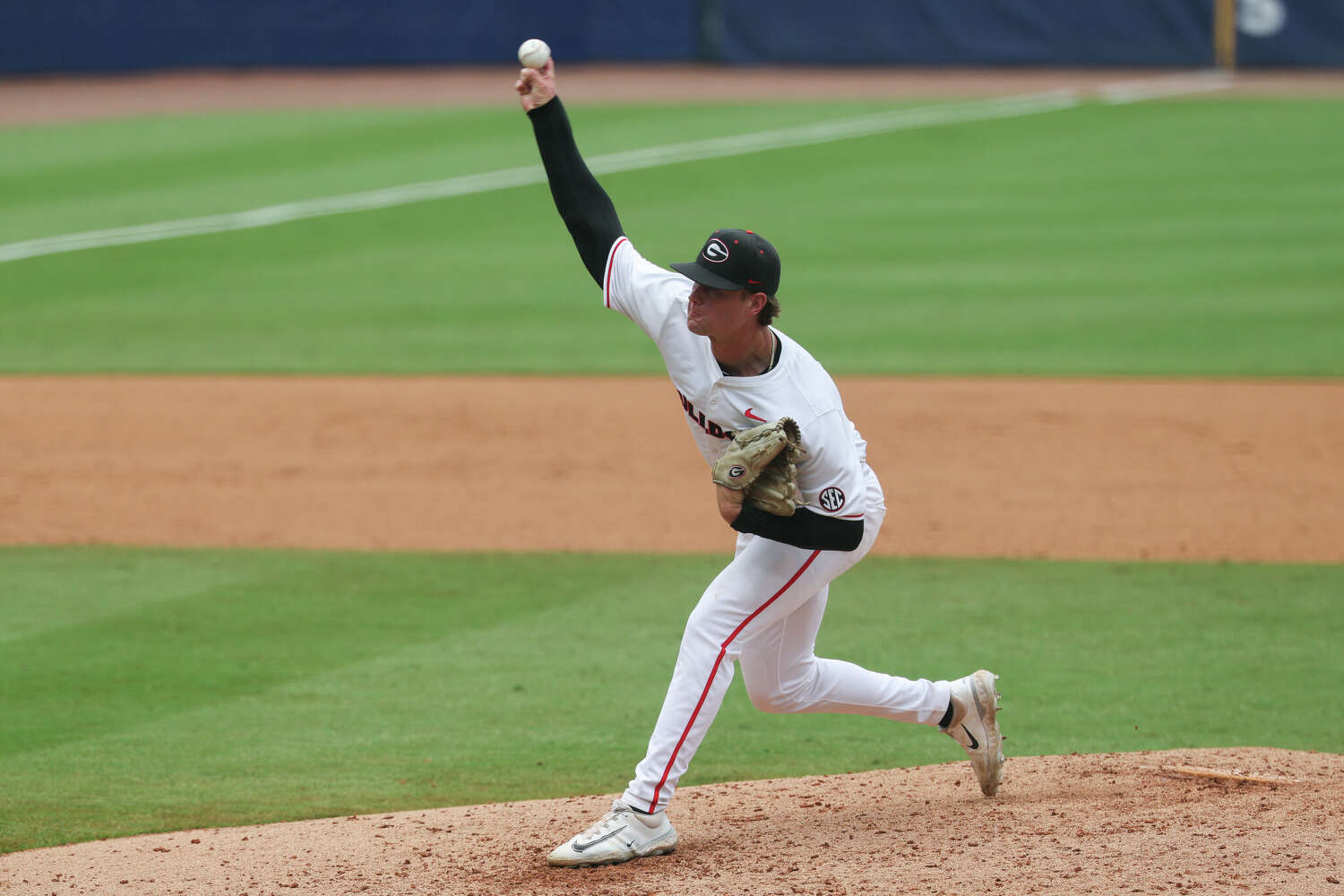
Then there’s Matt Scott of Redding, who, despite contributing to Georgia’s College World Series run, saw his ERA tick up. He played through the crucible of top-tier college baseball, then was claimed by the Cleveland Guardians at pick 243. Matthew Buccierro from Ridgefield became a Fairfield University legend, the kind of slugger statistics pages love: MAAC Player of the Year, leading in home runs, RBIs, you name it. The Chicago White Sox clearly liked what they saw, snapping him up at 285. But those accolades? They’re just entries on a scouting report, a transactional history.
And let’s not forget Zach Peters of North Haven. He became a VCU phenomenon, clocking a 1.68 ERA that put him fourth in program history, getting snagged by the Miami Marlins. That’s serious stuff. A genuine eye-opener, that VCU ERA—it tells a story. Even players like Patrick Clemmey, an Avon Old Farms alum (originally from Rhode Island, mind you) headed to Vanderbilt, demonstrate the crisscrossing pathways talent takes through Connecticut’s preparatory and summer league networks.
But how much of this is pure sport — and how much is business acumen? A long-time MLB scouting director, who requested anonymity to speak candidly about draft economics, put it plainly: “Look, we’re not drafting heart. We’re drafting potential market value. An arm that can throw ninety-five with control? That’s intellectual property. An Ivy Leaguer? Good sign, means he can handle complex assignments. But if he breaks, we cut our losses. It’s a ruthless system, kid. Always has been.” He’s right; it’s a constant evaluation of risk — and reward.
The academic side isn’t immune, either. Elliot Lascelles, a highly-touted Canadian, was committed to Yale before the San Diego Padres threw him a second-round curveball. He’s now staring down a potential $1.6 million signing bonus. You don’t say no to that. You don’t tell the Padres you’d rather read Hobbes in a New Haven lecture hall. “College coaches understand the landscape,” explained University of Connecticut Athletic Director, James Penders, a man who’s overseen eighty MLB Draft picks in his tenure. “We foster talent, — and when it matures to a certain level, they’ll often leap. We cheer for them, of course. It’s validation for our program, for our methods—even if it leaves a gap in the roster.” UConn itself sent Charlie West, a pitcher with a mixed but promising record, to the Dodgers. It’s a cyclical thing.
Policy Wire analysis of Major League Baseball data confirms that 681 hopefuls were selected in this year’s draft. A small percentage, indeed, achieve their ultimate goal. These are the sharpest points on a very broad spear. For every Matt Scott or Ryan Oshinskie, there are thousands of other athletes whose careers will peak in college or the semi-pros. Because ultimately, for the vast majority, the journey ends well before the big league paycheck.
What This Means
The concentration of talent emerging from Connecticut, a state not typically synonymous with professional baseball powerhouses, reflects several underlying dynamics. First, it underscores the growing professionalism of youth and collegiate athletics, turning even ostensibly amateur settings into proving grounds for future commodities. This isn’t just about local pride; it’s about regional economies that benefit, however indirectly, from the coaching, facilities, and academic institutions that cultivate such talent. High school and college programs effectively become incubators, providing early-stage development before corporate MLB assumes control. But this pipeline is fiercely insular. While scouts diligently mine the northeastern corridor, the grander vision of baseball’s globalization—the tantalizing idea of unlocking markets like Pakistan, where cricket reigns supreme but burgeoning interest in the diamond occasionally surfaces—remains, for now, largely a distant ambition. The investment, the intricate scouting networks, the economic machinery are overwhelmingly concentrated in areas of proven returns. Until player development models in nascent baseball nations evolve to MLB’s exacting standards, the path to the big leagues will remain heavily weighted toward established, economically developed regions like America’s northeast corridor, or, say, regions with burgeoning baseball interest like parts of Central America.
But the political — and economic ripple effect is still there. These draft picks become ambassadors, albeit accidental ones, for their home state, bolstering its image as a place where grit and opportunity can intersect—and that’s an image cities, even in sports, like to project. Consider the economic impact of collegiate summer leagues in places like Norwich, which host draftees like Andrew Gaines; they’re microcosms of minor-league economics, offering communities a piece of the sporting spectacle and players another crucial proving ground.