


Diamonds & Dimes: Connecticut’s Unseen Playmakers in Pro Baseball’s High-Stakes Gamble
POLICY WIRE — New Haven, CT — Most folks figure the biggest news outta Sunday’s MLB Draft was some golden-armed phenom from a Power Five conference, maybe a California kid with a fastball that’d dent...

POLICY WIRE — New Haven, CT — Most folks figure the biggest news outta Sunday’s MLB Draft was some golden-armed phenom from a Power Five conference, maybe a California kid with a fastball that’d dent a car. But they’d be wrong. Dead wrong, actually. What slipped through the usual news cycle, quiet as a perfectly placed bunt, was the sheer density of talent bubbling up from America’s forgotten corners, particularly from places you might not expect to be churning out professional athletes, like, say, Connecticut.
It’s not the glitz, not the fanfare. It’s the grit. You see, while 681 players from around the United States were being selected by the league’s 30 franchises — a sprawling, almost anonymous recruitment drive — an outsized slice of that pie had strong, often overlooked, ties back to the Nutmeg State. Thirteen young men, give or take a few academic decisions, got that life-altering call. They’re proof that baseball isn’t just bred on sun-baked fields down south, it’s also honed on slightly chillier high school diamonds and college campuses further north. [QUOTE_PLACEHOLDER]
Take Ryan Oshinskie. The Milwaukee Brewers saw something special there, using a sixth-round pick. This wasn’t some flashy, media darling situation. Oshinskie is the highest-drafted Connecticut native in this year’s draft, which sounds good until you consider he spent his entire 2026 college season at Brown sidelined with an injury. The Brewers took a chance on Oshinskie even though the 20-year-old missed his entire 2026 college season at Brown due to injury, convinced by a stellar season in the Cape Cod Baseball League the previous summer. That’s a gamble, plain and simple. And a calculated one, based on potential and that 1.93 ERA he posted across 13 appearances with the Orleans Firebirds, as reported by those summer league stats.
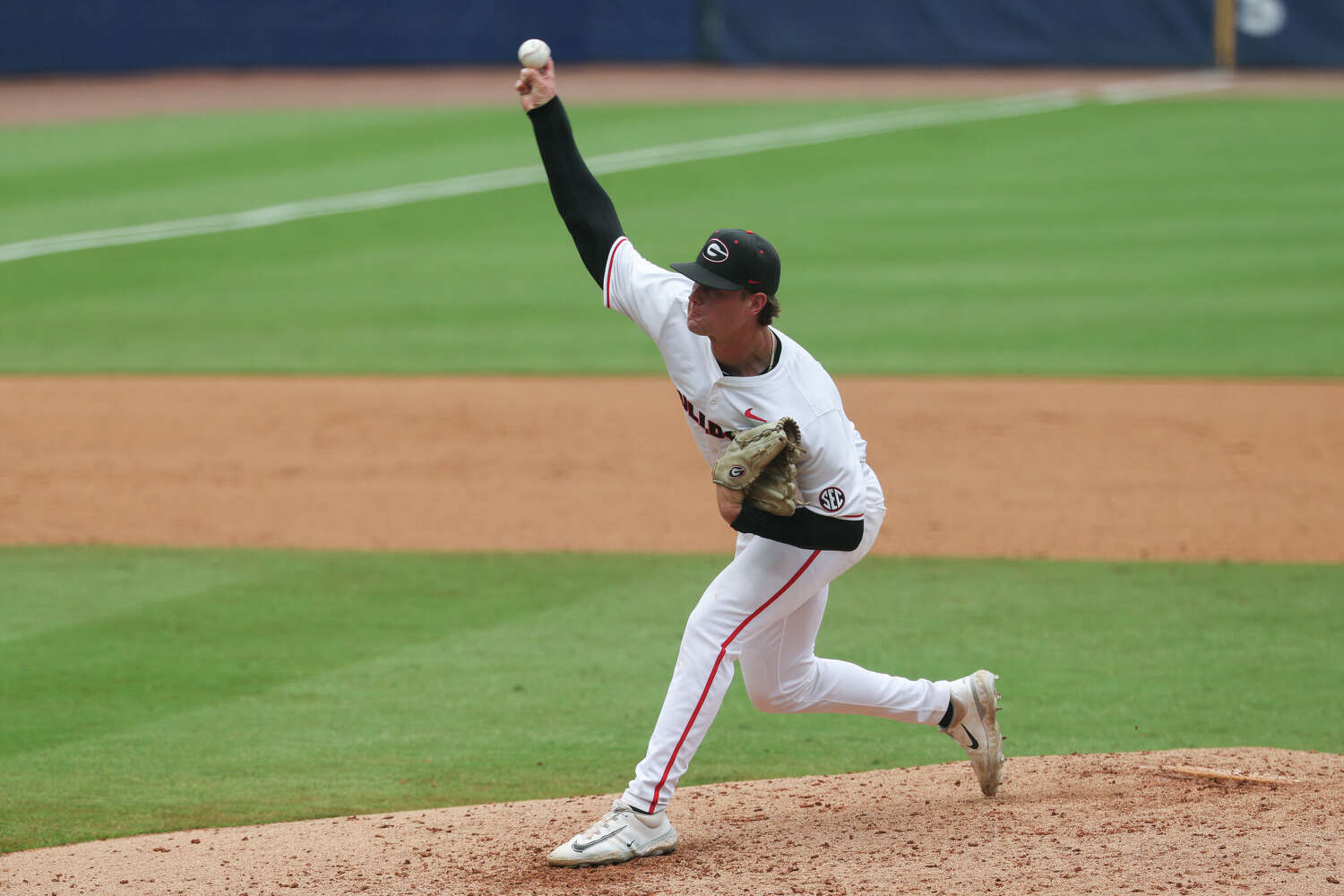
Then there’s Matt Scott from Redding, now bound for Cleveland. The guy pitched in Georgia’s College World Series run. He had a 7-0 record, see, largely in relief, before a tough outing in that Oklahoma game. He was GametimeCT’s Player of the Year in 2022, back when he led Joel Barlow to a Class M state championship. You get a sense of the grind these kids put in—that’s the whole story, right there. It ain’t handed to ’em. He’d earned second-team Freshman All-America honors at Stanford, don’t forget. But it wasn’t a clean, linear path; he ended up transferring to Georgia for his final year of eligibility. Professional baseball’s development pipeline isn’t for the faint of heart, or for those averse to uprooting their entire lives.
And consider Matthew Buccierro, another Connecticut native, who broke Fairfield University’s molds. He’s just the third Stag drafted inside the first 10 rounds of the MLB Draft — and the first in over 40 years. He was the MAAC Player of the Year, leading his team to a conference championship game with a .668 slugging percentage. That’s pure impact, the kind of stats scouts drool over, even if his home state might not have the traditional baseball pedigree of, say, Florida. But talent’s talent, no matter where it’s incubated. This isn’t just a quaint local story; it’s a testament to the diffuse and increasingly global search for talent that defines modern sports economics. And because of it, the global marketplace for raw athleticism continues to expand, pushing further and further into regions not traditionally associated with America’s pastime.
Zach Peters rocketed onto MLB Draft radars this spring with a remarkable senior season for VCU, as his 1.68 ERA ranked fourth in program history. And let’s not overlook Yale commit Elliot Lascelles, a Canadian phenom scooped up by the Padres, who’s in line to receive a $1.6 million signing bonus. It’s serious money, reflective of a system that views talent as an international commodity.
What This Means
The concentration of talent emerging from Connecticut — often honed through grueling collegiate summer league circuits like the NECBL and Futures Collegiate Baseball League — illustrates a broader economic and sociological phenomenon at play within professional sports. It’s less about the obvious hotbeds and more about the rigorous, almost industrial, approach to player development across the country. Think of it as a supply chain, decentralized but efficient, filtering individuals through an increasingly competitive process. Policy implications? You bet. The investment in youth sports infrastructure, the role of public and private education in athletic programs, even the shifting demographics of these smaller states all feed into this pipeline. This isn’t simply kids playing ball; it’s an ecosystem that feeds a multi-billion dollar industry.
But there’s a deeper, more subtle read. This talent migration, where young men relocate across states and countries for better collegiate programs or exposure, mirrors global economic trends. People move where opportunity lies. We see this dynamic in places like Pakistan, too, where talented youth, especially in cricket, often dream of securing contracts in foreign leagues. The dream of ‘making it’ isn’t confined by geography anymore, thanks to scouts — and agencies scouring the globe. It’s about access, coaching, and—let’s be honest—cold, hard cash. Baseball’s business imperative dictates that you find talent wherever it sprouts, regardless of its zip code or even its nationality, because the stakes are simply too high to leave any stone unturned.
The MLB, for all its American pastoral imagery, operates on global capitalist principles. It isn’t just finding new stars; it’s effectively mapping — and monetizing every viable talent pool it can tap. These Connecticut draftees—the kid from Fairfield Prep, the one from Eastern Connecticut State, the athletes who spent summers with the Norwich Sea Unicorns or the Mystic Schooners—are but a handful of nodes in a much larger, relentless global network. It’s an American dream, yes. But it’s built on a distinctly international blueprint.
They’ve all been through it, — and the process never gets any easier. That’s the reality for every aspiring professional athlete, from the Bronx to Karachi. They’re chasing an opportunity, just like anyone else in a competitive, cutthroat economy.