


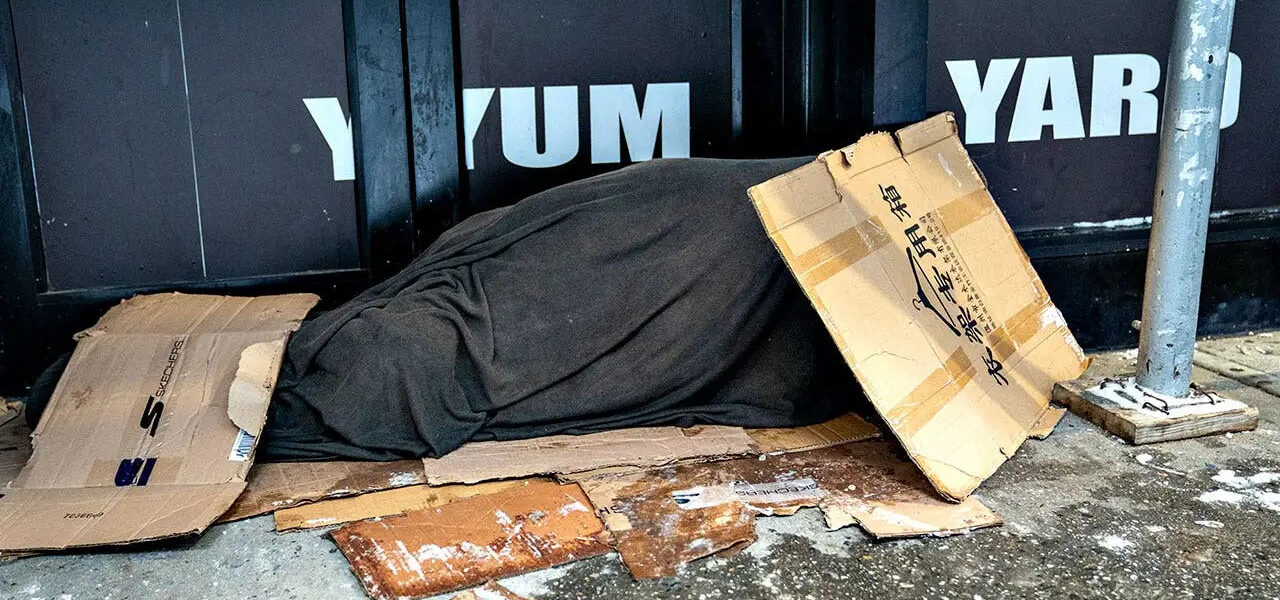
City’s Unheralded Exodus: Brooklyn’s Quiescent Corners Brace for ‘Single Homeless Men’
POLICY WIRE — New York City, USA — The city’s brass dropped another shoe this week, one that landed with a muted thud but echoed nonetheless through the usually placid tree-lined streets of an...

POLICY WIRE — New York City, USA — The city’s brass dropped another shoe this week, one that landed with a muted thud but echoed nonetheless through the usually placid tree-lined streets of an unsuspecting Brooklyn borough. It wasn’t the announcement itself—we’ve grown accustomed to the municipal ballet of public proclamations and bureaucratic maneuverings—it was the quiet implication: a sliver of urban planning, poised to redefine a neighborhood’s rhythm.
It’s a peculiar urban arithmetic, isn’t it? One hundred — and ten souls, unhoused, in transit, slated for a particular plot on the metropolitan chessboard. For the city, it’s a numbers game, a logistical puzzle demanding constant re-solvability. For the denizens of the targeted block—a place where Sunday mornings still hold a semblance of repose—it’s a wrench thrown into the gears of daily life. The report (you know, the kind that leaks before it’s official, priming the ground for disquiet) laid it bare: NYC intends to move 110 single homeless men to what’s been described as a quiet Brooklyn neighborhood. The outcome? Unsurprisingly, it’s leaving locals worried. And you can bet your bottom dollar they’re not just worried about parking spaces. [QUOTE_PLACEHOLDER]
They’re talking about safety, of course. Always the first reflex. The property values get a mention too—a natural, if somewhat predictable, concern when stability feels suddenly up for negotiation. But deeper than that, you sense an unraveling of expectation. This isn’t just about ‘not in my backyard;’ it’s about a disconnect, a perception that decisions are made somewhere else, by someone else, for some greater, abstract good that rarely includes the ‘locals.’ The civic leaders, naturally, articulate the profound need for humane solutions to a housing crisis that’s ballooned across America. Indeed, the US Department of Housing and Urban Development (HUD) reported that overall homelessness increased by 12 percent across the country from 2022 to 2023, with single individuals comprising the vast majority.
But back in Brooklyn, it’s personal. One could argue, quite reasonably, that these single homeless men are, by definition, also ‘locals’ of some stripe, displaced perhaps from another Brooklyn borough, or even from within this very same community. Yet, the framing, the timing, and the characteristic lack of genuine community dialogue (before the fait accompli) have ignited a familiar friction. It’s an old dance, this one—the imperative of public service colliding with the intransigence of established neighborhood norms. It always is.
This isn’t a problem unique to the five boroughs. Picture the megacities of South Asia—Karachi, Lahore, or Dhaka. There, the challenge of accommodating the displaced and the dispossessed isn’t just about 110 individuals; it’s a constant, tidal surge. Makeshift settlements, millions without formal housing, these aren’t anomalies but embedded realities. In these bustling centers of the Muslim world, governments wrestle with similar pressures, albeit on an unimaginably grander scale, often without the same social safety nets or legal frameworks that at least theoretically govern New York’s response. The methods of integrating these populations—or failing to—reflect deeply on national identity and social cohesion. It’s messy business everywhere. When megacity dreams recede, the ripple effect of such policies isn’t just felt in Brooklyn.
The city’s administrators are doubtlessly scrambling to assemble the usual reassurances. They’ll point to resources, services, a compassionate approach. But what’s often overlooked in these grand urban stratagems is the granular texture of community. It’s the daily rhythms, the casual interactions, the implicit social contracts that hold a neighborhood together. Upending that—even for the most noble of causes—rarely happens without a squawk, or, in this instance, considerable consternation. Because people, they’re not just line items on a city budget spreadsheet.
📄 POLICY WIRE WHITEPAPER PUBLISHED: PAKISTAN'S NATIONAL SECURITY POLICY PRIORITIES
👉 READ BY CLICKING HEREThey’re parents. They’re business owners. They’re folks who’ve spent decades building a certain kind of life in a particular place. And now, a decision from a far-off desk (or so it feels) demands they absorb a change that they had no hand in shaping. It’s an issue that transcends mere policy; it’s a test of social trust. You’d think, after all these years, policymakers might get that. But then again, maybe they don’t much care.
What This Means
This localized discontent in Brooklyn isn’t just about a particular group of men or a specific residential block; it’s emblematic of a systemic tension inherent in modern urban governance. The economic implications are multifaceted: perceived drops in property values can shrink local tax bases over time, impacting public services for everyone. Small businesses, reliant on established foot traffic and community comfort, could see shifts in their customer base or even face closures if neighborhood sentiment sours significantly.
Politically, these decisions, often made without robust preemptive community engagement, foster a sense of disenfranchisement. They erode faith in local government and can fuel single-issue voter blocks, potentially swaying elections at the council level and beyond. It highlights a common policy conundrum: the imperative to address a regional crisis (homelessness) through hyper-local solutions, often resulting in concentrated burdens. This approach sidesteps a truly comprehensive, region-wide distribution of responsibility and instead relies on ad-hoc, sometimes politically expedient, placements. The net effect is often more political blowback than lasting societal solutions. It’s not a sustainable model; it never has been. It’s a political football, ready for the next election cycle. And everybody knows it. Or they should.