

Political Vacuum: Lindsey Graham’s Sudden Death Shakes Senate, Foreign Policy Alignments
POLICY WIRE — Washington, D.C. — Washington D.C. rarely truly stops, even for the most seasoned players. But this weekend, the news dropped with the weight of a lead curtain. The official cause for...

POLICY WIRE — Washington, D.C. — Washington D.C. rarely truly stops, even for the most seasoned players. But this weekend, the news dropped with the weight of a lead curtain. The official cause for Senator Lindsey Graham’s sudden demise — an aortic dissection, complicated by arterial hardening, according to a preliminary medical examiner finding shared by his office — barely began to scratch the surface of the tremor he leaves behind in the U.S. capital.
It wasn’t the heart attack, that oft-feared, quick exit from public life. It was a more insidious, silent tearing that ended the career of a politician many loved to hate, and many more relied upon in a uniquely broken ecosystem. And just two days after turning 71 years old, the South Carolina Republican, a veritable fixture on the Hill for over three decades, just wasn’t there anymore. He’d left a gaping hole, a sudden power vacuum that’s got the gears of political maneuvering grinding overtime, even as the flags across the country dip to half-staff. [QUOTE_PLACEHOLDER]
They’re already talking about the scramble, you know. For a state like South Carolina, it’s not just a Senate seat; it’s a profound disruption. Governor Henry McMaster’s got the job of picking a temporary replacement. But November’s general election? It’s a whole new ballgame, — and not just because Graham won 57% of the GOP vote in South Carolina’s primary in June. The usual suspects — Rep. Nancy Mace, Rep. Ralph Norman, Lt. Gov. Pamela Evette — they’re already being whispered about. Even Rep. Russell Fry, just elected in 2022, could get into the mix. This isn’t just about party affiliation; it’s about shifting the state’s entire political axis.
But the real loss, the stuff that makes the strategists really twitch, is the one in foreign policy circles. Because Graham? He was the foreign policy hawk. An unrelenting advocate for a more aggressive U.S. foreign policy
you won’t easily replace. Remember how he championed Trump’s pushback against Tehran, even amidst skepticism? I’d rather try diplomacy than take it off the table,
he’d said about the memorandum of understanding with Iran. He had a thing for tough talk with real teeth behind it.
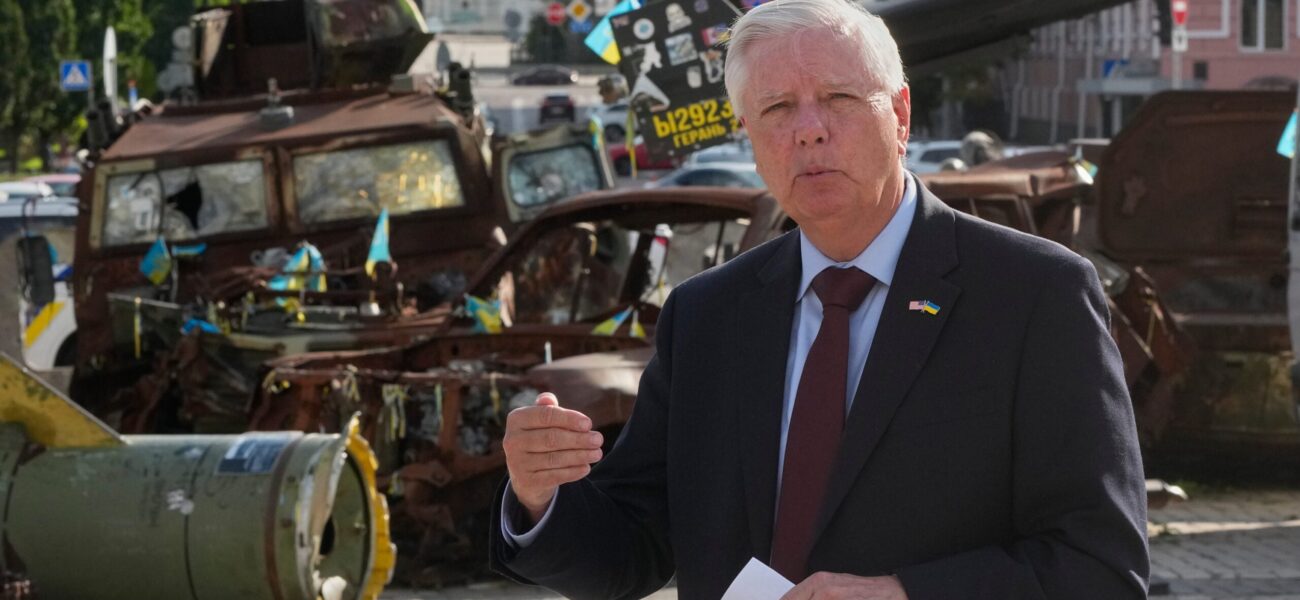
His recent trip to Ukraine, meeting with Volodymyr Zelenskyy — who noted Graham had visited his country 10 times since Russia’s 2022 invasion — was classic Graham. Lindsey was a true defender of freedom — and the values that make our world safer,
Zelenskyy told the wires. And then there was that sanctions package with Russia, hammered out on a Friday, just hours before he died. One wonders, what happens to that deal now? Is it truly solid?
Graham’s relationship with Trump, of course, was something else. A complex dance, really. From calling the former president unfit for office
and using choice profanity, to becoming one of his closest confidantes. It’s very tough,
Trump reportedly said, feeling like Graham was like a member of the family.
But, this strange partnership, what did it really achieve? It’s fair to say Graham pulled Trump in directions on the global stage, especially when it came to projecting U.S. might, particularly in regions like the Middle East. It’s a delicate balance that, without Graham, might just tip.
Consider the broader landscape. For nations across the Muslim world, Graham’s departure means a distinct voice, often a hawkish one, has fallen silent. From the Iranian front to stability in places like Pakistan, U.S. foreign policy has always been an intricate weave of internal pressures — and international realities. Graham’s firm, often unyielding stance on issues, particularly against what he perceived as extremist threats, held sway. His view of the security of Israel and the United States was inseparable, a point frequently made with leaders like Benjamin Netanyahu, who called Graham one of its greatest friends
and a beloved friend.
This perspective, now gone, leaves a gap at a moment when tensions are perennially high.
📄 POLICY WIRE WHITEPAPER PUBLISHED: PAKISTAN'S NATIONAL SECURITY POLICY PRIORITIES
👉 READ BY CLICKING HEREAnd it’s not just the big picture; it’s the minutiae of congressional power. As chairman of the Senate Budget Committee, — and previously the Judiciary, he held some serious sway. His ability to guide key legislation, like last year’s tax law, through the Senate via reconciliation? It was no small feat. He had even pledged to confirm as many conservative judges as possible
if Republicans retained the majority, which now, feels like a historical footnote.
Dick Durbin, a Democrat who found common ground with Graham on immigration reform—that legislative beast that never made it to the House—said he was part of every important policy issue and an indispensable player.
Maybe he was, or maybe that’s just how they talk when someone dies. But what’s for sure is that Washington just got a lot more unpredictable. Senator Richard Blumenthal was over the moon
about that sanctions deal, couldn’t believe Graham was ill. No one could. Now, the chess pieces are being rearranged. There isn’t an obvious next move. Because sometimes, when the music stops, a lot of folks are left without a chair.
What This Means
Senator Lindsey Graham’s sudden demise is more than a human tragedy; it’s a political jolt to the system, disrupting both domestic legislative momentum and the often-volatile currents of U.S. foreign policy. Domestically, his absence as a Budget Committee hawk and a known Trump whisperer scrambles Republican Senate strategy, particularly with a slim 53-47 majority. Without his legislative acumen and his unique relationship with the former president—a pipeline for influence often underappreciated from outside the D.C. bubble—passing certain measures, or even influencing executive decisions, just got harder. His pragmatic, if sometimes unpredictable, willingness to cross the aisle on issues like immigration (remember that 2013 overhaul, which, even if it failed, passed the Senate with 68 votes?) means a centrist deal-broker is gone. This likely exacerbates partisan gridlock. the ensuing special election in South Carolina could consume considerable Republican Party resources, diverting attention and funds from other key races as they battle to maintain control of a narrowly divided chamber.
Globally, Graham’s void feels most significant. He was a tireless advocate for American interventionism, a true believer in muscular diplomacy backed by military strength. His persistent advocacy on Iran, particularly regarding their nuclear ambitions and regional proxies, meant his voice was one that actively shaped Washington’s posture towards the Muslim world. Without his consistent, hawkish push, a key component of the aggressive U.S. stance may soften, or at least lack a powerful internal champion within the Senate. While current policies have institutional inertia, a senator with Graham’s experience and direct access to power brokers, both in Washington and abroad, is difficult to replace. This could translate to subtle but important shifts in American engagement with countries like Pakistan, Saudi Arabia, or even ongoing conflicts in places like Yemen, where a more forceful approach had an influential proponent in Graham. Policy discussions about defense spending, aid packages to allies, and sanction regimes will now occur without one of their most strident, well-traveled proponents. That, simply put, leaves U.S. foreign policy, especially toward regions accustomed to Graham’s particular brand of influence, looking a touch less defined, a little more uncertain.